Career Outcomes

Career Outcomes

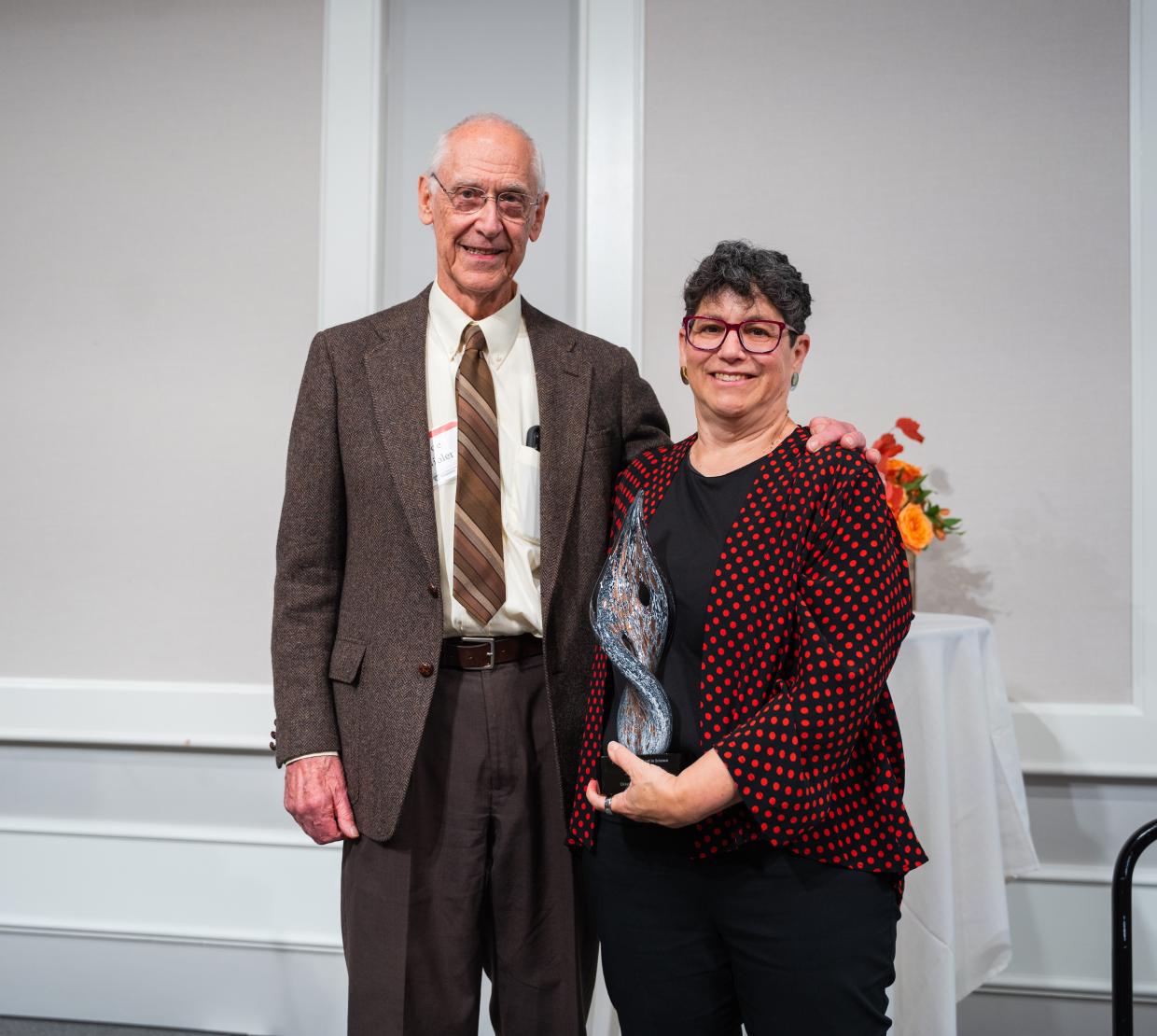
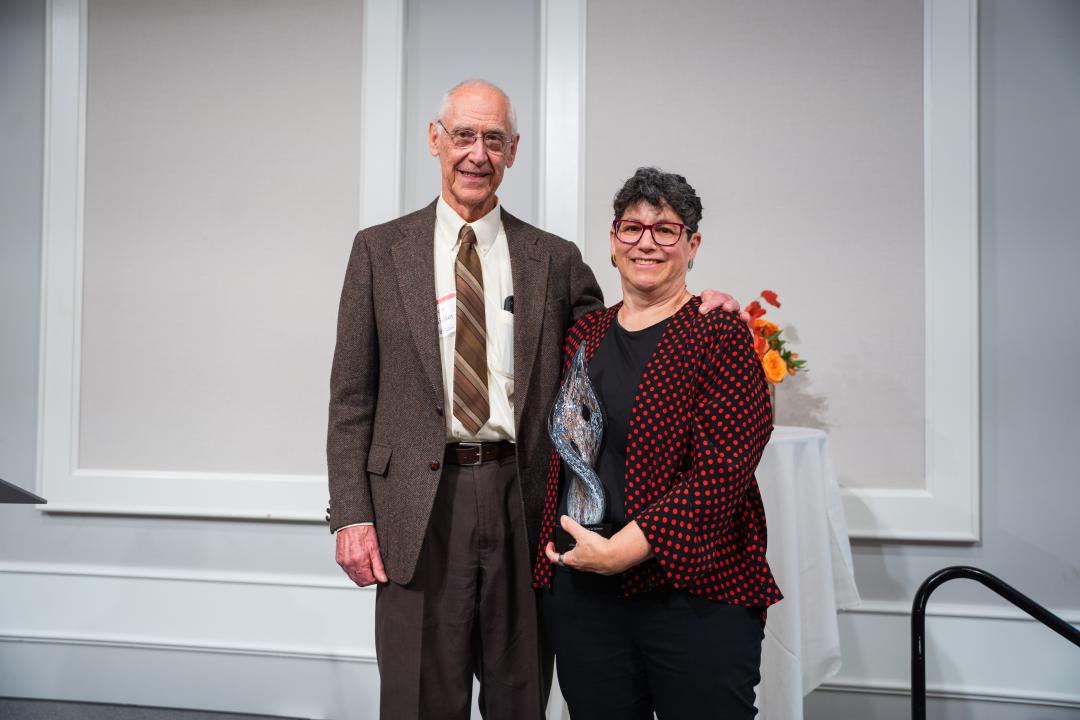
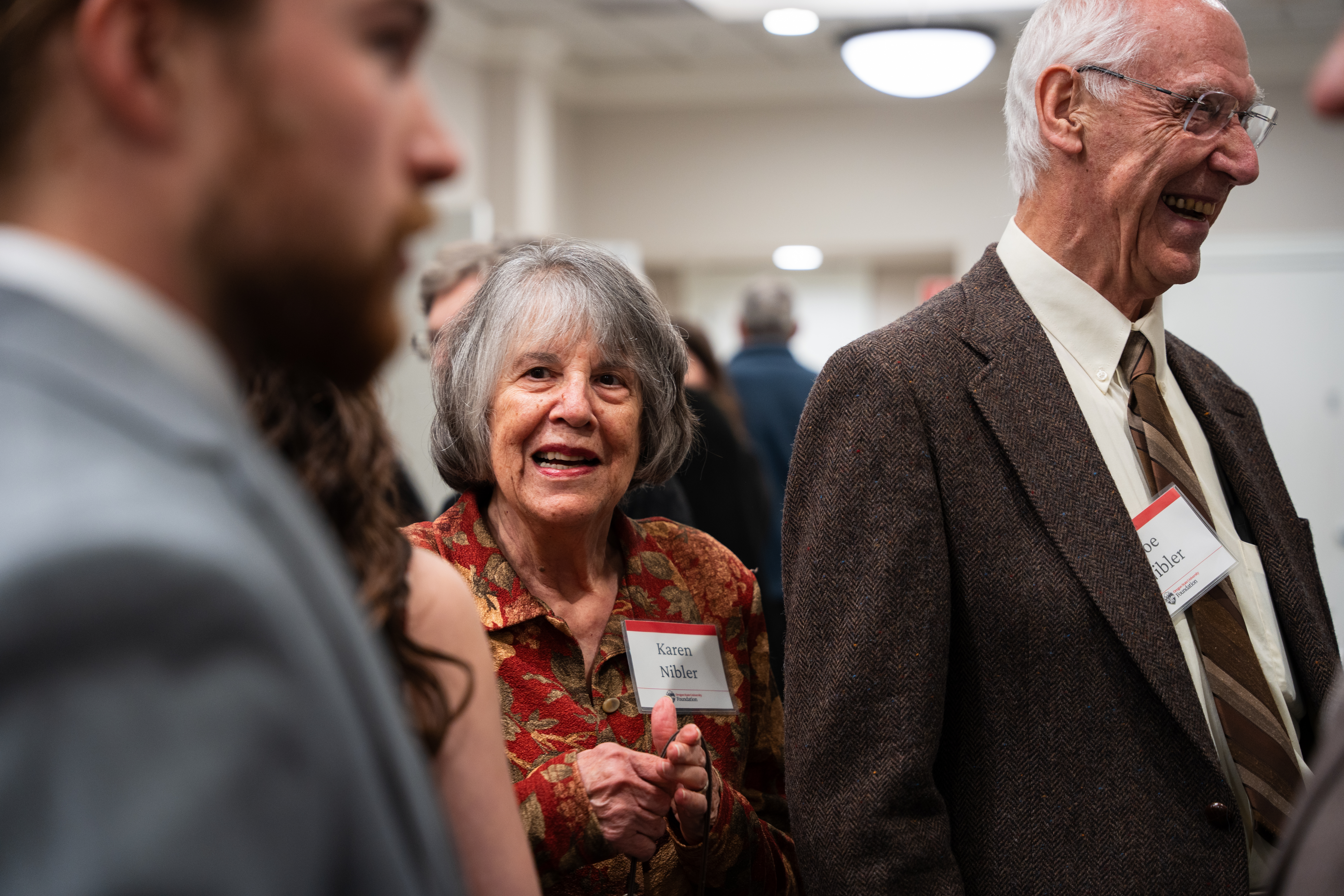
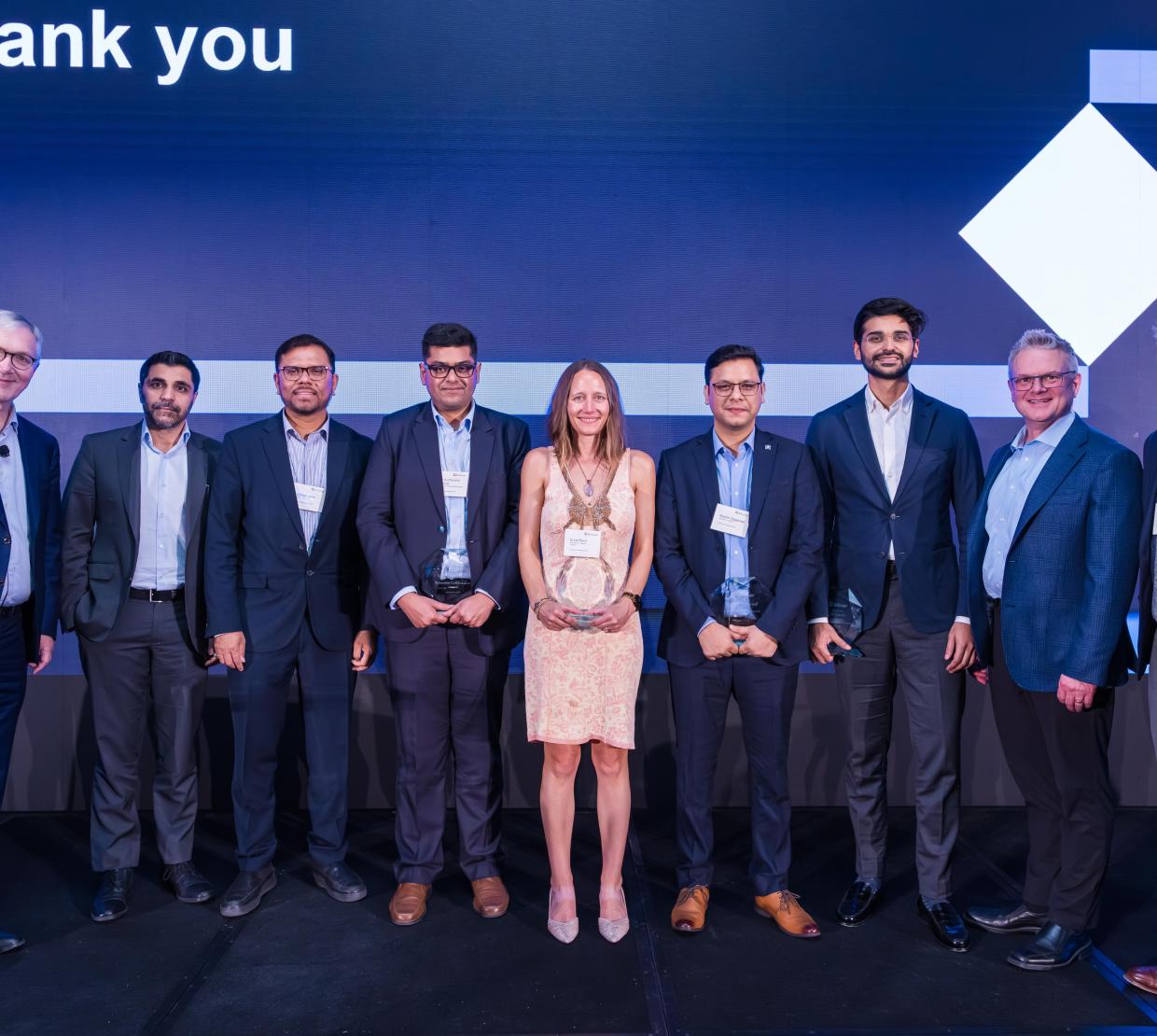
A man in a brown suit stands next to a woman wearing a red and black dress jacket. The woman is holing a glass award.

Recognizing excellence at 2025 Alumni Awards

By Hannah Ashton

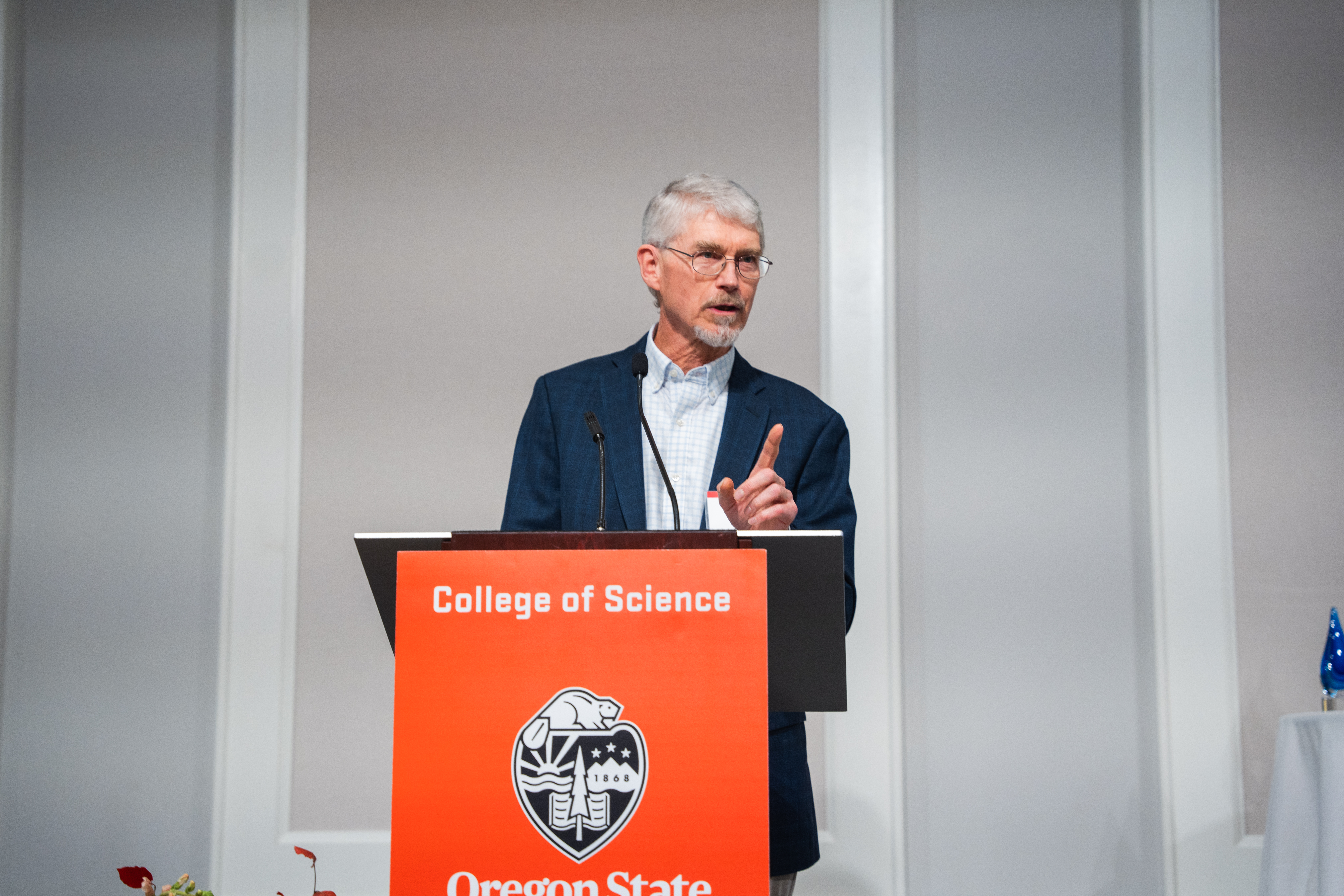
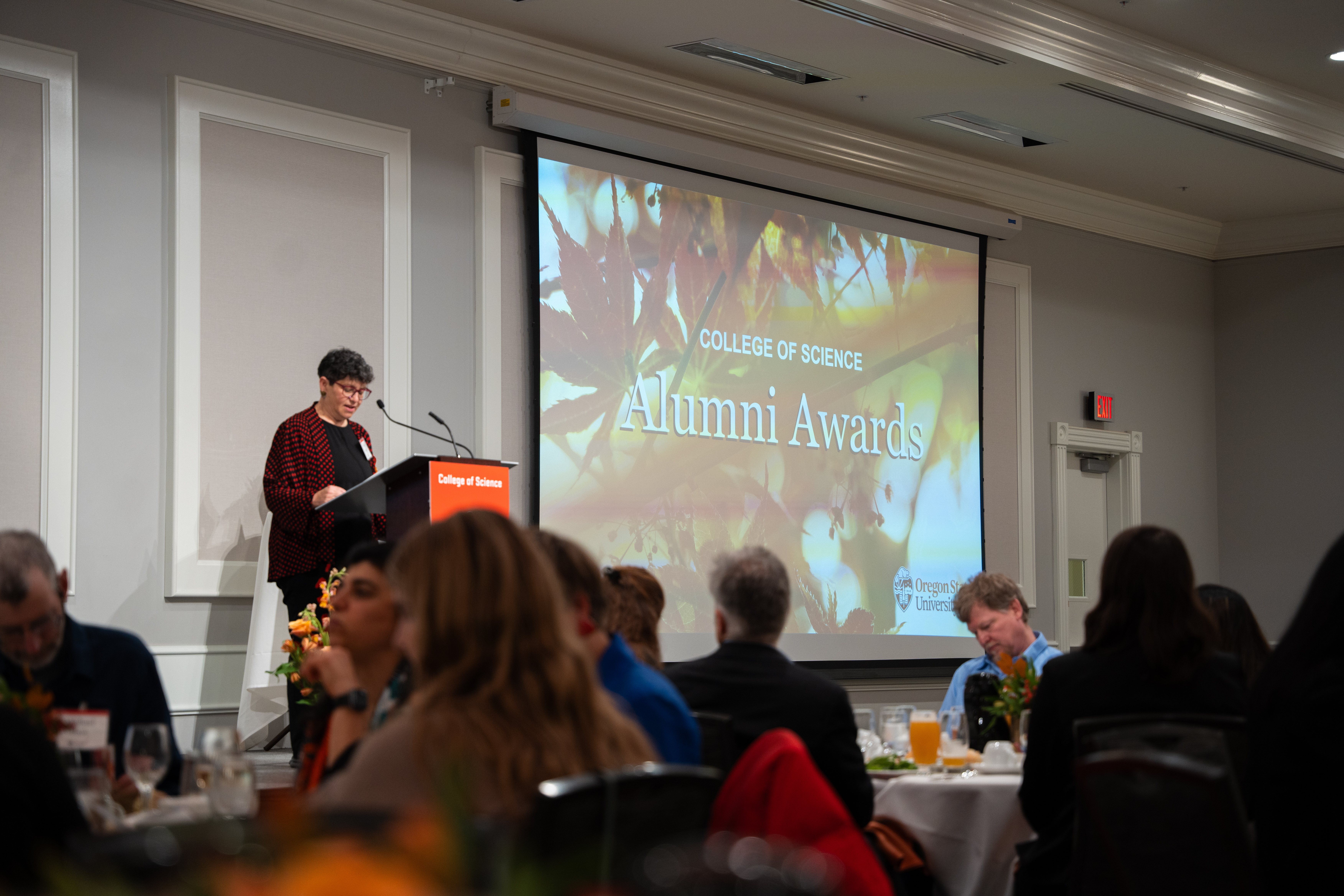
On November 14, 2025, the College of Science applauded groundbreaking achievements in science by our six alumni award recipients. Thanks to their hard work in a variety of scientific disciplines, impressive strides in research were made, livelihoods were improved and science was better understood by many.

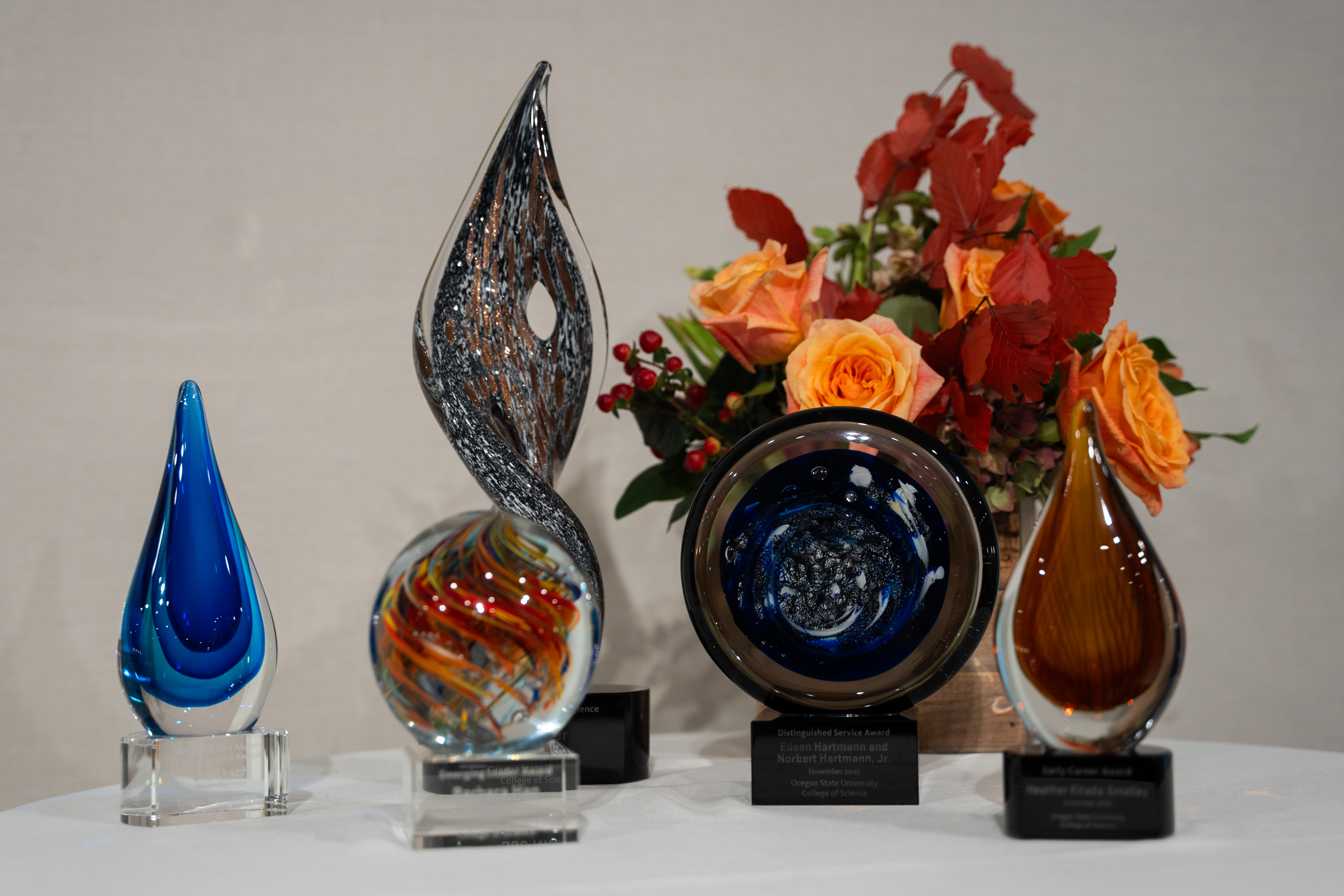
Heather Kitada Smalley ('18) received the Early Career Award; Barbara Han ('09) received the Emerging Leader Award; Eileen ('74, '76) and Norbert Hartmann received the Distinguished Service Award; William (Bill) Skach received the Distinguished Alumni Award; and Joe Nimbler ('63) received the Lifetime Achievement in Science Award.

Below is just a snapshot of their many accomplishments.

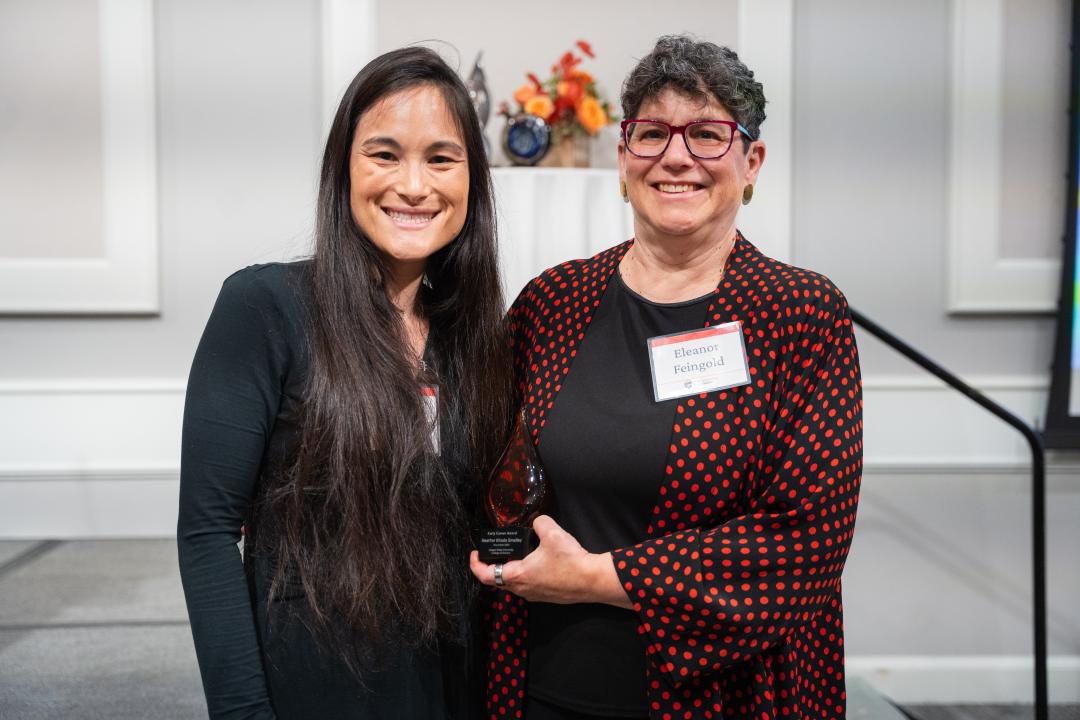
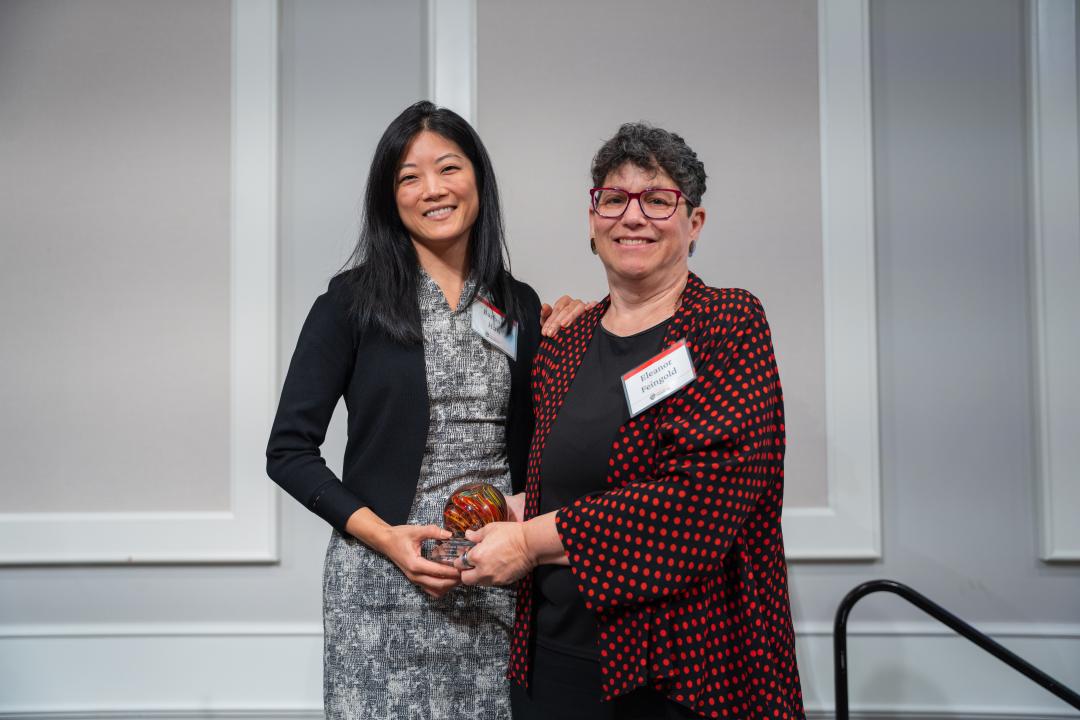
A woman in a black dress accepts an award from a woman in a black and red dress shirt.

Heather Kitada Smalley accepts the Early Career Award from Dean Feingold.

Heather Kitada Smalley is a passionate statistics professor. She earned her Ph.D. in statistics from Oregon State in 2018, where she discovered her passion for teaching and for applying data to meaningful problems. Today, she is an Albaugh Associate Professor of Statistics and Data Science at Willamette University, where she helped build the university’s new School of Computing and Information Science, from shaping its curriculum to securing a $2 million Department of Education grant that helped bring the programs to life.

Drawing on her Oregon State experience, Smalley designs classes that are both creative and practical. She uses hands-on learning to help students see how data connects to the real world — showing that statistics isn’t about memorizing equations, but about curiosity and discovery.

Read more about her research and teaching philosophy.

A woman in a black and white dress accepts an award from another woman in a black and red blazer.

Barbara Han accepts the Emerging Leader Award from Dean Feingold.

Barbara Han's journey to Oregon State began when Distinguished Emeritus Professor Andy Blaustein, who became her Ph.D. advisor, inspired her while she was an undergraduate at Pepperdine University. Her early fascination with amphibians and their ecosystem has grown into a career conducting groundbreaking work at the intersection of ecology, machine learning and infectious-disease prediction.

Today, Han is an Associate Scientist at the Cary Institute of Ecosystem Studies in New York, where she develops AI-based tools to forecast when and where zoonotic diseases, those transmitted from animals to humans, may emerge. Her models compare traits of known disease-carrying species with thousands of others to predict which animals might become carriers in the future, helping protect lives, ecosystems and communities. During the COVID-19 pandemic, her team’s predictions about which mammals could spread the virus were later confirmed in the field.

Learn about she is merging ecology and machine learning.

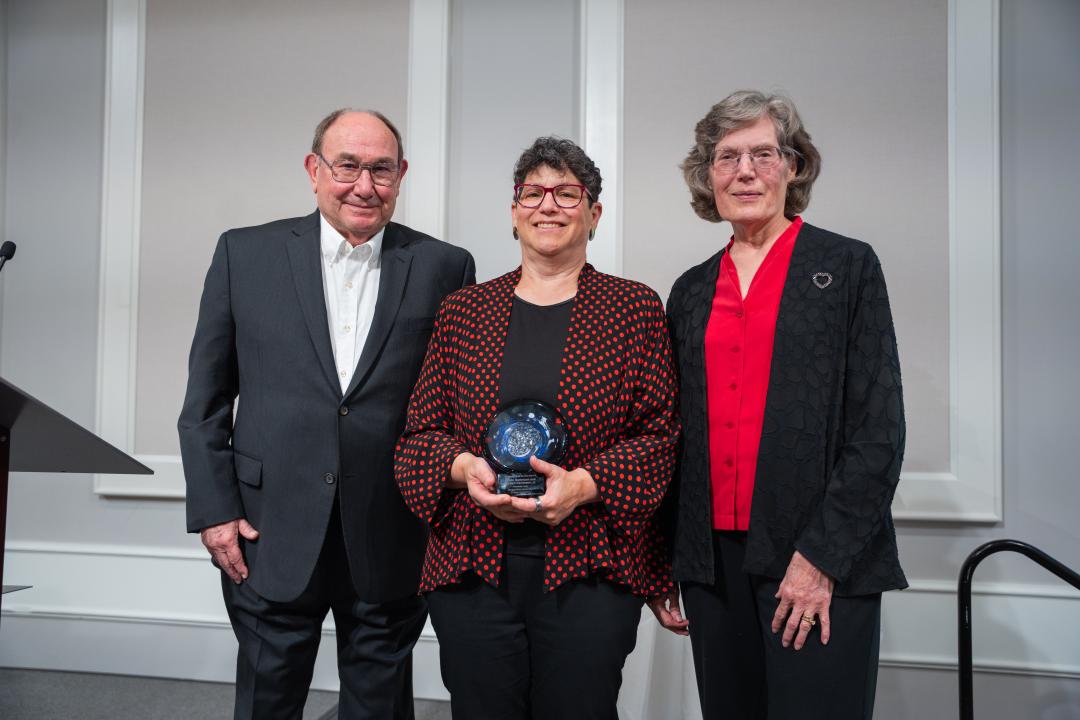
A man in a suit stands with two women in dress clothes. One of the women is holding a glass award.

Norbert and Eileen Hartmann accept the Distinguished Service Award from Dean Feingold.

Eileen ('74, '76) and Norbert Hartmann each grew up in modest circumstances where opportunities in science and higher education were slim. With perseverance and family support, they built lives defined by hard work, service and a deep belief in education as a force for opportunity.

Together the Hartmans have made philanthropy a shared mission. Their generosity to Oregon State includes endowments that support faculty in the College of Science and scholarships in women’s basketball and baseball – investments that reflect their belief in education, access and opportunity for future generations. They have also generously given of themselves as advisors to a succession of College of Science Deans - Eileen just recently rotated off of our Board of Advisors, where she is greatly missed.

Discover their journeys from rural towns to fulfilling careers.

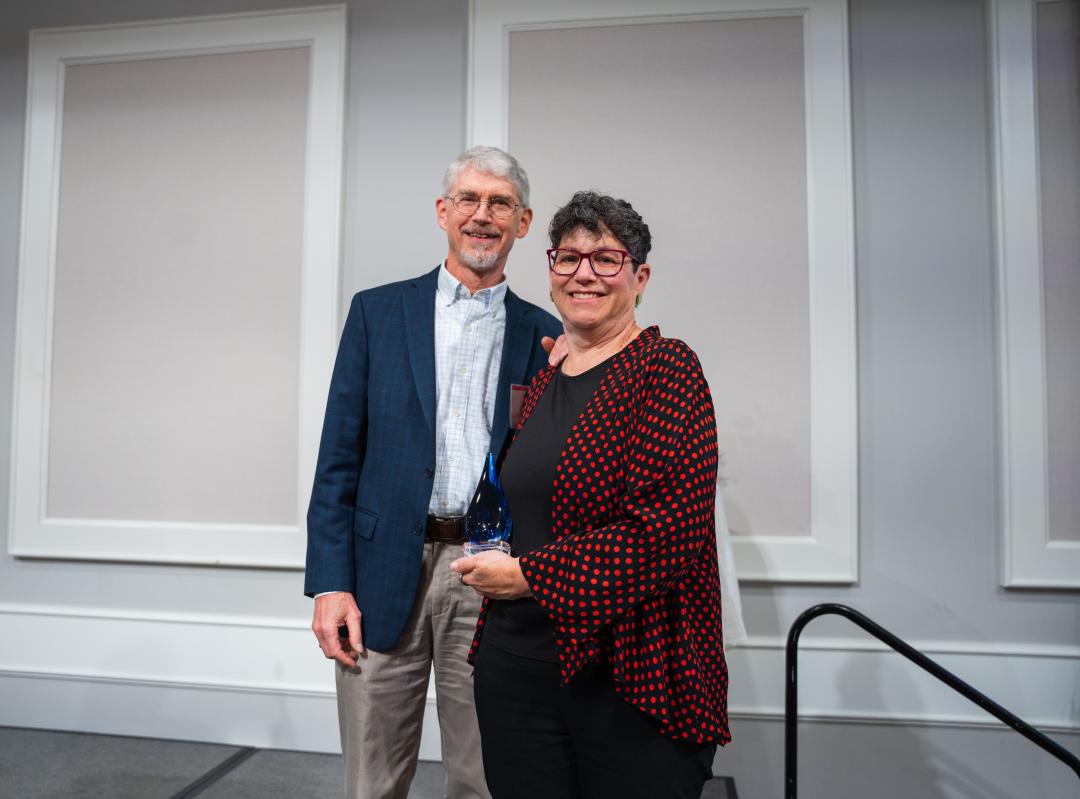
A man in a blue suit coat accepts an award from a woman in a red and black blazer.

William (Bill) Skach accepts the Distinguished Alumni Award from Dean Feingold.

The Distinguished Alumni Award, honoring alumni whose work has had an extraordinary impact on science and society. This year’s recipient, Dr. William Skach ('79), played a pivotal role in research that helped transform care for people living with cystic fibrosis.

Skach graduated from Oregon State with degrees in biochemistry and biophysics and crop science, then earned his M.D. at Harvard Medical School. As a physician-scientist at the University of Pennsylvania and later at Oregon Health & Science University, he devoted more than 25 years caring for cancer patients and studying how proteins fold inside the body – research that helped lay the groundwork for treatments that revolutionized cystic fibrosis care.

Read about a breakthrough moment in his career.

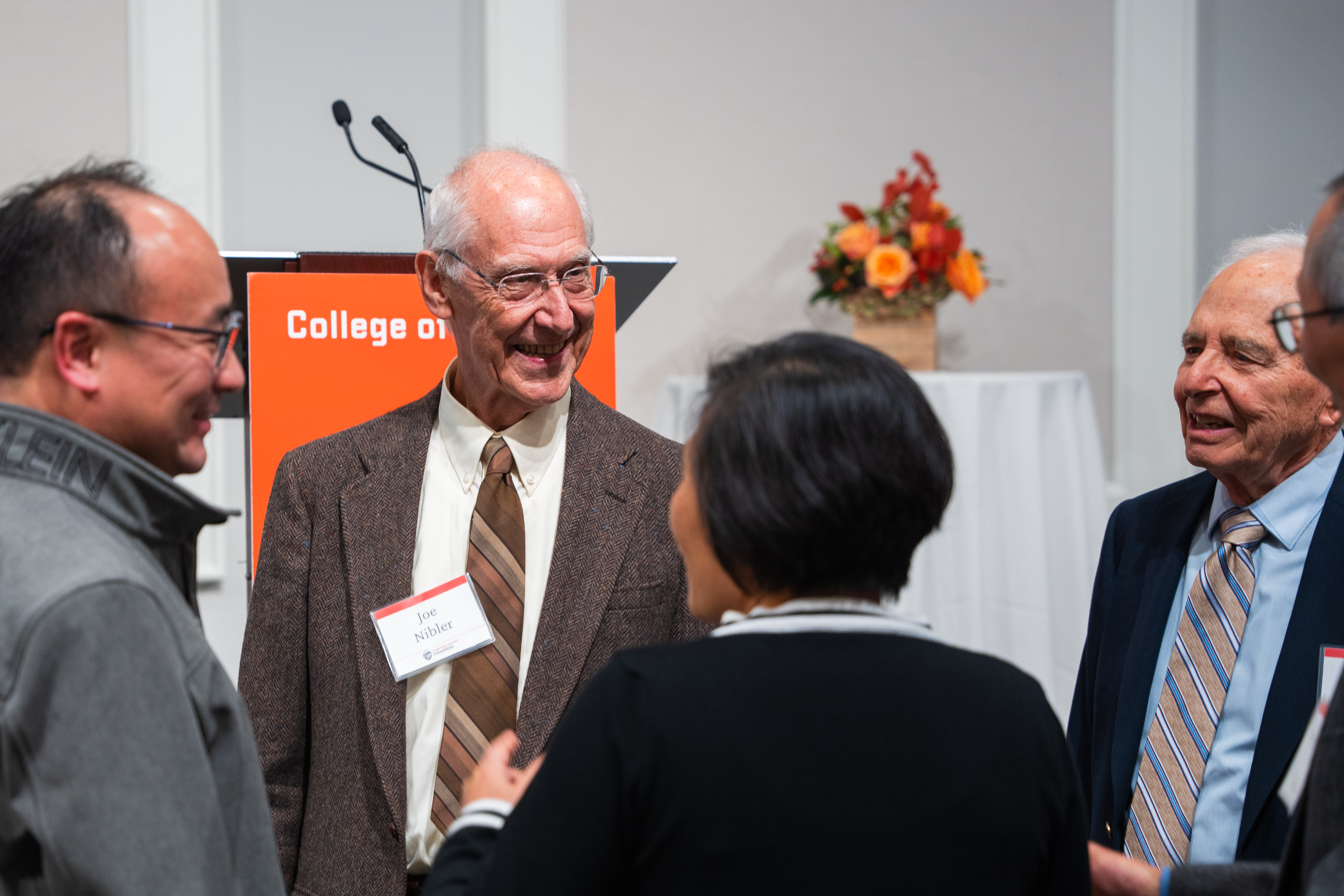
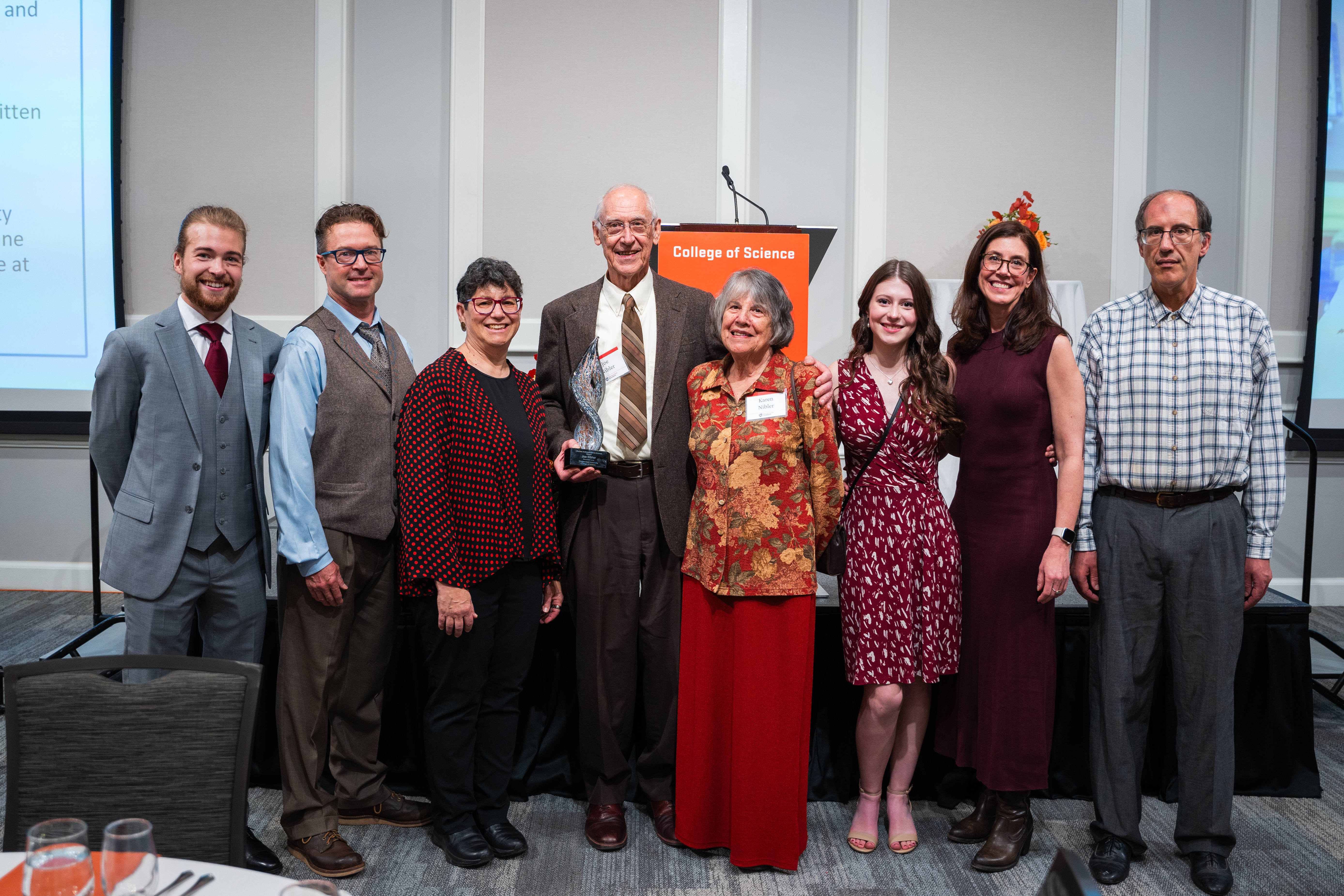
A man in a brown suit stands next to a woman wearing a red and black dress jacket. The woman is holing a glass award.

Joe Nibler accepts the Lifetime Achievement in Science Award from Dean Feingold.

Professor of Chemistry Emeritus Joe Nibler has spent his career exploring the invisible world of molecular motion – events that unfold in billionths of a second but define how matter behaves. A fourth-generation Oregonian and proud Oregon State graduate, he helped pioneer Coherent Anti-Stokes Raman Scattering, a laser-based technique that made it possible to watch molecules reacting in real time and opened new frontiers in experimental chemistry.

With support from the National Science Foundation, he established Oregon State’s first Coherent Anti-Stokes Raman Scattering laboratory, bringing laser tools that allowed scientists to observe how molecules move and react on ultrafast timescales. That ability — to see molecular bonds form and change in real time — transformed how scientists study the fundamental processes that power chemistry, from combustion to biology. His work positioned Oregon State among the early leaders in experimental spectroscopy, training generations of researchers who carried those methods forward.

Joe is also celebrated as a teacher and mentor. He co-authored Experiments in Physical Chemistry, a textbook used by students around the world, and mentored generations of scientists who are now advancing science in universities, companies and research labs across the country.

Find out what Nibler finds most rewarding.

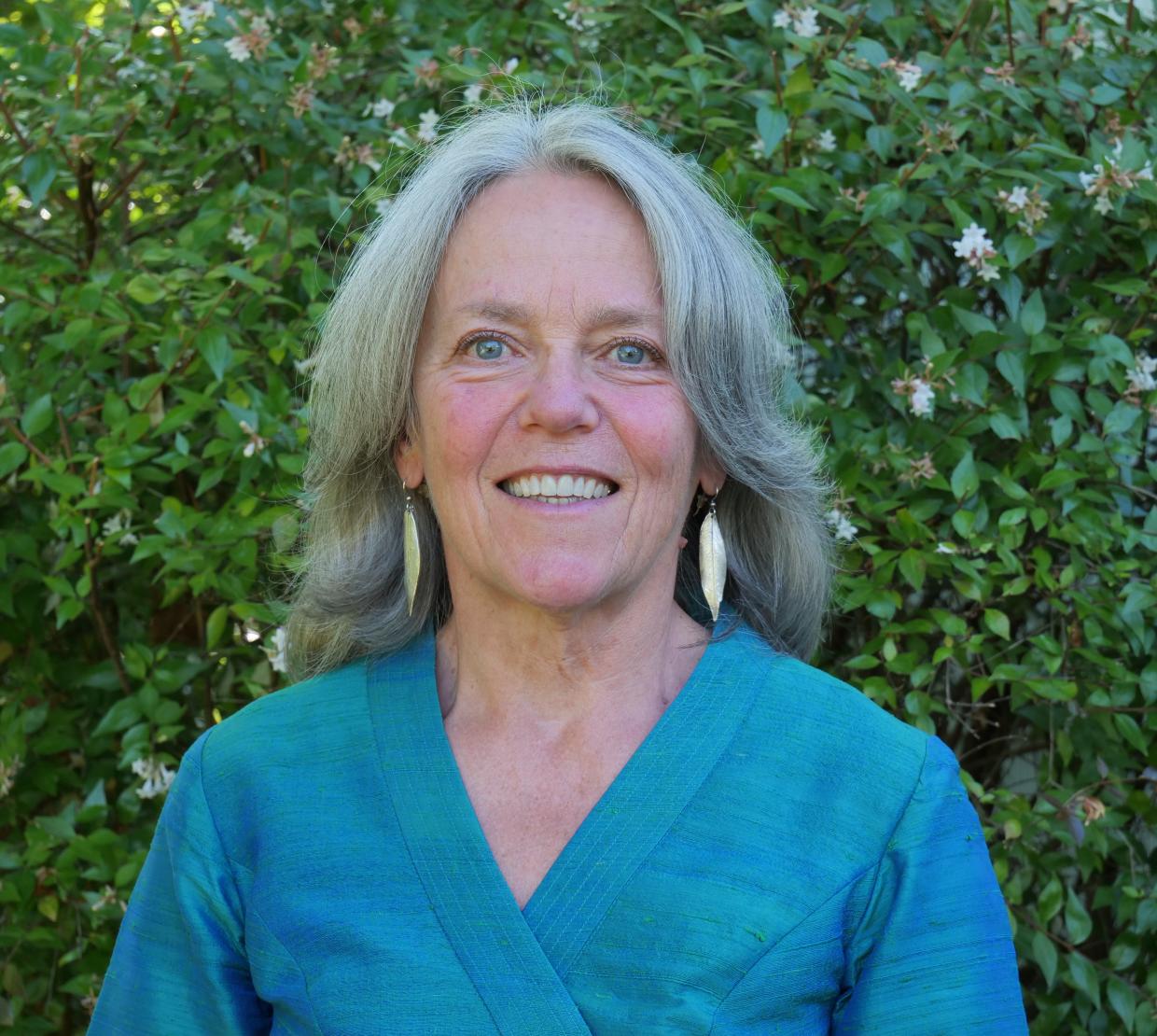
Smalley smiles at the company in front of green trees.

Leader in data science curricula development wins Early Career Alumni Award

By Kaitlyn Hornbuckle

As a graduate student at Oregon State University, Heather Kitada Smalley (Ph.D., ‘18) discovered the best way to make data matter is to make it personal.

She saw it firsthand at the Oregon Museum of Science and Industry (OMSI), where a group of Girl Scouts bubbled with excitement while they explored statistics in hands-on activities and earned their science badges. As a Girl Scout alum herself, that unforgettable night captured what drives her career: helping people of all ages see themselves in science.

Now recognized with the College of Science’s 2025 Early Career Alumni Award, Smalley is redefining how data science is taught and understood. She leads the next generation of scientists as an Albaugh associate professor of statistics and data science at Willamette University. She also teaches and sets up interactive activities as an OMSI Science Communication Fellow, helping many others creatively engage with science.

At Willamette University, Smalley draws on the whiteboard to teach the two students around her about data science.

Smalley joins students at the whiteboard to learn something new. Photo by Marketing and Communications team at Willamette University.

By communicating science clearly to the public, she helps audiences of all ages — from preschoolers to grandparents — walk away with something new. “The advice I would give to students who want to teach is to remember what it's like not to know and to have understanding and empathy,” Smalley said.

By making statistics and data science relatable, she hopes to encourage young students to learn how they can use data to benefit people. She wants to help them communicate their discoveries with other communities as well. She developed this outlook when in the first cohort of the Graduate Certificate in College and University Teaching (GCCUT) program, led by Jessica Beck at Oregon State.

“I felt really supported while I was at Oregon State. They gave me a strong foundation to work with.”

That philosophy guided her first big career step in 2018, when Willamette University planned to launch a new data science program. Having just finished graduate school, the timing was perfect.

By leveraging her new education and training from Oregon State, she steered the learning outcomes in the right direction while serving as the Curriculum Committee Chair for the data science and computer science programs. After helping write a Title III grant, the Department of Education awarded nearly $2 million that supported their design of new programs from the ground up.

Today, their six years of hard work is paying off in Willamette’s brand new School of Computing and Information Science. Thanks to the program, students can pursue quality careers in statistics and data science, similar to Oregon State’s competitive statistics programs.

At Willamette University, Smalley sits on the couch with her laptop to assist other students with their data questions. Everyone in the room is wearing masks to stay healthy.

Smalley engages with students when in-person classes returned in 2021. Photo by Marketing and Communications team at Willamette University.

“I use multiple modalities of teaching so that statistics and data science isn’t super theoretic and abstract,” Smalley said. “I always have hands-on components where students are engaging in skill building.”

A student-centered approach to teaching

Smalley’s teaching career took off earlier than expected. While completing her doctorate degree in statistics at Oregon State, she landed a position as visiting assistant professor of statistics at Reed College in Portland. She taught classes at both institutions; some online at Oregon State and others in-person at Reed.

“I felt really supported while I was at Oregon State. They gave me a strong foundation to work with,” Smalley said. “When I'm designing curriculum, I am always thinking about the student experience and what's going to help motivate them to learn this topic.”

For Smalley, the community at Oregon State opened new doors, led to lifelong friends and helped her become the kind of professor she always wanted to be. Her advisor, Sarah Emerson, mentored her throughout graduate school, leaving her with advice that continues to influence how Smalley teaches and conducts research today.

“Several people I know went into higher education to be those professors that wanted to change people’s lives. Having that in common ties us together,” she said. “We are connected because we were in Corvallis together, and I think there’s something really powerful about that.”

At Willamette University, Smalley joins two other students at the couch to discuss any questions about the exercises on their laptops. Everyone in the room is wearing masks to stay healthy.

Smalley sits down to explain new concepts in statistics and data science. Photo by Marketing and Communications team at Willamette University.

Smalley’s teaching and curricula stands out because she keeps teaching pedagogy at the center. Rather than losing students’ attention with extensive and abstract equations, she focuses on the bigger picture. By using diagrams and interactive visuals, students can better understand exactly how and why those equations work rather than root memorization.

“I want my students to feel empowered to use data to understand the world around them. Being a statistician doesn't mean you memorize all the statistics ever created. It's about data literacy,” Smalley said. “It's about asking questions and looking for patterns. You don’t have to memorize equations if you know how something works.”

With great conferences, comes great opportunities

To make the learning experience even more intriguing, Smalley is taking her research to the next level. In the past, she used to be knee-deep in analyzing the data quality of public opinion research. But after a meeting with Scott Pike, professor of environmental science and archaeology at Willamette, she’s going in a new direction.

Now, she’s involved in groundbreaking research — literally. She’s interpreting decades-worth of data collected on a variety of stones, including marble isotopes in Greece and geochemical soil analysis samples from the Ness of Brodgar in Scotland. To help support the next generation of scientists, she loves to include her students in on the fun.

“The students that I'm working with on these projects are amazing. I'm working with a student that is presenting that research next week at a conference,” Smalley said. “I’m really excited about it because I love helping people with their data.”

Smalley smiles while holding a green bucket and standing next to a statistics target practice board lined with four colorful targets. The workshop is part of an event with the Oregon Museum of Science and Industry (OMSI).

Smalley gamifies statistics using a board for target practice at an OMSI event.

The cherry on top of her professional career is presenting research at domestic and international conferences. Last summer, she attended the European Survey Research Association (ESRA) conference in the Netherlands, where she connected with professionals whose work she had long admired.

Smalley also loves to attend the American Association for Public Opinion Research (AAPOR) conference. There, she saw students blossom and build their network for the first time. Every year since 2022, she brings students along so that they have the experience of meeting and presenting to professionals in the field, just like she did.

To prepare them well, she has been mentoring students in the Science Collaborative Research Program (SCRP) at Willamette University every summer since 2022. After students spend the summer doing research, they communicate their findings at a regional conference.

Collaborating with students on research and watching them present during their poster sessions make the entire experience valuable. “I love taking that moment to step back and just watch the students shine. It makes me really emotional to think about because I just feel so proud of them,” Smalley said.

Conferences like these help bring scientists together that wouldn’t otherwise meet. She kept in touch with professionals from the U.S. Census Bureau and is often invited to collaborations with other data scientists. These opportunities not only accelerate her career, but those of young scientists as well.

When she’s not teaching in the classroom, she is assembling interactive science displays and proudly communicating what matters most as an OMSI volunteer, for nearly a decade and counting. Outside of teaching, Smalley is a proud mother of two, busy making the world a better place for her family of Beaver fans.

Woman wearing a hijab and a blue JSM lanyard peruses merchandise on a table with other conference attendees milling around.

Breaking into data science: How conference networking helps statistics students get hired faster

By Kaitlyn Hornbuckle

An attendee at the 2025 Joint Statistical Meeting peruses merchandise at the conference.

photo credit to JSM

Statistics students plotting their way to success have many tools available to explore career options — conference attendance can be one of the most important. That’s why Oregon State ensures statistics students have a wide array of conferences to explore. Each year, students advance their careers by speaking with industry leaders, connecting with researchers, presenting posters, and meeting other passionate peers.

It's not unheard of for these students to land a job after attending a conference. That’s how Oregon State alumna Chenyang Duan (Ph.D. Statistics, ‘23) landed a full-time position as senior statistician at AbbVie, one of the top pharmaceutical companies in the world. All it took was an in-person interview at Joint Statistical Meetings (JSM), the largest gathering of statisticians and data scientists in North America.

This Dam Proud Day, on April 29, 2026, you can help students like Duan access those same life-changing opportunities. By making a gift to the Supporting Statistics Student Travel Fund, you’ll help cover travel costs so students can attend major conferences like the JSM.

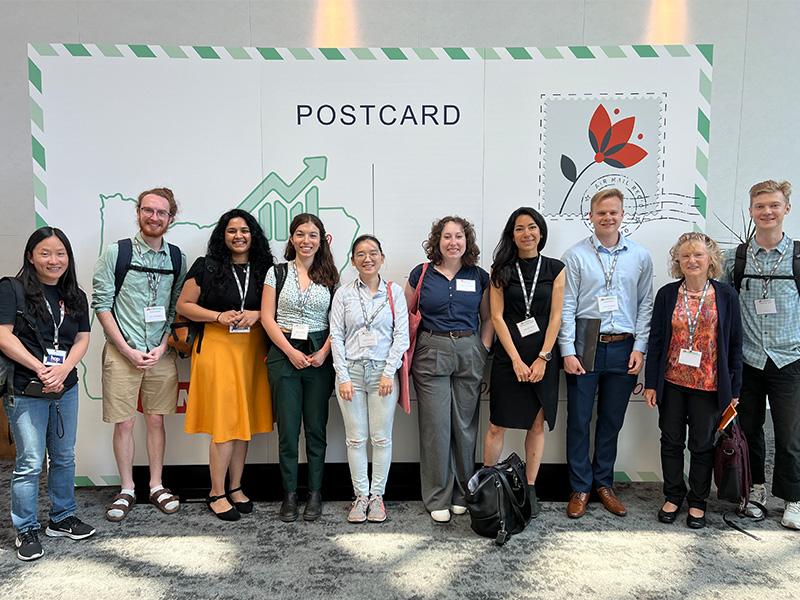
Oregon State statistics faculty and students at the JSM in front of a giant mural of a postcard.

Statistics students and faculty explore and make connections at the Joint Statistical Meetings in Portland, OR 2024.

JSM's innovative networking and career tool in action: Career Service Portal

Conferences open doors to job opportunities in industry, research collaborations in academia, mentorships, and even future grant panel members, which are extremely valuable after completing graduate school. When it comes to attending JSM, there’s an additional benefit.

By using JSM’s online Career Service portal, students can click a button that sends their resume to every company attending the conference. Even better, interviews with recruiters can be scheduled in advance. Students can find these invitations by routinely checking the portal’s inbox. For Duan, she received 12 interview requests.

Thanks to these interviews, students have a chance to shine. “The interviews are pretty short, so make sure to remember the details on your resume and clearly explain the purpose, motivation, challenges and results of your research to help the hiring managers better understand your work,” Duan said. “That’s how I found my job!”

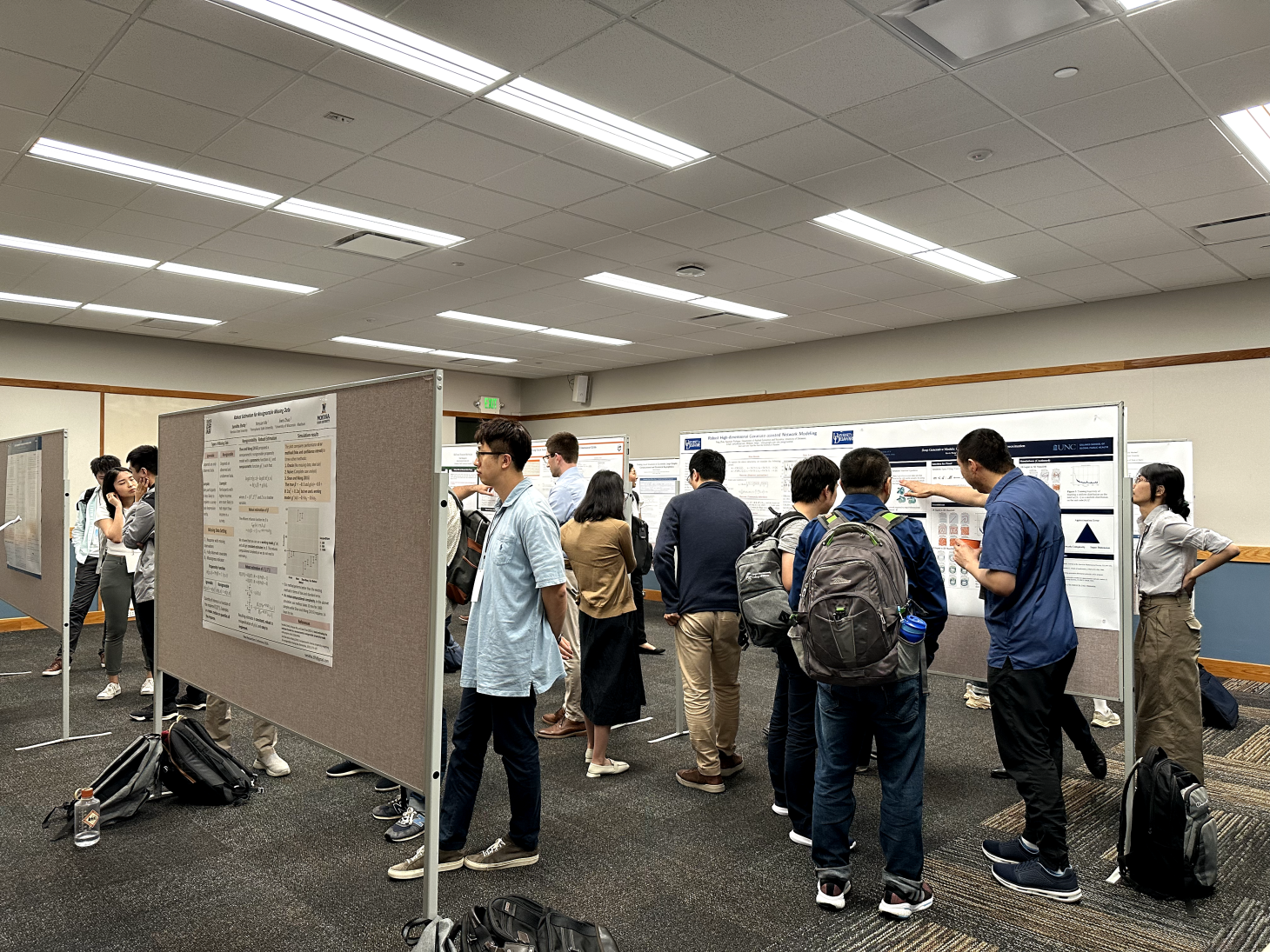
A group of students peruse the posters at the New Researchers Conference in Corvallis, OR.

Students attend and present their research at the New Researchers Conference in 2024.

This streamlined process helps students focus on expressing themselves through public speaking rather than worrying about handing out as many resume copies as possible.

Duan’s advice for students wanting to connect with professionals? Find something in common. It can be as simple as asking to chat over dinner because you graduated from the same university. “Most people are very willing to speak with alumni, and they might introduce you to more people, so that’s a great way to make connections at conferences,” she said. “You can also invite hiring managers to attend your presentation and speak with them there.”

How conferences boost career prospects

In statistics and data science, there is a vibrant community full of opportunities for passionate learners. “Going to conferences helps you do better research, look for better jobs and have a better outcome, no matter what career you choose to have,” said Yuan Jiang, statistics associate professor and co-director of graduate studies.

Jiang co-organized the New Researchers Conference (NRC), which is always held shortly before JSM. Last year, students could attend both conferences in the same summer, meaning a chance to make double the connections without traveling far from home.

Other annual conferences like the Eastern North American Region (ENAR) and the Western North American Region (WNAR) of the International Biometric Society are other options for professional networking and developing, especially in biostatistics.

“There are two ways to look for a job. You can apply by yourself to as many companies as possible or have an internal referral. I would say that if you are being recommended by someone, the success rate of landing a job is probably much higher,” Jiang said.

The College of Science offers various resources to help students expand their network both locally and around the world, even if they’ve never been to a conference before. The College of Science Student Travel Award is available for both undergraduate and graduate students. The Department of Statistics offers professional travel awards up to $1000 each academic year for graduate students who travel to regional, national or international conferences to present a paper or poster.

“Different people have different personalities. But no matter what, networking is important,” Jiang said. “Going to conferences is an integral tool to get to know people, whether you want to go to industry or academia. When people can know you in person, that gives them a more direct impression about who you are.”

Panelists intrigue a sizable audience of attendees at the 2024 New Researchers Conference.

A variety of panelists speak with attendees at the 2024 New Researchers Conference.

Headshot of man

The versatile statistician: Jon Francis' career across industries

By Hannah Ashton

Jon Francis (statistics, ‘96) has built a career working for some of the biggest names in business, including Amazon, Fred Hutchinson Cancer Research Center, Nike, T-Mobile, Starbucks, PayPal and currently General Motors. What education has allowed him to shift seamlessly from coffee to cars? A master’s degree in statistics from Oregon State University.

“Statistics is core to so many different industries and companies. It’s not like you have to go into a specific field or there’s only a few sets of companies or domains that you could work for,” Francis said. “Statistics applies to everything. It’s been really fun for me to have such a transferable set of skills.”

With 25 years of professional experience, Francis has learned valuable lessons and made a few mistakes along the way. Attending Oregon State, however, remains one of his best decisions.

Opportunities in every direction

As the chief data and analytics officer for the largest automaker in the United States — General Motors — Francis wears many hats.

“I am responsible for the stewardship of all our enterprise data, everything from manufacturing to customer data, to product development data. I am also tasked with finding where we can solve some of the company's hardest problems by applying statistics, data science, machine learning and AI,” Francis said.

On the customer side, he works with the marketing organization to ensure effective communication with customers when they are in the market to buy a vehicle. This includes determining which vehicles to highlight and what incentives to offer.

On the safety and vehicle quality side, GM is working to use diagnostic data proactively.

“If we could use machine learning and predictive analytics to predict when a car might have a problem and alert the customer to take it in, it would enhance customer lifetime value, improve loyalty and increase efficiency for GM in terms of costs,” he said.

Francis didn’t start on the business side of statistics. His first job after graduating from Oregon State was at the Fred Hutchinson Cancer Research Center in Seattle, Washington, where he worked as a statistician on the Women’s Health Initiative.

A series of clinical trials that kicked off in 1991, the initiative focused on studying major health issues for post-menopausal women. Francis helped design the analytics for the studies and reporting.

After that role, he moved into business, taking roles at Amazon, Expedia, T-Mobile, Microsoft and Nike. In 2011 when he joined Nike, the company was just starting to prioritize building more customer relationships directly with customers through digital experiences like their membership program. As the director of data science and technology, Francis helped move a lot of their analytic work toward the cloud and Amazon Web Services. He also explored what capabilities needed to be built around personalization and understanding what drives customer loyalty.

Reflecting on his early career, Francis admits that he changed jobs frequently, sometimes driven by frustration rather than strategic growth. Over time, he realized that similar challenges exist across companies, and the key to professional development lies in resilience and addressing problems rather than avoiding them. “Instead of running from the problems, how can I build a growth mindset and be part of the solution?” he explained.

His advice to students: pursue new opportunities thoughtfully, ensure they align with personal growth and long-term goals, and focus on running toward opportunities, not away from challenges.

“What’s happening with AI and machine learning are things we couldn’t even have dreamed of back then.”

Another important lesson he learned is to invest time in understanding stakeholders’ work, challenges and business needs.

“I think the core idea is to lead with humility. The best way for you to have an impact through the work you do is to build that relationship and earn that credibility by understanding what the challenge is for someone and how you can bring statistics to help solve those problems,” he said.

Statistics has become even more important in the 21st century.

“The world has changed. When I started some things were not possible because the technology wasn’t available. We didn’t have cloud computing, we didn’t have the scale that we have now in terms of the problems we can solve,” Francis said. “What’s happening with AI and machine learning are things we couldn’t even have dreamed of back then.”

As technology continues to advance, Francis believes there will always be a role for foundational statistical understanding. For him, statistics is more than just numbers on a page; it’s a language that decodes mysteries and solves problems across every industry.

From health research to Fortune 500 companies shaping the future of transportation, his career exemplifies the boundless potential of a statistics degree from Oregon State University.


Read more stories about: alumni and friends, statistics, career outcomes


A man in a blue button shirt stands in front of nature.

Merging statistics and the environment: Science alumni gives back

By Hannah Ashton

In 1977, Steve Stehman (statistics, ‘82) was a junior at Penn State University studying biology. An independent study course had him knee deep in the streams of Centre County, Pennsylvania, collecting diatoms — tiny, unicellular photosynthesizing algae.

As he began to analyze his mountain of data, he quickly realized he was in over his head. This led him to enroll in a few statistics courses, where he discovered the powerful mutualistic relationship between biology and statistics.

Those tiny microscopic organisms changed the course of his life and put him on a path to the Department of Statistics at Oregon State, a place he believes stays one step ahead of the scientific trends and prepares students for every career outcome.

Today, as a Distinguished Teaching Professor at the State University of New York (SUNY) College of Environmental Science and Forestry, Stehman honors his roots by giving back to Oregon State. His contributions recognize the invaluable education he received and pay tribute to one very special faculty member.

OSU connections shaped a path to success

Oregon State was one of a few schools on a short list Stehman created for master’s degree options. Faculty at Penn State recommended OSU as a place where statistics and the environment were already coming together, something that wasn’t true at most universities.

“It has been a strength of the department for the last 50 or so years and I’m biased in my opinion, but I think they’re still one of the top places for combining the environment and statistics,” he said. “They have been very successful in being innovative and right at the front of changes that have occurred over the last few decades.”

A scholarship offer that covered his first year of tuition sealed the deal and he packed his bags to move across the country.

Once he arrived at Oregon State, he quickly found a sense of community, thanks to W. Scott Overton, a faculty member with a joint appointment with the forestry college. Overton’s academic career spanned a range of topics including wildlife, forestry, statistics, ecology, conservation and environmental issues. He was a pioneer in the application of hierarchy theory to ecosystem theory and modeling. His statistical specialty was sampling theory and design, with applications to environmental issues and monitoring programs.

Overton served as Stehman’s master’s advisor and along with his wife Joanne, he helped numerous graduate students feel at home.

“They had students out to their house for dinners and long discussions about statistics or life,” Stehman said. “That family relationship they invited people into, for me, was very helpful.”

When Stehman left Corvallis in 1983 to pursue a Ph.D. in Biometry at Cornell University, Overton still played a role in his education, receiving special permission to serve as his dissertation advisor.

“I get to learn about research and work with people who are addressing what I think are important problems.”

At the time, Overton was working closely with the Environmental Protection Agency, making major contributions to several aspects of the EPA’s National Surface Water Surveys conducted during the 1980’s and to the EPA’s Environmental Monitoring and Assessment Program (EMAP). Stehman worked with Overton on some of his research questions that had a direct environmental impact.

“I have always liked that I can ask researchers a lot of questions and learn about all these different things in the environment that otherwise I wouldn’t know about. You’re talking directly to an expert about their work, and they allow dumb questions because they recognize I don’t understand what they are doing,” Stehman said. “I get to learn about research and work with people who are addressing what I think are important problems.”

In 1989 he accepted a teaching position at SUNY in the Department of Sustainable Resource Management. Teaching wasn’t on his radar until his time at Oregon State. One of his degree responsibilities was spending one quarter as a teaching assistant.

“I put that off until my very last quarter because I wasn’t planning on being a teacher, but I had such a good experience that it was the spark for me to change directions and I decided it was something I was really interested in,” he said.

Stehman teaches sampling techniques, map accuracy assessment and experiment design and analysis of variance. These classes align with his passion for analyzing land cover mapping with satellite data. Although this type of work requires a narrow area of statistics, Stehman likes how it addresses problems with huge impact such as deforestation or changes in surface water availability.

“I’ve had a very narrow career specialized in that area, but these were the problems I wanted to work on. It’s been a lucky but perfect match of my interests and the work people are doing,” he said.

Once again, he owes it all to Overton. In 1989, before he left to teach back east, Stehman took a consulting job that Overton was offered but didn’t have time for. He spent the first three weeks of January in Fairbanks, Alaska, working with the U.S. Fish and Wildlife Service to assess the accuracy of vegetation maps derived from satellite imagery.

“To validate maps you select a small set of areas as a sample and then do very intensive work to try and see what exactly is there as close to the truth and then compare it to the map. There has been a lot of work over the years to try and do it more efficiently and accurately,” Stehman said.

In 2016, Stehman was named the SUNY College of Environmental Science and Forestry exemplary researcher for his outstanding research career and unsurpassed knowledge in his field of study.

Attending Oregon State helped Stehman narrow his field of study and develop a love of teaching, two things that would later define his entire career.

“It really did change things for me and put me on a career path I don’t think I ever would have started,” he said.
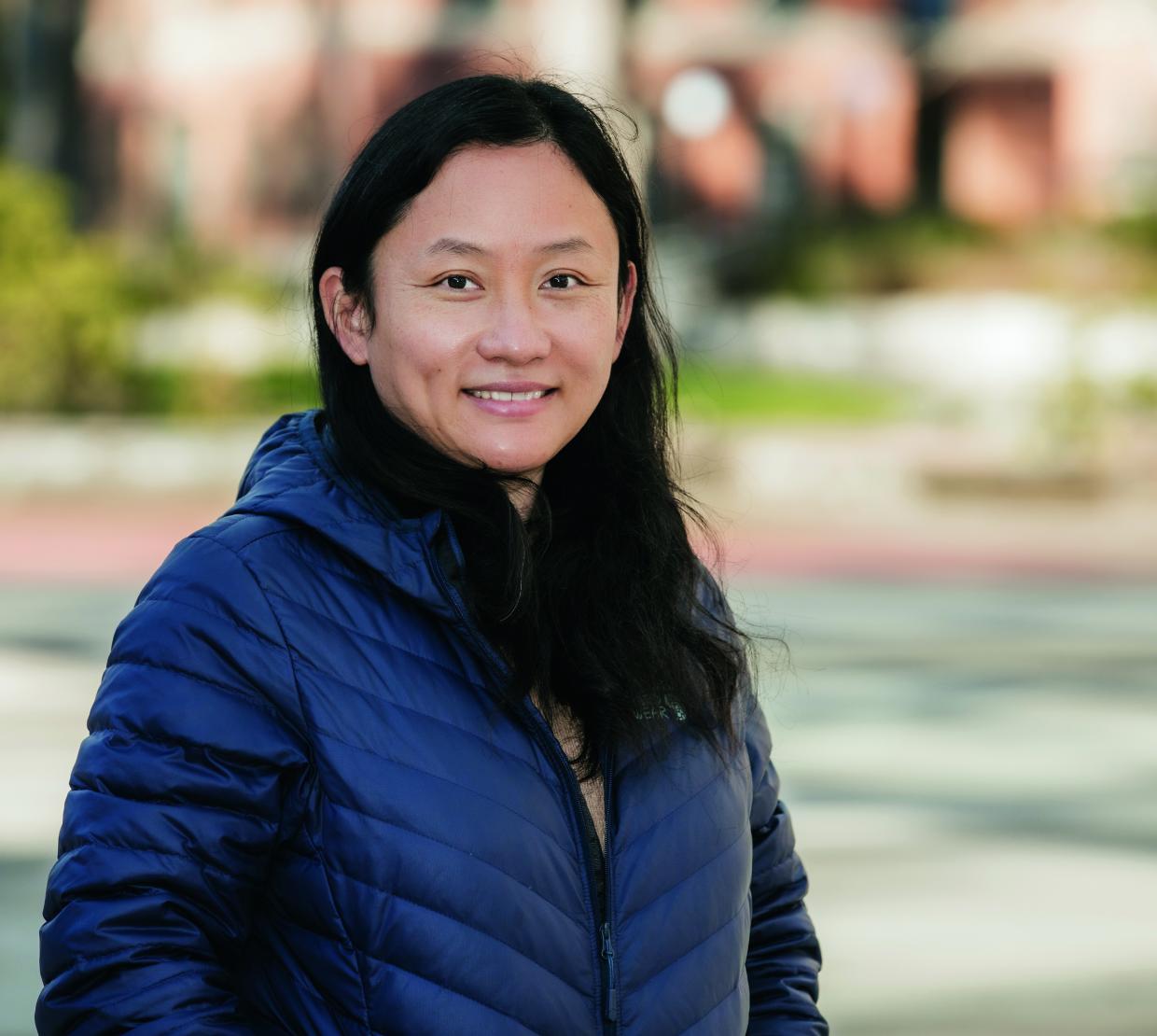
Lan Xue smiles for a headshot wearing a puffer jacket.

College of Science welcomes new Department of Statistics Interim Head

By Tamara Cissna

The College of Science welcomes Lan Xue as Department of Statistics Interim Head, effective January 1, 2024.

Joining Oregon State University in 2005 after completing her Ph.D. at Michigan State, Xue has served on the faculty of the department since 2005, achieving the rank of Professor in 2018.  

Xue’s research focuses broadly on non-parametric and semi-parametric methods, methods for longitudinal data analysis, and measurement error models. She was elected a member of the International Statistical Institute in 2007.

She has secured significant research funding, garnering over $2.3 million from the NIH as the co-PI for statistical methods related to wearable device data, a $100K NSF grant to lead a study on non- and semi-parametric models, a College of Science SciRIS award, and other grants.

Xue’s contributions to the department and to the profession include service as Assistant Chair of the Department of Statistics and leadership of the American Statistical Association Oregon Chapter as well as associate editorships of several journals. She has taught numerous statistical theory classes, developed several new applied courses, and mentored numerous Ph.D. and M.S. students.

“I am confident Xue will lead exceptionally well through this transition. She is an outstanding scholar and exemplifies a strong commitment to both the department and the field of statistics. Her involvement in mentoring students further strengthens her qualifications," said Eleanor Feingold, Dean of the College of Science.

Lisa Ganio, who served as department head since 2018, returns to her teaching and research responsibilities.

“Please join me in giving tremendous thanks to Lisa for her significant accomplishments as Head of the Department of Statistics, including leading the growth of the data analytics certificate, growing the faculty, and guiding the department through the pandemic,” Feingold said.

Under Ganio’s leadership, the department oversaw the growth and curricular development of the online data analytics program, graduating 116 M.S. students in the last five years. She supervised the implementation of adaptive courseware and learning assistants in undergraduate statistics courses, the inclusion of undergraduate statistics courses in the statewide common course numbering for transfer students, and the incorporation of statistics courses in OSU’s new Core Education.

She also implemented inclusive practices within the statistics graduate program in areas of scholarship, admissions and student funding. Additionally, she led the hiring of three new tenure-track research faculty and four instructional faculty and oversaw the development of the new department website.

Xue affirmed the strengths of the statistics department, emphasizing its wide-reaching service through the Survey Research Center, interdisciplinary partnerships, and dynamic faculty with diverse research interests in growing fields, for example, survey sampling, genomics and emerging data science areas.

Xue's research focuses on addressing methods for handling increasingly complex data. Traditional linear models are not well-suited for them, she explained, so there's a need to develop non-linear or non-parametric methods for interpreting the data and unlocking benefits.

In her recent research focus, Xue delves into functional data, which refers to information continuously connected over time and observed as curves. Common examples include health data from devices like Apple Watch or Fitbit, which capture physical movement, activity and heart rate. The challenge lies in inherent measurement errors in these devices, which provide only a partial representation of accurate physical activity.

"The question we aim to address is how to handle these measurement errors, ensuring that we can still derive a valid, reasonable and efficient inference based on the data, even when we are aware that the data are contaminated with measurement errors,” Xue said.

The relevance and promise of the research keep things interesting for her.

“We are very excited about working with students to develop new methods with practical applications, especially in health studies where data from volunteers offer real-world scenarios. It's thrilling to see how these methods can be useful in analyzing diverse exercise patterns and physical activity in the population,” Xue said.  

The significant increase in data opens huge opportunities to benefit society, she explained, and she anticipates the College of Science will play an increasingly impactful role.

Manuela Huso in a blue shirt in front of green bushes.

Wildlife conservation: Devising statistical tools anyone can use

By Hannah Ashton

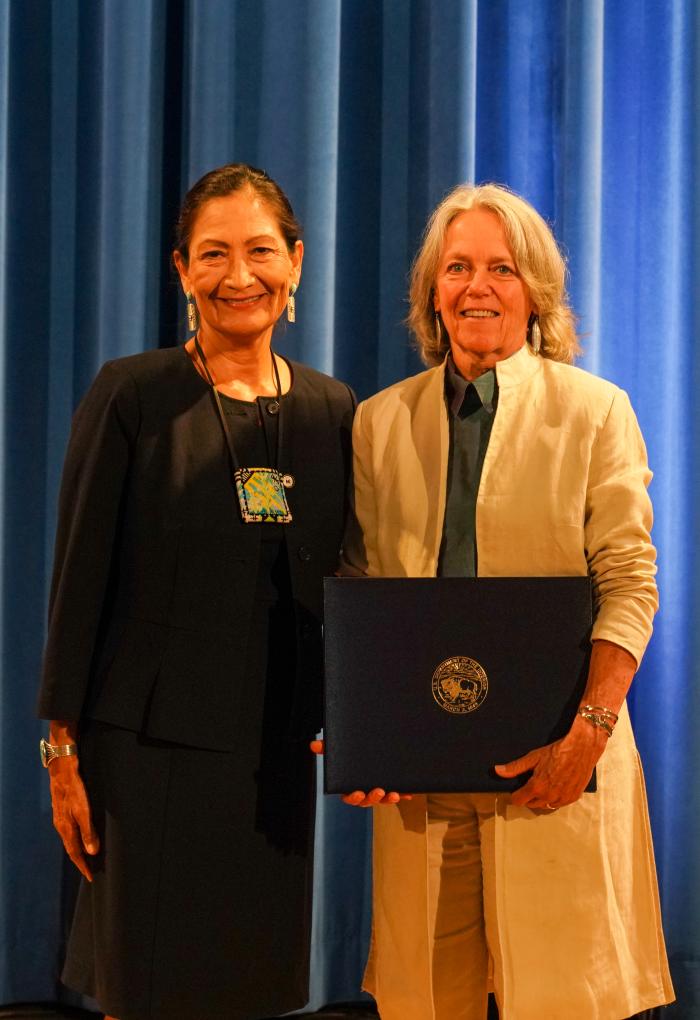
Research statistician emerita and alumna Manuela Huso (M.S., 88’) received the highest honorary recognition an employee can receive within the U.S. Department of the Interior.

She awarded the Distinguished Service Award last fall for her “significant and highly impactful advancements in biological statistics and wildlife conservation ecology.”

Huso led the creation of statistically robust estimators of wildlife fatalities associated with wind-energy development while accounting for uncertainty in how impacts of turbine collisions are monitored.

To make these tools accessible to everyone, she put the software into packages for public use. Those programs, GenEst and Evidence of Absence, are now often required by the U.S. Fish and Wildlife Service as part of their permitting process for incidental take of wildlife at wind-energy facilities.

“It feels really good that I’ve been able to provide something that can be used by a lot of people. Whether you’re in a rich country or poor, it’s still accessible. And you don’t have to be a statistician,” she said. “It’s not a black box. That’s very important to my philosophy that whatever we do, anybody can look at the code and see what we’ve done and modify it for their own purposes.”

Huso’s passion for creating useful tools for scientists and industry started long before her work for the U.S. Geological Survey.

‘Statistically fascinating’

After graduating from Whitman College in Walla Walla, Washington, with a B.A. in Biology in 1978, Huso joined the Peace Corps.

Working as a forestry volunteer in Burkina Faso, located in West Africa, her experience was “life-changing.”

“There were incredible highs and pretty deep lows. It was an amazing opportunity to be in a part of the world and live a lifestyle that I would not otherwise have had a chance to do and work with people who were dedicated to their homes and doing the right thing for their place in the world,” she said.

During her free time, she started to think about opportunities that would combine her interests in mathematics and biology.

After the Peace Corps, she attended the University of Oregon and received her master’s in theoretical ecology, which she thought was the perfect fit. However, after entering the job market she realized her skills in statistics were worth more.

Oregon State Professor of statistics Fred Ramsey (now Emeritus) took Huso on as a student and she graduated in 1988 with a master’s in statistics. He asked her to do a Ph.D. but she declined, wanting to work in the field before making a long-term commitment.

“I went off and took a job with Oregon State in the Forest Science Department working on an acid rain project funded by the EPA,” she said. “And there I discovered that I really did like working in statistics. It was a lot of fun.”

Two women in professional attire in front of a blue background.

Manuela Huso accepting the Distinguished Service Award with the U.S. Department of the Interior Secretary Deb Haaland.

At the time, her dream job was a consulting statistician position in the College of Forestry. This role worked with students and faculty on a wide range of statistical questions from experimental design to analysis and even teaching.

When the position became available, she applied but the job was offered to Lisa Ganio, current Department of Statistics head. A few months later Huso found out Ganio was taking on a new role, and the consultant position was open again. She applied and remained in the role for 15 years.

Ganio and Huso ended up working together on a number of projects, and even co-taught a graduate statistics course for non-statistics majors.

During that time, a fortuitous encounter with a graduate student in Forest Science propelled Huso down the path of wind power and its effects on wildlife.

“I realized there was a big opening there for somebody with a statistics background to help them understand how to best estimate what the mortality was at wind power facilities using rigorous statistical tools because what they were using before was pretty ad hoc,” she said.

In 2011, Huso published a paper suggesting a statistical answer to mortality questions. Simultaneously, the Corvallis USGS office opened a research statistician position focused on wind power and wildlife and she was offered the job.

The idea for Evidence of Absence came during conversations with U.S. Fish and Wildlife. Huso worked with coauthor Jessica Kenyon (M.S. ’12), another Oregon State graduate, and David Dail, a former statistics Ph.D. student.

“I pointed out that when they go out and search for bats or birds, particularly rare ones, they didn’t have any tools to help them interpret what it meant when they found none,” Huso said. “If you have a high probability of finding something, like 90%, and you don’t find anything, you can say maybe you missed one or two, but you didn’t miss 100.”

The answer gets more difficult with a lower detection probability. If the probability of finding something is 1/10, then it would be easy to miss 10, or even 20. And when you are talking about a rare species those losses matter.

“It’s just so statistically fascinating. There are so many pieces to it and it’s so easy to think about it all the time, to think about where we can improve and what components we have missed.”

The program Huso helped design can tell government agencies and industry the probability of mortality rates based on the probability of detection. This helps them decide if mortality rates are too high for the successful management of any given species.

Her next goal was to develop statistical tools for people trying to estimate impacts, whether that was how many birds are killed at one facility, comparing across different facilities to find patterns in regions or habitat types, or testing methods for reducing mortalities. The result was GenEst.

Huso acknowledges GenEst was a team effort from the start. “I don’t want to take credit for the actual statistics and the coding of this. That was all done by Dan Dalthorp, a statistician with the USGS.” Jeff Mintz, an Oregon State statistics graduate, was also a coauthor on the project, and Lisa Madsen, professor of statistics, collaborated as well.

Beyond software creation, her work with USGS also involves experimental design. Her team takes methods that companies have proposed to reduce mortality rates and sets up experiments to test them.

After spending more than a decade working on wind power and avian species, Huso is still captivated.

“It’s just so statistically fascinating,” she said. “There are so many pieces to it and it’s so easy to think about it all the time, to think about where we can improve and what components we have missed.”

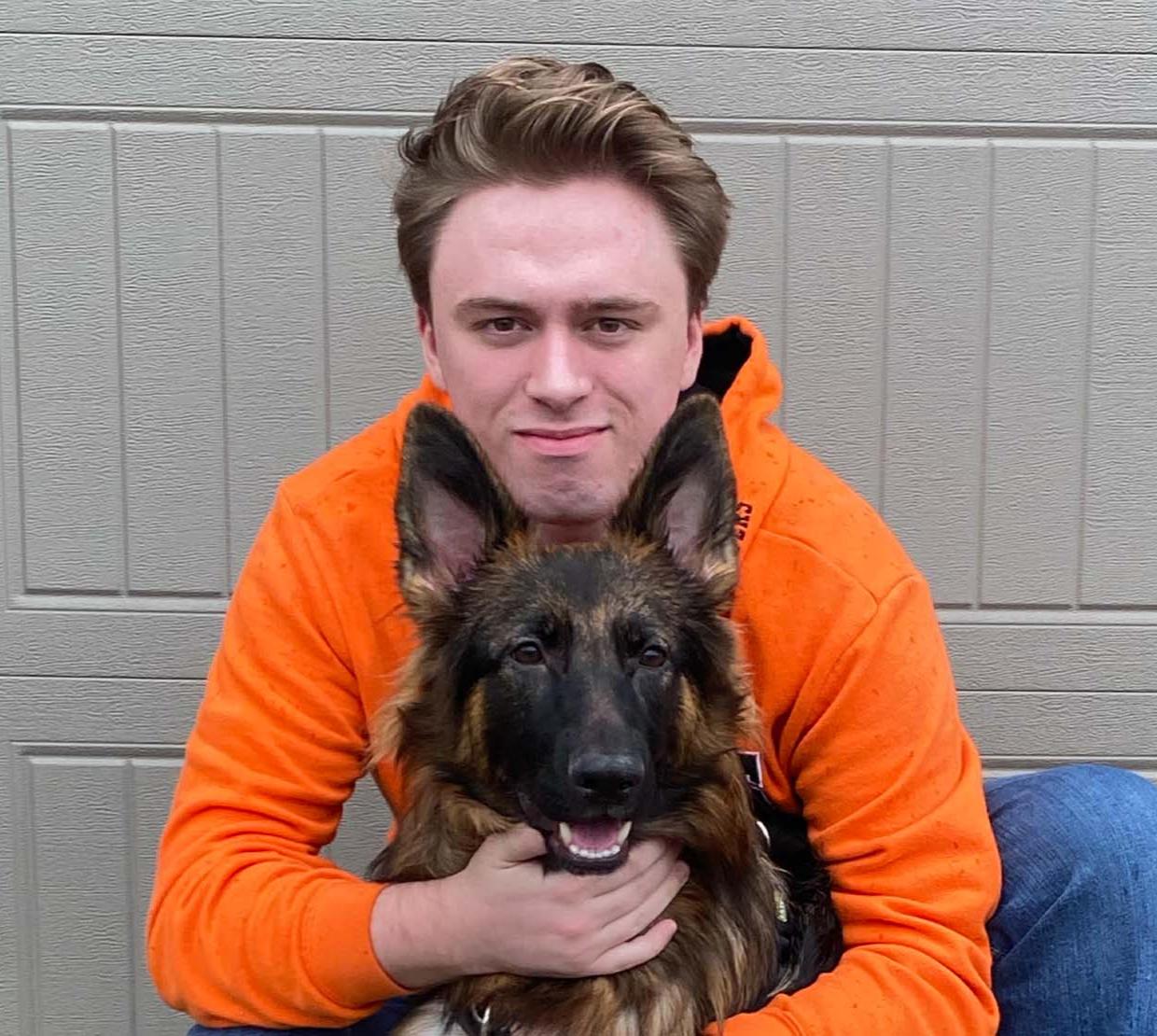
A young man hugging a German shepherd dog.

Math alumnus fast-tracks degree to actuarial success

By Grace Peterman

A good job and a big yard keep James Hansen and his canine pal happy.

James Hansen (Mathematics ’20, Actuarial Science Minor) was in 8th grade when his aunt foretold his future career. “She said, ‘you’re good at math, you should be an actuary,’” he recalls. “I was like, ‘Oh, what’s that?’”

Less than a decade later, Hansen has found a niche as a full-time Actuarial Analyst at GovInvest, aiding government agencies in their fiscal planning. He credits his success to determination and decisiveness: “I stuck to the schedule and hammered it out,” he said of getting an education.

When Hansen entered Oregon State, he was already well on his way to achieving that goal. He earned an associate’s degree at Clackamas Community College while still in high school, taking over 100 credits of general education and advanced math coursework.

Oregon State welcomes and encourages students to earn college credit prior to enrollment and accepts credit earned through a wide variety of options. Our Degree Partnership Program also allows students to enroll at both OSU and any Oregon community college concurrently, minimizing overall college costs and allowing for more flexibility in course scheduling.

For Hansen, this early investment of time and energy allowed him to jump into 300-400 level courses when he came to Oregon State, finishing his B.S. in just two years.

Plugging in to actuarial science

Hansen attended Canby High School outside Portland, where his soccer coach happened to be friends with Oregon State’s Actuary in Residence Manny Hur. Hansen was able to meet Hur for a job shadow and career counseling session. They chatted for a couple hours, “and that was basically the decision right there,” he said of choosing Oregon State.

Once at the College, Hansen found his instructors helpful, accommodating and inspiring — even when it came to graduating during the pandemic.

Mina Ossiander was just very real with it,” Hansen said of the Professor of Mathematics’s probability courses. “I loved her. I think that there are some professors out there that act like their course was your whole life, but Mina was not that person.” When classes went remote due to COVID, Hansen said Ossiander was respectful of students’ changing needs and challenges in a time of unprecedented instability.

He was also impressed by how Assistant Professor of Statistics James Molyneux handled the transition to remote coursework. “I had him the only term I took online, he was amazing, again just super down to earth, really good speaker, great at teaching, and encouraged conversation between students," Hansen said. “I’d say that online class [Statistics 413] was the best-set-up of any class I took.”

Finishing his degree in two years kept Hansen busy, and biking to class allowed him to build exercise into his schedule. Corvallis and Oregon State are ranked nationally for bike-friendliness, and 30% of Oregon State students opt to bike to campus.

Finding a niche in a small startup

Through participation in the College’s Actuarial Science Club, Hansen found an internship with a large health insurance company right after graduation. While the predictability of working there was convenient, Hansen likes the flexibility and variety of his current position. At software startup GovInvest, “I get to have a lot more impact and say than I would at a larger company,” he said.

Based in Portland, GovInvest advises public institutions and private companies in their pension and benefits planning. “It’s very niche,” said Hansen of his work helping government agencies interface with their employees. “Say a firefighter wants a health benefit when they retire. The city’s not going to know right off the top of their head, ‘oh this is the amount of money we need to have saved up by the time they retire to meet that liability.’ Our work makes it so that there can be a conversation there without just guessing. It provides certainty in very uncertain circumstances.”

Hansen said he likes the non-traditional nature of his work, and the leadership opportunities afforded by running with a small team. “It’s a rewarding accomplishment to see how everything kind of lines up in the end,” he said.

Embracing stability and commitment

What Hansen finds most fulfilling about his work is the freedom it gives him to live a life he loves. Hansen and his wife met in high school, got married in college and recently bought a house together in Molalla. Having their own space with a yard for their dog is a dream that was worth the time and hard work it took to make it happen.

One of the resources that was integral to their success as a young couple in college was the Supplemental Nutrition Assistance Program (SNAP) offered through the Department of Human Services. Hansen said the decision to apply was a game-changer: “we were living off, like, ramen before,” he joked. “And then suddenly we could afford real food!” He encourages students who qualify to take advantage of this program. Assistance with eligibility questions can be found through the OSU Human Services Resource Center.

All along, finding the path to success for Hansen took trust, discipline and a series of decisions — from taking those advanced math classes back in high school, to getting married at 19 and beyond. Hansen said a love for certainty and stability have motivated him along the way.

Yet sometimes college students get stuck in trying to make decisions that will bring them the perfect future they picture — especially when choosing a major. Hansen said getting a degree is sometimes less about making the perfect choice and “more about showing you can just commit to finishing something.” For students wavering between two great options, “just pick something,” he said. “Make a decision, and if that decision turns out not to be the right one, then switch it up.”

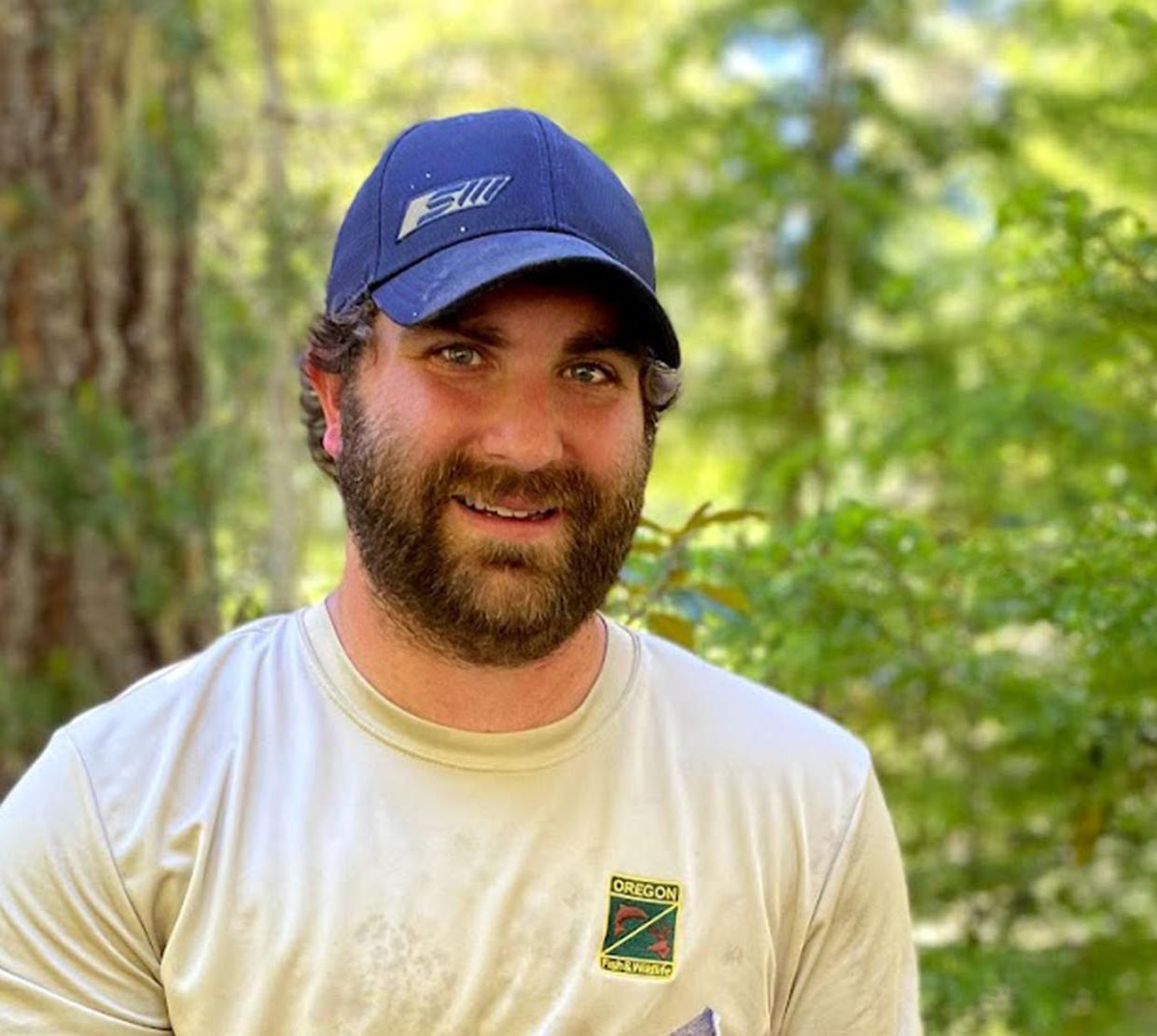
A man with a beard in the forest.

Brent Wolf takes wildlife research to the next level with Data Analytics graduate program

By Grace Peterman

Data analytics empowers Brent Wolf to make a difference with wildlife.

A wildlife research biologist with the Oregon Department of Fish and Wildlife (ODFW), Brent Wolf couldn't be happier with the career path he's found. “Coming to Oregon was a great choice, I love living out here,” he said. Wolf is also a graduate student in the College of Science’s two-year online Graduate Program in Data Analytics, a flexible program that allows him to continue working the job he loves while getting his degree. He was drawn to the program as a way to get a leg up in his current role, and so far it has paid off. “Going for the M.S. in data analytics has opened some doors for me that were previously closed,” he said.
Finding fulfillment with wildlife research

Wolf mapped out his career path early. “I grew up watching Steve Irwin and BBC nature shows, plus I enjoy being able to be outside and solve problems. Wildlife is just a good fit for all of that,” Wolf said. As a research biologist, he collects and analyzes data on a variety of Oregon species, including black-tailed deer, Columbian white-tailed deer and the American marten.

After graduating from the Florida Institute of Technology with a B.S. in ecology and marine biology, Wolf encountered some of the drawbacks of working with wildlife: low pay and frequent moves between seasonal jobs. “ODFW is the first spot where I actually have a permanent job with upward mobility,” he said.

To make a bigger impact at ODFW, Wolf decided to go back to school for data analytics. Oregon State’s award-winning Ecampus program “jumped out because it was an M.S. and offered some courses that I really wanted to take,” he said. Unlike most online learning opportunities, Ecampus courses are taught by the same faculty who teach in-person, giving students access to experienced, committed professionals in every field.
“I really enjoyed Professor Lan Xue, especially her survival statistics course,” said Wolf. “It’s really hard to get good at something like that without some instruction.”

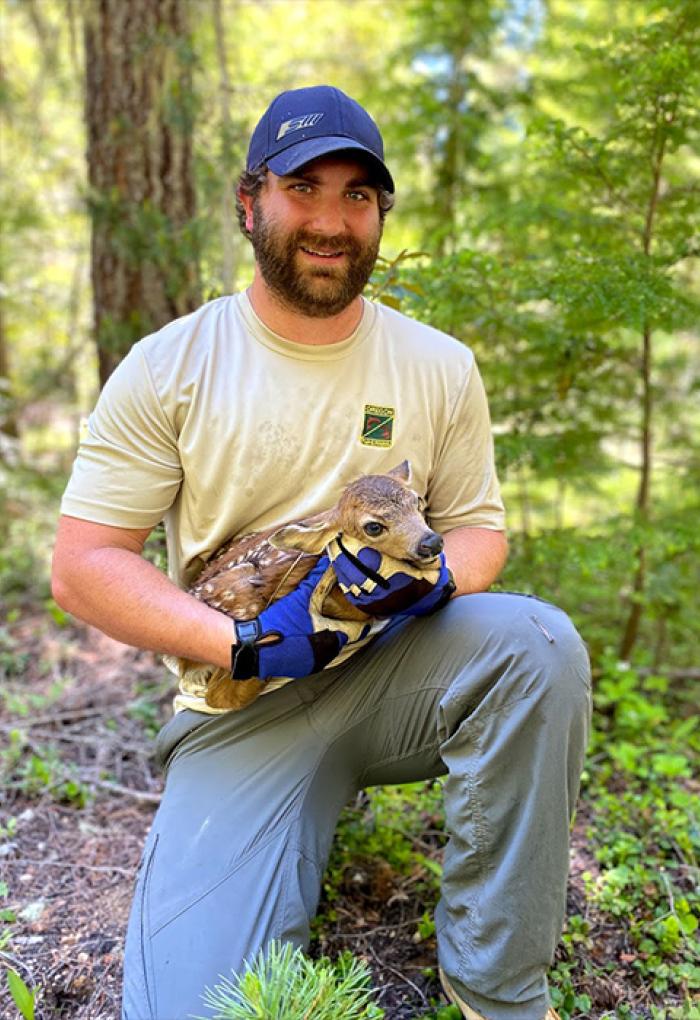
A man kneeling in the forest, holding a fawn or baby deer.

Wolf studies survival of black-tailed and Columbian white-tailed fawns in Douglas county.

Distilling data for strong decision-making

As our ability to collect information explodes, having people who know how to process and interpret data is more important than ever. From environmental solutions and healthcare to engineering and product development, being able to collect and translate data pays off across the board.

Research biologists like Wolf work both in the field and at computers, reviewing existing studies on the species and deciding what model will allow them to best address and communicate what they need to know next.

“I really like being able to provide wildlife managers with study results that can help them make the best decisions possible,” said Wolf of his work at ODFW. “Making sure that the science input that they get is well-done and answers the questions they need is pretty important and satisfying.”

Centrally located in Roseburg, OR, Wolf works on a wide array of studies. One project is focused on deer fawn survival, looking at the first six months of life when fawns are most vulnerable to predators. He also works in the Archie Creek fire area in southwest Oregon, monitoring what species are still in the burned area, what comes back, and how long it takes for them to come back. Finally, a camera study just north of Crater Lake monitors occupancy of martens and other mid-sized carnivores.

Translating data into action

Managing wildlife involves balancing the needs of many different stakeholders. All species are affected to some degree by human activity, natural disasters and climate change, and data analytics is crucial to understanding those effects and how to mitigate them. Oregon State’s Ecampus program trains students to translate data into terms the public can understand.

“We need to be able to effectively communicate what we are finding, why it is important, and why people should care,” Wolf said.

A love for animals and the scientific process motivates Wolf to work towards a better world. “I think that we should always be pushing forward with new studies to answer new questions,” he said.
Audrey Dickinson on a mountain top

Data analytics alumna: OSU has ‘all the tools’ for student success

By Grace Peterman

After earning her bachelor's in chemical engineering, Audrey Dickinson returned to Oregon State for a master's in data analytics that would allow her to have a greater impact in her career.

“If you say some vaccine is x percent effective, what does that really mean?” asked Audrey Dickinson (M.S. Data Analytics ’21). The Oregon State alumna went back to school to learn how to answer just such important questions.

Dickinson was working as an engineer at HP in Corvallis when she realized that a better understanding of data would make her work even more impactful. The value of data for industry really stood out to her, she said. Oregon State’s two-year online Graduate Program in Data Analytics gave her the flexibility to earn her credentials while still working full-time at HP.

“There are a lot of great professors and the coursework was very valuable. Right away, I applied things that I was learning to my real-life job,” she said. Professor Charlotte Wickham in the statistics department was particularly engaging: “she has a data visualization course which has helped me immensely in communicating data analytics,” said Dickinson.
Ensuring ethical use of data

Since graduating from the Data Analytics program, Dickinson traded her engineering role for that of a Driver Analyst at HP, looking at key data points driving business metrics. In today’s unpredictable world, the value of professionals who can accurately interpret data and forecast results is greater than ever.

Data analytics is “very powerful,” Dickinson said, but understanding its limitations is also important. Equally vital are the ethical use of data and integrity in how we convey supposedly cut-and-dry scientific figures to a public not initiated into the scientific process.

“We talk a bit about that in our data science courses,” Dickinson said. “If you report something in a very scientific manner, how is that interpreted by the general public?” Although science is often thought of as objective, how we communicate it and present data has a big effect on how it is perceived.

“If someone comes to you and they say, ‘I can predict this with a certain amount of accuracy,’ what does that truly mean? And how much confidence can you really stake in their results? I think that’s powerful to know and understand,” she said.

Finding identity in STEM

Before delving into data analytics for her master’s, Dickinson earned her B.S. in chemical engineering at Oregon State. Although a minority as a woman in many of her classes, she “always had a lot of support” in her program, finding community in Oregon State’s engineering sorority Phi Sigma Rho and inspiration in the excellent mentoring and involvement of professors like Willie E. 'Skip' Rochefort. “He’s a very unique person,” she said, always participating in events like Discovery Days to get students more involved.

Dickinson knows the value of getting hands-on with math and science in early education, because her mom was a middle-school math teacher growing up. STEM was accessible and inviting to Dickinson from an early age, but she acknowledges that is not the case for students who may struggle with math and how to apply it practically.

“I think math and science can be this ladder-esque study, where if you feel like you struggle with it at a certain point in your life, and then you progress, you may never feel like you’re confident or you’re good at it.” Students can have bias in how they perceive their own skills, she said, due to past experiences.

OSU alumna Audrey Dickinson

Dickinson found that OSU's student resources opened up a world of possibilities for community building and career enrichment.

A solid support system can go a long way to rewriting the story for students who struggle. "It is very important to find mentors and people that you connect with to talk to about your career, the decisions you’re making, what you want to do and how to achieve that,” Dickinson said.

For women in STEM, “there’s still not equal representation,” she said, and getting plugged into a community is particularly vital. Part of Dickinson’s role at HP includes mentoring interns and new hires. These programs are a “great tool for building relationships” and making sure team members from all backgrounds are supported and welcomed.

Mapping her future through Oregon State

Dickinson recently accepted a job transfer at HP to Washington D.C. From central Oregon, she said that leaving the West Coast is bittersweet. Reflecting on her time at Oregon State for both her degrees, “I really found that Corvallis and Oregon State has been a home for me,” she said.

Dickinson’s story is also a reminder of how flexible and interdisciplinary a career in STEM can be. Although initially an engineer, more time on the job brought nuance to her perspective, and she was able to layer Oregon State’s Data Analytics master's on top of her engineering degree to achieve a weightier position at HP.

Sometimes a career path can take unexpected turns, but in the end, “you really do get what you put into things,” she said. “Getting more involved at OSU in my undergrad days really led to some of the internships I ended up doing, and the job I ended up taking.”

Her advice for future students is to take advantage of all the resources Oregon State has to offer. “OSU has all the tools and the people to help students be successful and to really create that community,” she said. “Find the professors that you feel are strongly influential for you, or if you find a group interesting, get to know them!”

Subscribe to Career Outcomes