Career Outcomes

Career Outcomes

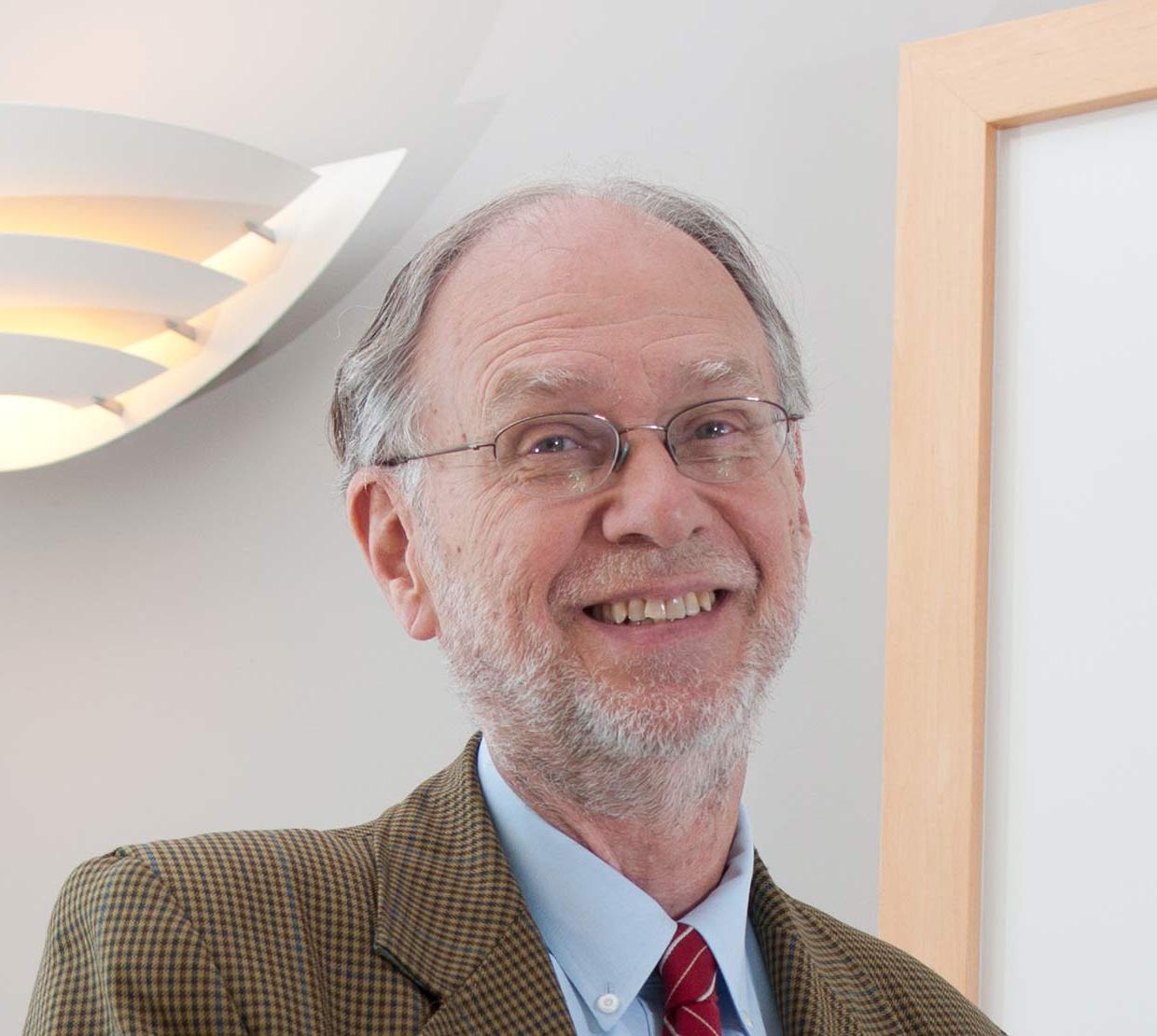
Ben Lyons in front of white backdrop

Alumnus highlights important role of statisticians in clinical trials

By Srila Nayak

OSU statistics alumnus Ben Lyons (Ph.D. ’97)

Alumnus Ben Lyons (Ph.D. ’97) has taken his passion for biostatistics far, carving out a very successful career in biotechnology and the pharmaceutical industry. Based in San Francisco, Lyons is the global biometrics team leader at Genentech, a leading research-driven biotechnology rm. He is involved in designing clinical development programs and directing biometrics teams in their analysis.

A native of Oregon, Lyons developed an interest in mathematics in high school. He joined the OSU statistics department after graduating with a degree in mathematics and economics from Reed College, Portland.

“I had the opportunity to work on a variety of interesting projects from many departments including forestry, toxicology and food science. Working with these scientists was the best.”

Lyons’ rewarding professional journey began with many memorable statistics classes, all of “which turned out to be interesting and useful.” “Besides experimental design and linear models, the optimization classes we had then were great, as was the survival analysis class,” Lyons recalled.

He admits that the most enjoyable course was the one in statistical consulting. This comes as no surprise as the consulting practicum has proven highly meaningful for generations of statistics students, remaining a cornerstone of their graduate education.

“I had the opportunity to work on a variety of interesting projects from many departments including forestry, toxicology and food science. Working with these scientists was the best,” Lyons reminisced.

Inspiring classes in linear models and experimental designs taught by Dawn Peters led Lyons to write his doctoral thesis on linear models and higher order asymptotics under Peters’ guidance.

The lessons absorbed in his statistics classes have stuck with Lyons. He says the consulting course gave him ample exposure to communicating with scientists in order to understand their research problems. “In the long run, though the advanced theory and linear models courses turned out to be the most useful since you can apply the concepts to all sorts of data types,” observed Lyons.

“Clinical trials are some of the most important, and certainly the most expensive, experiments around, and since it is regulated, you can have many interesting and high stakes statistical discussions with health authorities.”

After OSU, Lyons built an impressive career in medical research, biotechnology and clinical trials research and design. He was a postdoctoral fellow at the Southwest Oncology Group in Seattle and then moved on to become a senior statistician at Johnson and Johnson where he continued his work on statistical analyses for clinical trials. After five years, Lyons joined Genentech in 2004 where he rapidly ascended the corporate ladder with leadership positions as associate director and director of biostatistics.

Before a medicine is approved for use, it has to undergo clinical trials to test its efficacy and safety, a process in which statisticians play a signi cant role. Lyons chose a career in clinical trials because he preferred working with experimental rather than observational data, not to mention the fact that it is highly rewarding for a statistician to work on clinical trials.

“Clinical trials are some of the most important, and certainly the most expensive, experiments around, and since it is regulated, you can have many interesting and high stakes statistical discussions with health authorities,” Lyons explained.

At Genentech and other organizations, Lyons has primarily worked on pivotal late-stage clinical trials. His career highlights are getting drugs approved as quickly and easily as possible. “It can be quite challenging, and I have had the opportunity to work on many interesting trials,” said Lyons.

In his current position at Genentech, Lyons also oversees data management, programming and patient-centered outcomes for a large program. “These are broader responsibilities than statistics which I enjoy at this point in my career,” added Lyons.

According to Lyons, statistics is valuable in and of itself and also in synergy with other disciplines. With the massive deluge of data, statisticians today possess the ability to make better sense of it, “especially if we can work with other scientists.”

Lyons is married and a father of twin nine-year-old girls, Catie and Sally.
Michael Waterman in office space

Going the distance: From Coos County and Corvallis to L.A. and the world

By Debbie Farris

Alumnus Michael Waterman (’64, ’66)

Alumnus Michael Waterman (’64, ’66) has traveled quite a distance to get where he is. From humble beginnings on an isolated livestock ranch in southern Oregon in the 1950s to becoming an internationally celebrated mathematician and biologist at the University of Southern California (USC), Waterman has shattered all expectations.

“For me, OSU was the doorway to the rest of the world,” said Waterman, whose mother was committed to the idea of her children going to college.

Reflecting on his rural childhood, he recalls thinking, “You have no idea what’s out there. It’s very hard to imagine beyond what you see.”

Waterman struggled to see a clear career path forward, but pursued mathematics which proved to be a fortuitous jumping off point in his young life.

The values he acquired growing up in the Pacific Northwest—a respect for living off the land, freedom from outside authority, and a slight tendency to go against the grain and reach beyond the imagination—served him well.

Michael Waterman sitting outside office space

Alumnus Michael Waterman, Professor of Biological Sciences, Computer Science and Mathematics at University of Southern California

Waterman earned bachelor’s and master’s degrees in mathematics at Oregon State and a Ph.D. in statistics and probability at Michigan State University, which propelled him to become a founder and leader of computational biology and a renowned human genome theorist.

Waterman holds joint academic appointments in the Departments of Biological Sciences, Mathematics, and Computer Science at USC and an appointment at Fudan University in Shanghai. Previously, Waterman held positions at Los Alamos National Laboratory and Idaho State University.

Waterman’s work in the 1980s formed a cornerstone for many DNA mapping and sequencing projects, including the Human Genome Project. His work continues to play an important role in DNA sequencing. He is member of both the U.S. National Academy of Sciences and of Engineering, the American Academy of Arts and Sciences, and both the French and Chinese Academies of Sciences.

In recent years, Waterman reconnected with mathematicians at OSU and returned to present the Mathematics Department’s Milne Lectures in Mathematics, Statistics, and Computer Science. He presented a talk on the mathematical, statistical and computational challenges of sequencing DNA and the historical developments contributing to new methods that are accelerating the speed of DNA sequencing.

Waterman’s work is focused on applying mathematics, statistics, and computer science techniques to various problems in molecular biology. His work in the 1980s formed one of the theoretical cornerstones for many DNA mapping and sequencing projects, including the Human Genome Project. He also helped develop some of the most widely used tools in the field, including new technologies to solve basic problems. His work continues to play an important role in DNA sequencing.

Waterman has acquired an international reputation evident by his outstanding scientific achievements. He is member of the U.S. National Academy of Sciences, the U.S. National Academy of Engineering, the American Academy of Arts and Sciences, the French Academy of Sciences and the Chinese Academy of Sciences. He received a Gairdner Foundation International Award in Biomedical Sciences and the Dan David Future Prize in Bioinformatics. He is also founding editor of the Journal of Computational Biology.

Waterman has pondered the disparity between the two worlds he navigated between: his rural childhood in a ranching community that was relatively under-populated and undeveloped and the private university experience in the nation’s second-largest city as a globally renowned scientist at the convergence of math and biology.

Reflecting on his own journey, Waterman has considered ways he might make a difference and impact future generations of scientists, especially first generation students from rural, less privileged communities.

“I believe that those who didn’t grow up with privilege should have a chance too, said Waterman. “I am pleased to see OSU is still accepting kids from a variety of backgrounds. That is not very common to see these days.”

This notion inspired Waterman to establish an endowed scholarship for science students—the second largest in the College’s history. Waterman’s legacy gift, the Michael and Tracey Waterman Scholarship, has the ability to transform students’ lives in a deep, profound way. He is particularly interested in supporting first-generation students, a population often with low success rates as they struggle to transition academically and culturally while struggling with financial need.

Waterman’s legacy gift goes a long way to support science students, transforming their lives forever in a deep and profound way. Noting the tremendous difficulty public universities have contracting public support and funding today, Waterman heartily supports OSU’s mission, rooted in the land-grant tradition of accessible education, problem-solving research and outreach that serves communities statewide.

Philanthropic support at public institutions is growing more and more vital every year. This is especially true in Oregon, which cut per-student spending in higher education more than any other state in the country except one between 2000 and 2014, according to a 2015 study by the Urban Institute.

Subscribe to Career Outcomes