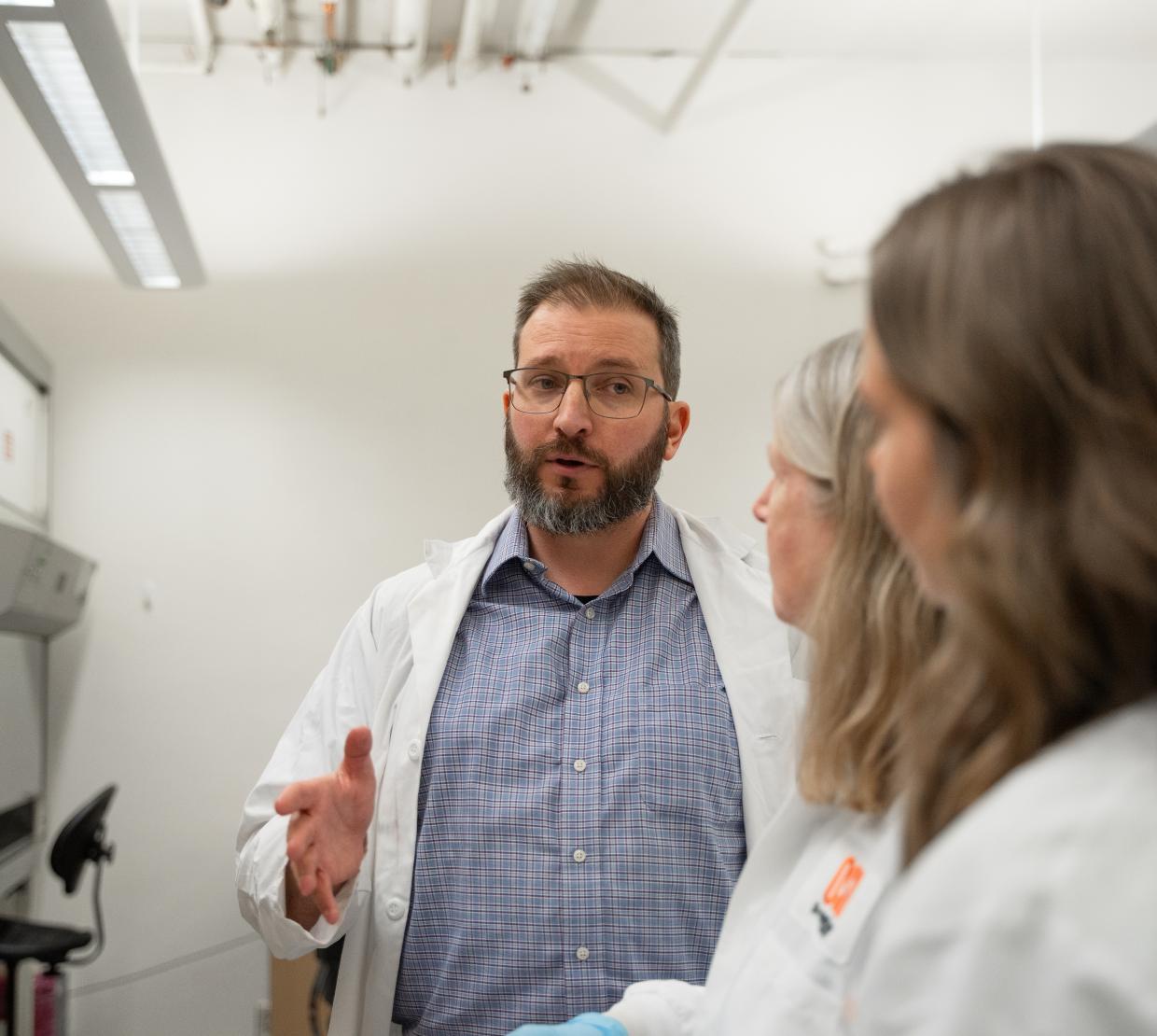
A bearded man wearing glasses and a button-up shirt beneath a lab coat speaks to two other scientists wearing lab coats toward the camera.

The science behind your gut: Oregon State researcher pushes microbiome discoveries

By Elana Roldan

Right now, your body is listening to your gut.

Chemical telephone lines are hot with messages racing to the body’s systems, but not every caller is a human cell. In fact, many of the most influential signals in your body may be coming from organisms you never see.

“The gut is a really amazing place in our body,” said Thomas Sharpton, professor in the microbiology and statistics departments, “because it is where we engage in inter-kingdom communication with the natural world.”

Trillions of microbes make a home in the intestines, and they’re not quiet passengers. This microbiome has a profound influence on our health and how we interact with our environment. Two identical people could experience the same medication or diet in unique ways depending on what species they house.

“All these major systems in our body have open ears and open minds for the messages that the gut microbiome has to say,” Sharpton (Biochemistry & Biophysics ‘03) said.

Sharpton leads interdisciplinary research to pick apart the microbiome’s impact. His work lays the path for future human health innovations that embrace the relationship with our microscopic roommates. He also helped build the Oregon State University Microbiome Initiative (OMBI), a campus-wide effort that connects researchers studying microbial communities in fields ranging from human health to agriculture and ocean science.

How gut microbes shape health

A major theme across Sharpton’s research is that microbes don’t just correlate with health. They determine how organisms — like us — experience their chemical environment.

“The gut microbiome mediates how we experience our diet, how we experience the drugs we consume and the environmental pollutants that we’re exposed to,” he said.

That principle guides the lab’s experiments on the gut-brain axis, neurodegenerative disease, behavior and cognition.

To test causality at scale, he established a unique partnership between his team’s computational skills and the zebrafish research community at Oregon State, particularly the Sinnhuber Aquatic Research Laboratory. Human microbiomes vary widely, and large, controlled clinical studies are expensive. Zebrafish enable high-replicate tests that isolate microbe-host-environment interactions. In collaboration with OSU colleagues, Sharpton’s group has shown that pollutants can restructure the gut microbiome and alter neurobehavioral development, and that removing the microbiome can flip a chemical’s effect.

A gloved woman wearing a lab coat smiles as she holds up a small tank to the camera with zebrafish swimming inside.

Ruby Scanlon works with zebrafish as an undergraduate research assistant in the Sharpton Lab.

“We studied a pollutant that drives a behavioral alteration and makes a fish hyperactive,” he said. “What happens when you take the microbiome away? All of a sudden, that pollutant makes the fish hypoactive.”

These studies reposition the microbiome as an active biochemical gatekeeper between environment and physiology. They also illuminate why two people with similar genetics and exposures can respond differently to the same diet or medication: their microbial communities and the metabolites they produce are not the same.

Sharpton’s computational work pushes the field beyond cataloging species. By integrating genomic information from gut samples and applying rigorous statistics, his lab seeks out functional signatures linked to health and disease. This shift from taxonomy to function has helped the field home in on mechanisms that are more likely to translate between species and into clinical contexts. Recently Sharpton’s team published a study titled “Modeling the zebrafish gut microbiome’s resistance and sensitivity to climate change and parasite infection” in Frontiers in Microbiomes (July 2025).

Equally important to what questions the team asks is how they answer them. The lab builds and releases open-source software and curated data resources so that others can reproduce analyses, train students and extend the findings.

“We publish everything we produce for free. It holds us accountable and helps others reproduce our results,” Sharpton said.

That openness accelerates discovery in a fast-moving field where methods evolve nearly as quickly as the microbes they study.

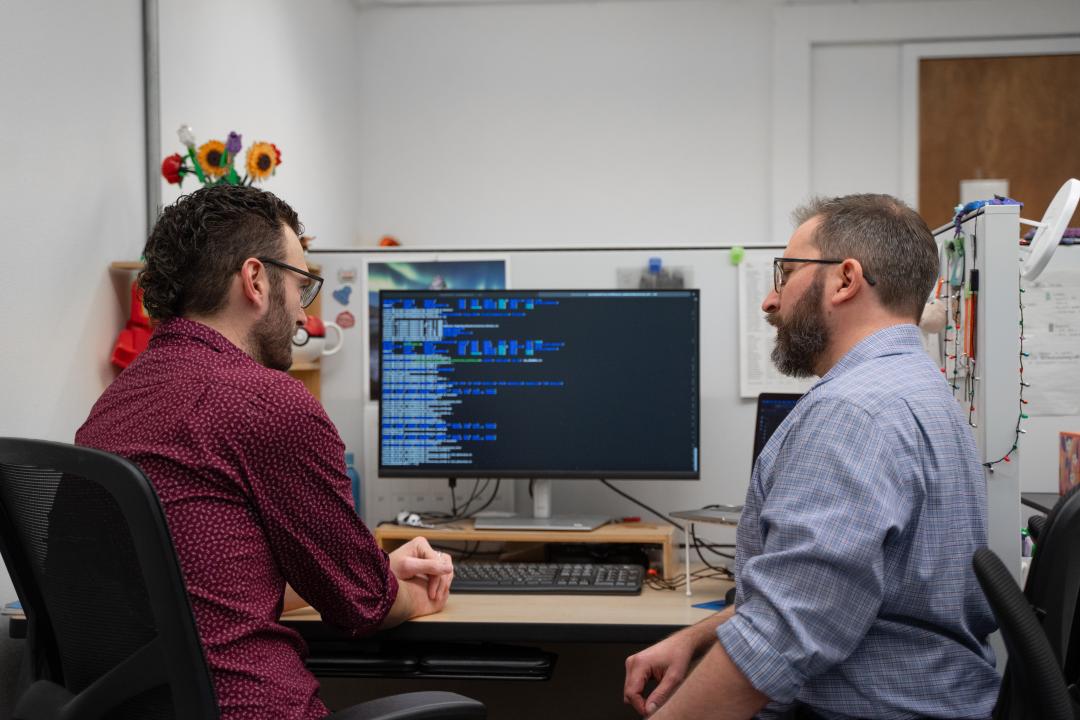
Two men sit at a desk with a monitor covered with code, discussing the information.

Sharpton integrates microbiology and statistics to sift through large datasets and draw correlations between the microbiome and health.

While zebrafish allow for fast, controlled tests, the lab’s standard of evidence requires asking whether those mechanisms translate to mammals and people. Sharpton’s group works across zebrafish, mouse and human systems (with some nonhuman primate studies) to assess findings.

“At the end of the day, we really want our research to matter to people,” he said. “We always try to swing the bat around and determine if what we’re seeing in these model systems is relevant in human systems as well.”

That translational arc is especially crucial in the lab’s gut-brain axis research. What began for Sharpton as skepticism has turned into sustained investigation. Across fish, mice, children and adults, his team and collaborators repeatedly see robust links between the microbiome and behavior or cognition. Those links raise questions for how we might treat cognitive and neurodegenerative disorders in the future.

“Do we have novel opportunities to prevent or treat these diseases that are frankly terrifying to many people?” Sharpton said. “Efforts to manage, manipulate or someday even engineer microbiomes may be a fundamental transformation in our ability to prevent, diagnose and treat chronic diseases.”

The future of microbiome science

With public interest in the microbiome surging, Sharpton is careful to separate promise from hype. “A lot of people think the microbiome is the key contributor to health, and it isn't. But it is an important component alongside other variables,” he said.

Methods are advancing, individual variation is large and proving cause and effect is challenging.

“It’s almost like you’ve got a ball of yarn that’s been tangled into a knot,” he said. “You’re having to pull apart the right pieces at the right time.”

Still, he argues, scientists have a responsibility to explain what’s known, what isn’t and why it matters. “It’s not enough for us to just publish in journals anymore. Our duty to the taxpayer is to communicate the results in a way that people can understand.”
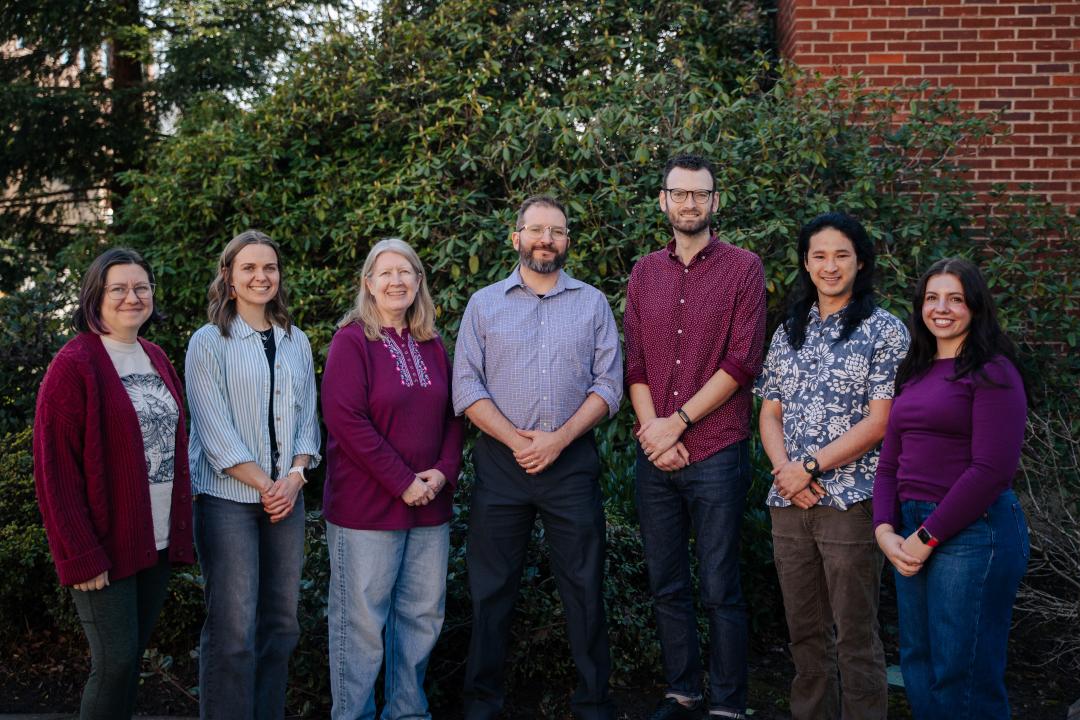
Seven members of the Sharpton Lab stand shoulder-to-shoulder outside in front of a large, green bush, each wearing matching maroon and blue shirts.

The Sharpton Lab's research has paved a path forward in microbiome research and continues to push the bounds of what we know about our symbiotic relationships.

For pioneering contributions that have advanced microbiome science from description to mechanism, Sharpton recently earned the Milton Harris Award in Basic Research and position as the Burgess and Elizabeth Jamieson Chair in Healthspan Research. These honors recognize a body of work that spans high-impact zebrafish experiments, human-relevant translation, openly shared analytical frameworks and a collaborative research ecosystem that has elevated OSU as a hub for microbiome discovery. Reflecting on the Milton Harris Award, Sharpton called it “a milestone. Validation that I’m on the right track.”

The practical stakes of his work are high. If the microbiome helps determine how we process a meal, respond to medication or endure a pollutant, then understanding and, one day, managing these microbial communities could transform treatment for chronic disease.

“What microbiome science is telling us is that we are, in effect, symbiotic organisms,” Sharpton said. “We depend on our microbiome to be healthy.”

To understand human health, we have to listen closely to our gut — and the microbes calling from within.

Learn more about how the small but mighty microscopic world is studied at Oregon State here.