Mathematics

Mathematics

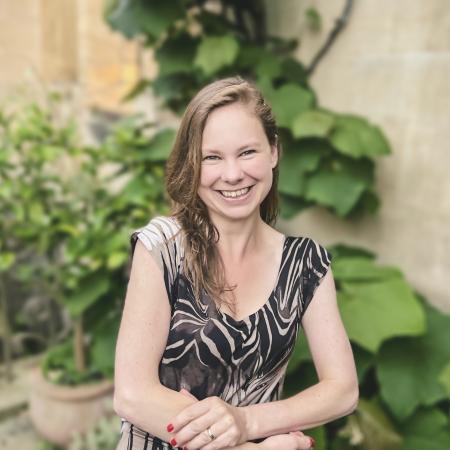
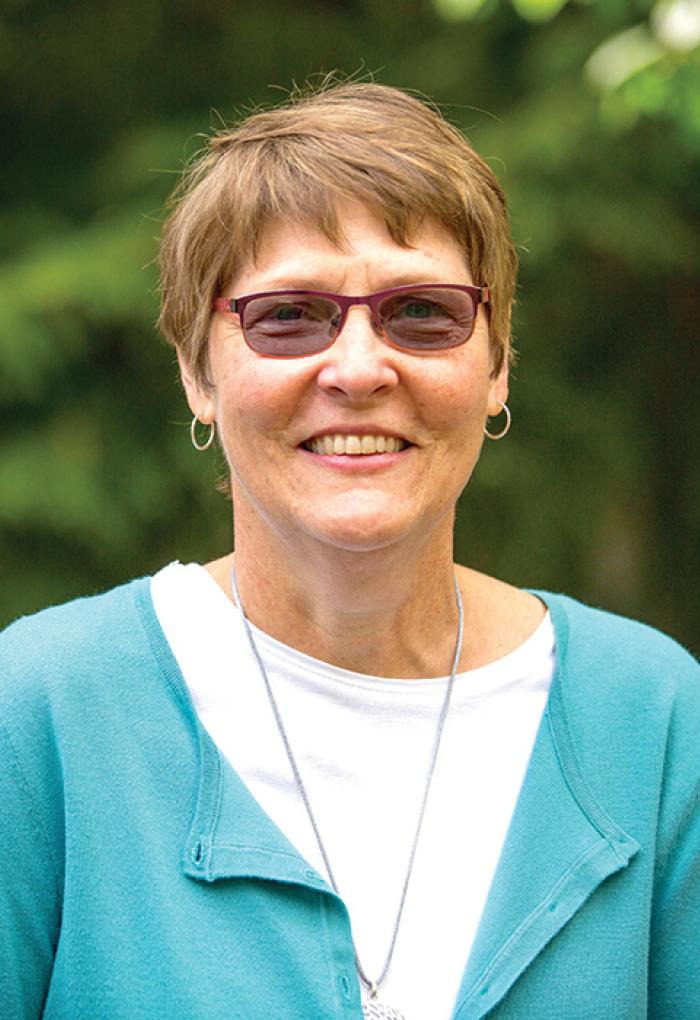
Headshot of Dr. Laura P. Schaposknik: A woman smiling with her hands folded in front of her, sitting in front of a background featuring beige stone walls and green plants.

Lonseth Lecture 2026: 'Geometry of Hidden & Broken Symmetries’

By Arie Henry

The Department of Mathematics invites you to attend the 41st Lonseth Lecture on Thursday, May 28, featuring award-winning guest lecturer Laura P. Schaposnik of the University of Illinois, Chicago. In her lecture, titled "Geometry of Hidden & Broken Symmetries," Schaposnik will break symmetry on purpose to see what drives reality:

Many systems look complicated until we ask what stays the same — at both micro and macro scales. At the micro level, exchangeable interactions and local conservation laws simplify PDEs and networks; at the macro level, these invariances organize families of solutions and predict emergent behavior. Then we’ll break symmetry on purpose to see what drives reality: anisotropy in crystal growth and snowflakes, trust biases that trigger information cascades, and more. Symmetry and its selective breaking offer a way to reduce complexity, illuminate mechanisms, and connect fine-scale rules with large-scale patterns across geometry and the applied sciences.

41st Annual Lonseth Lecture

"Geometry of Hidden & Broken Symmetries"


Date: Thursday, May 28, 2026
Time: Department awards at 3:30 p.m.; lecture at 4 p.m.; reception to follow
Location: LaSells Stewart Center, Construction and Engineering Hall

We'll begin by honoring student and faculty achievements at our annual department awards ceremony from 3:30 to 4 p.m. Then we'll settle in for Schaposnik's lecture from 4 to 5 p.m. A public reception will follow immediately after.


About the speaker

Laura P. Schaposnik is an Argentinian professor of mathematics at the University of Illinois, Chicago. Her research sits at the intersection of geometry, topology and mathematical physics, with a focus on moduli spaces of decorated bundles, and also leads applied projects in network science and mathematical modeling. Schaposnik received the 2025 Presidential Early Career Award for Scientists and Engineers (PECASE), as well as an NSF CAREER award, a Simons Fellowship and a Humboldt Fellowship. She is actively involved in mentoring and outreach, including the development of bilingual STEM books for young readers. Schaposnik will deliver the AMS-MAA Invited Lecture at MathFest 2026.


Established in 1985, the Lonseth Lecture series pays tribute to the legacy of Arvid T. Lonseth, a respected figure in the Mathematics Department at Oregon State University. Explore more about Arvid Lonseth and the lecture series to appreciate its significance within academia.


Read more stories about: events, mathematics, awards & recognition


A group of people at a conference.

What does an actuary do? Erica Baird’s path from math student to industry leader

By Hannah Ashton

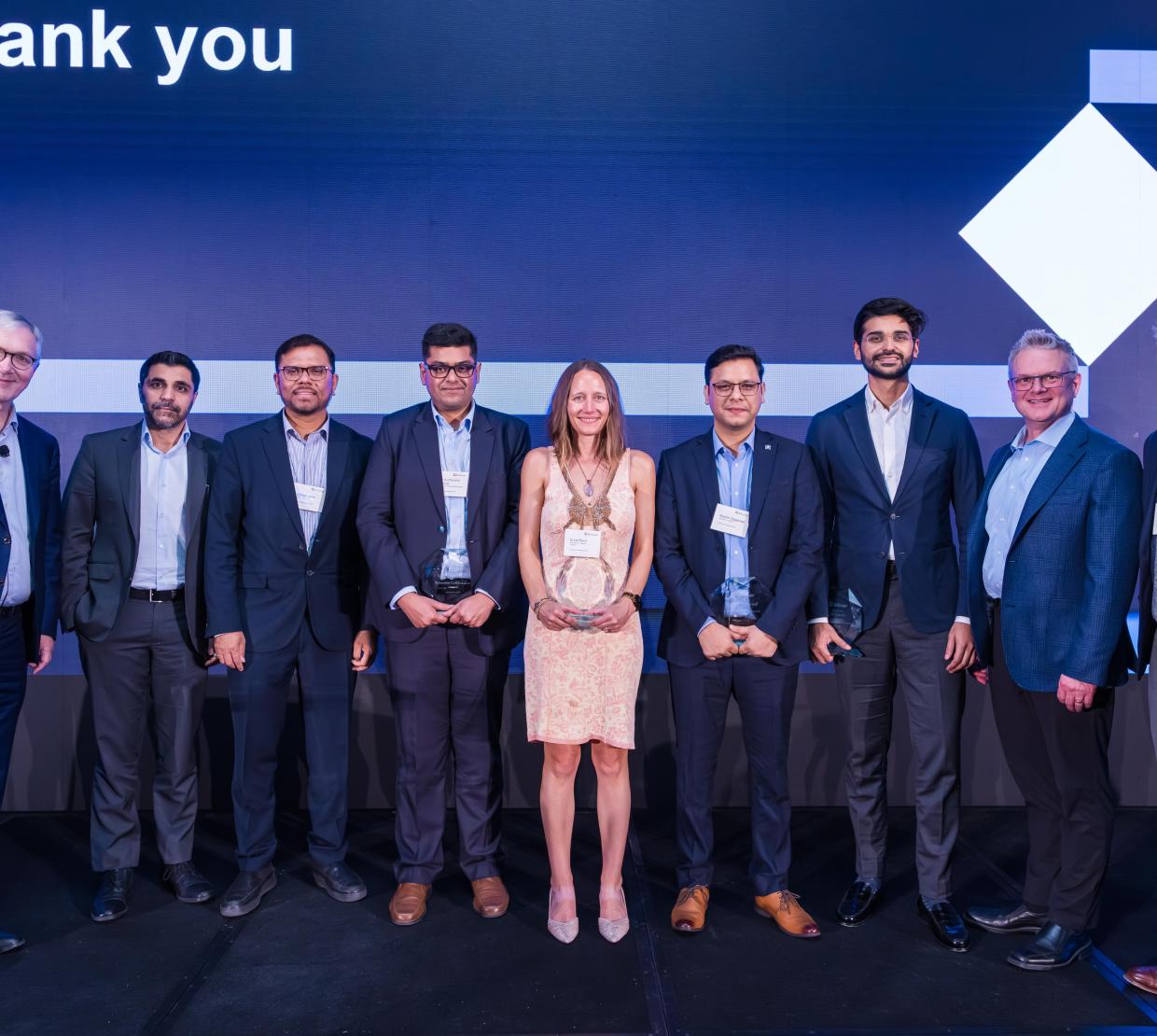
Erica Baird and her coworkers at a shareholders meeting in Phoenix in 2026, along with the chairman of the board and CEO of Milliman.

Erica Baird (’05, M.A. mathematics ’09, Ph.D. mathematics and statistics ’13) didn’t set out to become an actuary. In fact, when she first heard about the career as an undergraduate mathematics student at Oregon State University, she was skeptical.

“I thought it was a scam,” she said. “You go and take all of these exams and then you get this great high-paying job and all you need is a bachelor’s degree.”

That skepticism didn’t last. As Baird learned more about the profession and the rigor behind its credentialing process, she began to see actuarial science as a disciplined field grounded in mathematics, data and real-world impact.

Today, Baird is a principal and consulting actuary at Milliman, where she leads research and development for a risk-adjustment software product while advising clients across the health care industry. Her path from southern Oregon to a leadership role in a global consulting firm was driven by a desire to use mathematics to tackle complex challenges that affect patients and health care systems.

Four people sit and pose for a photo in front of trees.

Baird and her husband Kyle pose for a photo with Baird's parents at the Trees of Mystery in California.

What is an actuary?

At its core, actuarial science uses mathematics, statistics and financial theory to manage risk and inform decision-making. While the work is rooted in numbers, it is ultimately about helping institutions understand what could happen in the future — and how to plan for it.

The profession is structured around four main practice areas: health, life, property and casualty, and pensions. Each track focuses on a different kind of risk and requires specialized knowledge of industries, regulations and financial systems.

Health actuaries, like Baird, work with hospitals, insurance companies and government programs to analyze medical costs, design insurance pricing and evaluate how healthcare services are funded and delivered.

“We’re trying to make sure that their prices are fair, and that they are financially stable,” she said.

Baird started at Milliman as an actuarial analyst, supporting a software product designed to predict individual health care costs using past claims data. She trained predictive models, validated them and answered client questions.

Over time, her role expanded. Baird discovered she excelled in consulting, working directly with clients to solve unique problems. She now leads research and development for the software product and holds a senior-level position on the consulting side. Her work ranges from pricing Medicare plans to helping hospitals understand payment models to evaluating how successful medical interventions are at improving patient outcomes.

A group of people hold hands and jump into a lake for a polar plunge.

Baird and her coworkers jump into a frozen lake for a polar plunge to benefit Minnesota Special Olympics (Baird is third from the right and her husband, Kyle, is fourth from the right).

“My days are never boring," she said. “Clients bring us hard problems and we get to design studies, build models and really dig into whether something is working.”

No two assignments look the same, she said, because no two clients are trying to solve identical problems. That variability is part of what keeps the work engaging: each project requires adapting models, interpreting data in context and explaining results to non-technical audiences.

While insurance can be a complex and sometimes frustrating system for consumers, Baird emphasizes the broader mission behind the work.

“It can be tricky, but it can also save lives,” she said. “We aren’t just there to help insurance companies make more money. We’re there to help them serve the people that need health care.”

In January 2026, Baird joined the Actuarial Standards Board, which sets standards that actuaries in the U.S. must follow in their work. It also oversees updates to those standards through volunteer expert task forces and public comment, helping ensure consistency and professionalism across the field.

“It's been a great experience because they’re all people who are really passionate and excited. We spend a lot of time in passionate discussions and debates, making sure we think through all the implications of the guidance that we’re creating. Am I setting the bar too high for actuaries? Or am I not setting it high enough?”

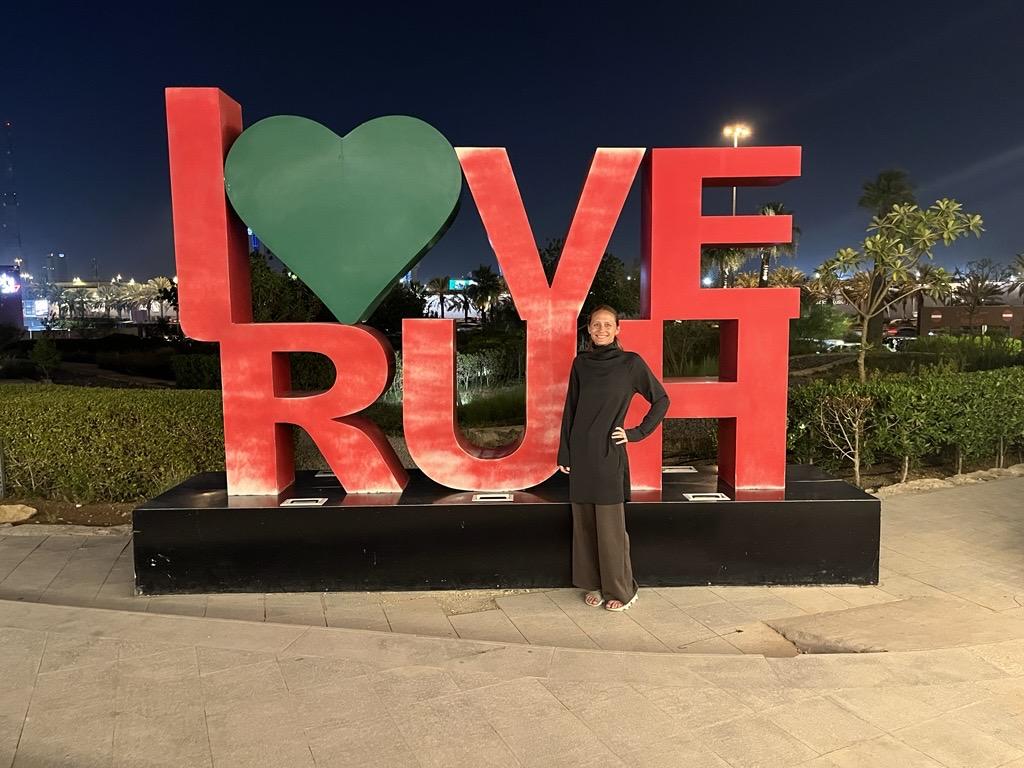
A woman poses with a giant sign that says "Love RUH."

Baird poses with the Love RUH sign in Riyadh, Saudi Arabia during a work trip.

Baird’s take on how to become an actuary

Baird grew up in Central Point, Oregon, and was interested in pursuing a degree in education, but a high school calculus class shifted her trajectory.

“I really enjoyed the problem-solving aspect of it,” she said. “It felt like the first time you moved beyond mechanics and got to how we use math to solve problems.”

That realization led her to pursue mathematics at Oregon State, where she eventually completed her undergraduate degree, master’s degree in mathematics and a dual Ph.D. in mathematics and statistics.

Her interest in actuarial science didn’t take hold until graduate school. After taking her first probability course, she began to see new possibilities, deciding to take her first actuarial exam while she was still in school.

Becoming an actuary requires a series of rigorous professional exams that unfold over several years. Candidates complete seven exams and a series of modules and other courses to reach Associate status, with several additional exams and modules needed to be fully credentialed as a Fellow. Most candidates study while working full-time, turning the exam process into a parallel track of education and career experience.

A woman poses for a photo in front of an orange sunset over water.

Baird poses for a photo during sunset in Key West during a work trip.

Always being open to learning benefited Baird when she started at Milliman. New terminology, processes and expectations felt overwhelming. Although she credits her graduate training for helping her develop critical skills like note-taking and technical writing, it took her time to adjust.

“For the first six to eight months, I felt completely out of my element,” she said.

Doubting yourself in a new role is a normal experience, Baird said, but those feelings won’t last forever. Over time, that uncertainty gave way to confidence and she took on leadership roles.

For students interested in actuarial careers, Baird recommends gaining early exposure to the field by taking exams and pursuing internships. Equally important are soft skills.

“We’re a very collaborative group,” she said. “Making sure that you can show that you have successfully worked as part of a team or led a team is helpful.”

Actuarial work goes beyond spreadsheets and equations; it’s about using math to guide decisions that affect people’s lives. From shaping how healthcare is delivered to ensuring organizations can meet their financial commitments, that work carries real consequences. For Baird, it’s a job that lets her use mathematical skills in ways that have real-world impact.

Colorful waves move across the screen in greens and purples, illustrating thinking patterns

Milne Lecture: "From bits to bots: a mathematical perspective on generative AI"

By College of Science

Artificial intelligence is transforming the world—but how did we get here, and where are we going next?

Together, the College of Science Departments of Mathematics and Statistics, the College of Engineering Computer Science program and the Oregon State Center for Quantitative Life Sciences present the 2025 Milne Lecture.

Join us to hear Rachel Ward, an applied mathematician known for her work on machine learning, optimization and signal processing from the University of Texas at Austin and Microsoft Research, share a talk titled,

“From bits to bots: a mathematical perspective on generative AI.”

Data science and machine learning have undergone profound transformations in recent years, driven by the exponential growth of computational power and available data. In this talk, Ward will discuss the evolution from signal processing over half a century ago to the rise of machine learning and generative AI, highlighting mathematical foundations such as information theory, probability, linear algebra, and optimization. While modern AI research is becoming more empirical in recent years, we finish by highlighting open questions and directions where mathematicians and scientists are crucial for making foundational advancements.

When: Monday, June 2, 4–5 p.m. with a short reception beforehand

Where: OSU Corvallis, Cordley Hall, Room 1316

Whether you're studying STEM, already immersed in the field, curious about AI, or passionate about the future of technology, this lecture offers a compelling look at the science and mathematical principles behind the algorithms—and the opportunities ahead.

Orange background with graphics of mini research posters.

Celebrating graduate research at the College of Science

By Hannah Ashton

Graduate Research Showcase

Graduate students at the College of Science are conducting crucial research that addresses critical challenges and benefits both local communities and the broader world.

To celebrate their accomplishments, the College will be hosting the inaugural Graduate Science Research Showcase from 11:30 a.m. to 2:30 p.m. on Friday, May 16, 2025 in the Memorial Union Horizon Room.

Click here to RSVP!


This event offers a glimpse into the future of science featuring graduate research presentations, a poster session and a keynote address from renowned alumnus Jonathan Gallion, vice president of Artificial Intelligence and Machine Learning for OmniScience.

Gallion, recipient of the College's 2024 Early Career Award, earned dual Honors bachelor's degrees in biochemistry and biophysics, and microbiology in 2012. His career began with an internship at SIGA Technologies, where he programmed robots to screen chemical compounds for antiviral medicines. At OmniScience, Gallion and his team utilize large language models to enhance clinical trial outcomes and improve human health. Their work accelerates decision-making and transforms data analysis in biotech, medtech, pharmaceutical and preclinical innovation. Rather than replace human expertise, their AI tools are designed to compliment it.

Schedule of Events

12 p.m.

Lunch

12:20 p.m.

Welcome from Executive Associate Dean Vrushali Bokil and Dean's Remarks from College of Science Dean Eleanor Feingold.


12:30 p.m.

Keynote speech from alumnus Jonathan Gallion, V.P. of Artificial Intelligence and Machine Learning for OmniScience.

Keynote Talk Title - Beyond Automation: Agentic AI and the New Frontier of Life Science Innovation

Abstract: Artificial intelligence in the life sciences is moving beyond automation into a new frontier defined by agentic systems—AI tools capable of reasoning, planning, and autonomous action. As these AI agents continue to evolve from tools to collaborators, life scientists will need to rethink how we generate hypotheses, design experiments, interpret data, and generate insights. This keynote will examine how agentic AI is already transforming decision-making and accelerating innovation within clinical trial development and offer a perspective on how domain experts can adapt and lead at the intersection of scientific expertise and intelligent automation through AI.


1 - 2:30 p.m.

Five minute research presentations and dessert, followed by a poster session, showcasing the diverse research conducted across the seven departments in the College of Science. The session will highlight how Science graduate students are participating and contributing to this valuable research.

Presenters include:

Oluwasen Adu (Integrative Biology)
Advisor: Michael Blouin
Talk title: Genome Wide Association Study of Biomphalaria glabrata snail and its Schistosome Parasite

Vera Alenicheva (Chemistry)
Advisor: Vincent Remcho
Talk title: A Microfluidic Paper-Based Assay for the Quantification of CBD and THC

Lucas Allan (Chemistry)
Advisor: Tim Zuehlsdorff
Talk title: FC2DES: Modeling 2D Electronic Spectroscopy for Harmonic Hamiltonians

Hallee Boyd (Chemistry)
Advisor: May Nyman
Talk title: Characterization of Trivalent Lanthanide Keggin Phosphomolybdate Sandwich Clusters

Daniel Malone Buoy (Statistics)
Advisor: Claudio Fuentes / Sarah Emerson
Talk title: Representative Sampling Methods for K-Fold Cross Validation

Olivia Burleigh (Integrative Biology)
Advisor: Virginia Weis
Talk title: Transcription Factor-targeted ChIP-Seq for Smad3-mediated TGF-β Signaling in Heat-stressed Aiptasia

Jun Cai (Integrative Biology)
Advisor: Virginia Weis
Talk title: Effect of Sphingolipid Metabolic Pathway Inhibition and Knockdown on Cnidarian-Algal Symbiosis

Giovanni Crestani (Integrative Biology, Ph.D.)
Advisor: Molly Burke
Talk title: Genomics of experimentally-evolved postponed reproduction in Drosophila melanogaster

Ushasi Datta (Chemistry)
Advisor: Marilyn Mackiewicz
Talk title: Unveiling the Hidden Properties: How Nanomaterial Surface Chemistry and Biomimetic Systems Shape Reflectance and Contrast

Konstantin Drallios (Chemistry)
Advisor: Thomas Osborn Popp
Talk title: 3D Printable Radiofrequency Coils

Rudranil Dutta (Chemistry)
Advisor: Claudia Maier
Talk title: Identification and Quantitation of Bioactive Alkaloids in Withania Somnifera

Arpa Ebrahimi (Chemistry)
Advisor: Claudia Maier
Talk title: Characterizing the Lipidomic and Proteomic Profile of the 5xFAD Alzheimer’s Disease Mouse Model: A Comparative Study Using MALDI Imaging Mass Spectrometry

Jessica Etter (Chemistry)
Advisor: Claudia Maier
Talk title: LC-QTOF and LC-TIMS-qQTOF MS Analysis of Fecal Inoculum Biotransformation Products and LC-MRM-MS Analysis of Human Withanolide Pharmacokinetics of an Ashwagandha Supplement

Caroline Hernandez (Microbiology)
Advisor: Maude David
Talk title: Whole-Cell Crosslinking Reveals Direct Lactobacillaceae and Rhizobiaceae Interactions with Host Duodenal Neuropods

Esteban Hernandez (Chemistry)
Advisor: Jennifer Field
Talk title: Experimental pKa Values of Substituted and Unsubstituted Perfluoroalkyl Sulfonamides via 19F NMR

Lucas Kolanz (Physics)
Advisor: Davide Lazzati
Talk title: Cosmic dust bunnies

Weiqi ‘Grace’ Li (Statistics)
Advisor: Yuan Jiang
Talk title: Reframing spatial transcriptomics prediction: From regression to classification

Sarah Louie (Biochemistry & Biophysics)
Advisor: Richard Cooley / Ryan Mehl
Talk title: Optimizing genetic code expansion technology to access post-translationally modified proteins

Praveeni Mathangadeera (Mathematics)
Advisor: Małgorzata Peszyńska
Talk title: Computational Modeling of the Nonlinear Heat Equation in Frozen Soil and Snow

Anshika Nagar (Chemistry)
Advisor: Marilyn Mackiewicz
Talk title: Shielded Nanoparticles: Advancing X-Ray Fluorescence Microscopy with Oxidant-Resistant Nickel and Cobalt

Luke Nearhood (Physics)
Advisor: Patti Hamerski
Talk title: Computing the Tension

Joline Nguyen (Biochemistry & Biophysics)
Advisor: Sarah Clark
Talk title: Isolation of Scarce Membrane Protein Complexes from C. elegans

Victory Chiamaka Obieke (Mathematics)
Advisor: Vrushali Bokil
Talk title: Compatible Energy Preserving Discretizations for Nonlinear Optical Wave Propagation: The Maxwell-Duffing Approach

Emily Palmer (Statistics)
Advisor: Yuan Jiang
Talk title: A Group Penalization Framework for Detecting Time-Lagged Microbiota-Host Associations

Madison Phelps (Mathematics)
Advisor: Małgorzata Peszyńska
Talk title: Nonlinear Solvers in Permafrost applications

Kevin Rice (Microbiology)
Advisor: Maude David / Kenton Hokanson
Talk title: Electrical Characterization of Primary Enteroendocrine Cells: Developing Tools to Screen Novel Microbial Neuroactive Compounds

Casey Rummelhart (Chemistry)
Advisor: Addison Desnoyer
Talk title: Frustrated Lewis Pairs Ligand for the Transformation of Carbon Dioxide to Chemical Feedstocks

Pavel Sengupta (Chemistry)
Advisor: Dipankar Koley
Talk title: Quantifying Dissolved Oxygen in Biofilms with Non-invasive Flexible Amperometric Oxygen Sensors

Michael Sieler (Microbiology)
Advisor: Thomas Sharpton
Talk title: Modeling the zebrafish gut microbiome’s resistance and sensitivity to climate change and parasite infection

Gavin Tovar (Statistics)
Advisor: Robert Trangucci / Sarah Emerson
Talk title: Sequential Approach to K-Fold Cross-validation---Computational Reduction Technique

Hao Yue (Chemistry)
Advisor: Marilyn Mackiewicz
Talk title: Targeted X-ray Imaging Agents for Visualizing Triple-Negative Breast Cancer

Sima Ziyaee (Chemistry)
Advisor: Claudia Maier
Talk title: Exploring Cellular Heterogeneity through Single-cell Proteomics


Join us to celebrate the future of science — and the graduate students who are making it happen.

View of the Colorado river inside the Grand Canyon.

Transforming river health, ecology, seaweed, and pest control: Revolutionary SciRIS research

By Hannah Ashton

The College of Science Research and Innovation Seed (SciRIS) Program continues to drive groundbreaking research by fostering collaboration and innovation. Founded in 2018, SciRIS funds interdisciplinary research projects that aim to create meaningful societal impact. This year, Stage 2 awardees are working to revolutionize our understanding of river health, ecological communities, sustainable seaweed cultivation and insecticide resistance.

There are two tracks through the program: SciRIS team awards (Stages 1-3) and the SciRIS individual investigator award (SciRIS-ii). SciRIS Stages 1-3 funds teams in three stages to support training, research, and capacity-building, accelerating work toward external funding opportunities. SciRIS-ii funds individual faculty to establish research relationships with external partners, enabling them to demonstrate the feasibility of their ideas and quickening the pace of scientific discovery.

Four teams received SciRIS Stage 2 awards.

Bioinformatics for integrated river health

Biologist David Lytle’s project focuses on understanding the complex interactions between multiple biotic components, including food base, disease landscape and microbiome in the lower Colorado River, including the Grand Canyon. Lytle will be working with three Oregon State colleagues, along with collaborators at the United States Geological Service and the National Parks Service. The project aims to develop diagnostic tools that can identify fish parasites and diseases at a molecular level and provide preliminary data on how these parasite, microbial and invertebrate communities change over time.

Oregon State Collaborators
David A. Lytle, Integrative Biology
Justin Sanders, Microbiology, (College of Science and Carlson College of Veterinary Medicine)
Anna Jolles, Integrative Biology (College of Science and Carlson College of Veterinary Medicine)
Claire Couch, Fisheries, Wildlife and Conservation Sciences (College of Agricultural Sciences and Carlson College of Veterinary Medicine)

Government Collaborators
Ted Kennedy, Kim Dibble, Charles Yackulic, Kate Behn, Jessica Anderson, Bridget Deemer, U.S. Geological Service
Emily Omana, Brandon Holton, National Parks Service

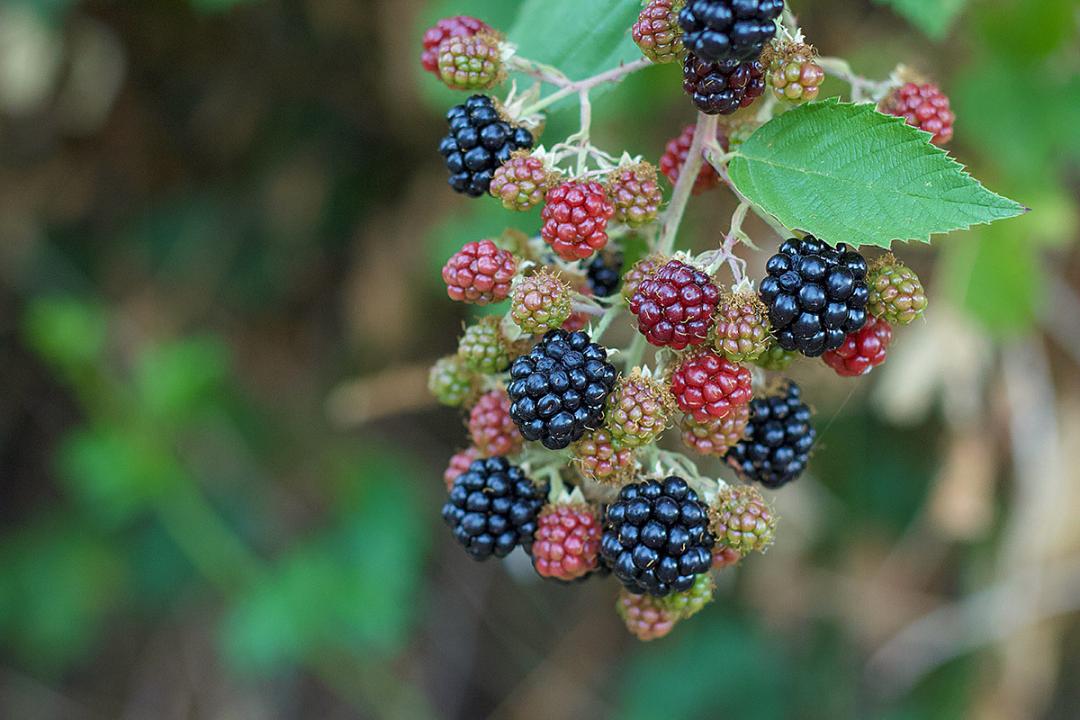
Ripening Oregon blackberries, one of the crops at risk from Spotted wing drosophila

Spotted wing drosophila are an invasive pest that attack several crops essential to Oregon farmers, including ripening blueberries, blackberries, apples and stone fruit. Fruit fly populations evolve rapidly and the Patel and Vrailas-Mortimer group seek to understand the risks of resistance evolution before they adapt to local pesticides.

Insecticide resistance in spotted-winged drosophila

Geneticist Alysia Vrailas-Mortimer's project addresses the significant agricultural threat posed by spotted-winged drosophila (SWD), an invasive pest species. The research aims to advance understanding of the genetic basis and evolution of insecticide resistance in these pest populations through experimental work, genetic techniques and mechanistic mathematical modeling. The project involves collaboration with experts from UC Davis and focuses on developing sustainable control methods. Directly connected to the needs of the Oregon agricultural community, this project is a prime example of OSU’s strong community engagement initiatives as a land grant institution. By learning more about the mechanisms of insecticide resistance in spotted-winged drosophila, growers will be better able to plan and prioritize their insecticide applications to mitigate resistance.

Oregon State Collaborators
Alysia Vrailas Mortimer, Biochemistry & Biophysics
Swati Patel, Mathematics
Serhan Mermer, Environmental and Molecular Toxicology (College of Agricultural Sciences)

Analytical Tools to Understand Ecological Communities

Statistician Yuan Jiang’s SciRIS project aims to create novel analytical tools for assessing how organisms in complex ecological communities like microbes and parasites interact and affect each other over time. The research will leverage long-term community datasets from wild vertebrate host populations with improved data techniques that allow these large complex data sets to be analyzed more efficiently and with environmental conditions factored in. In addition to improve our ecological understanding of these communities, Jiang's project seeks to extend the accessibility of these analytical tools to diverse scientific audiences through summer camps, workshops and online tutorials. The project will also involve collaboration with colleagues and students at the Universidad of San Francisco de Quito in Ecuador to build capacity in data analytics.

Oregon State Collaborators
Yuan Jiang, Statistics
Lan Xue, Statistics
Anna Jolles, Integrative Biology
Claire Couch, Fisheries, Wildlife and Conservation Sciences (College of Agricultural Sciences)

Seaweed on a beach with water.

Seaweed morphology and chemical makeup can vary dramatically depending on environmental factors like seawater composition and sunlight exposure, making it a challenge to nutritionally analyze consistent materials. James Fox and his contributors have developed a system for growing seaweed on land under consistent conditions for analysis.

Unlocking the potential of seaweed

Algal physiologist James Fox’s project explores the chemical composition and potential applications of Pacific Dulse, a protein-rich seaweed native to the Pacific coastline. The team will create a special growth chamber to cultivate seaweed on land under controlled conditions. This allows researchers to maximize the production of important compounds found in Pacific Dulse, which can be used in nutrition and medicine. The project also emphasizes community outreach and inclusive excellence by engaging diverse student populations and partnering with outreach programs. Additionally, the project will investigate the impact of different processing methods on the nutritional quality of seaweed extracts.

Oregon State Collaborators
James Fox, Microbiology
Myriam Cotten, Biochemistry and Biophysics
Ford Evans, Hatfield Marine Science Center
Evan Forsythe, Integrative Biology
Scott Geddes, Chemistry Program Coordinator OSU-Cascades
Jung Jwon, Department of Food Science & Technology (College of Agricultural Sciences)
Christopher Suffridge, Microbiology

These projects highlight the innovative and impactful research being conducted by the 2025 SciRIS awardees. Each project not only advances scientific knowledge by also emphasizes collaboration, community engagement and inclusive excellence.

A blue background with the year 2025

Celebrating inclusive excellence, administration, service and performance: 2025 College of Science Awards

By Hannah Ashton

The College of Science gathered on Feb. 26 to recognize and celebrate our high achieving faculty and staff at the 2025 Combined Awards Ceremony. The evening celebrated the very best in the College, from teaching, advising and research to inclusive excellence, administration and service.

The following faculty and staff received awards in Inclusive Excellence, Administration, Service and Performance.

Congratulations to all the awardees!

Headshot of Hannah Stuwe, a woman with short curly hair and black shirt.

Hannah Stuwe, graduate student in the Department of Biochemistry and Biophysics, received the Inclusive Excellence Award.

College of Science Inclusive Excellence Award

Hannah Stuwe, graduate student in the Department of Biochemistry and Biophysics, received the Inclusive Excellence Award.

Department Head Elisar Barbar, who nominated Stuwe, said she has engaged in a wide-ranging set of service, outreach and training that is truly impressive. First, Stuwe conducted a GFP protein purification activity for middle and high school students from the Chemawa Indian School, Jewell High School (Seaside), and visited groups of black and Latinx students from the Portland area.

She planned, wrote and edited a handbook of science experiments geared towards middle school aged students, their parents, and teachers to fill the void of not having a BB summer camp. This handbook now serves as a free and open access resource for community members.

Stuwe is the founder of the non-profit organization Corvallis Music Collective. They have engaged in community service and activism by providing live music for events and rallies. Recent events include the Basic Needs Center Fall Welcome Party, the Disabled Students Union Disability Justice Rally and Jackson Street Youth Services National Runaway Prevention Month “Skate Park After Dark” Show.

Amy Timshel

Amy Timshel, assistant head to the department head in the Department of Microbiology, received the Gladys Valley Award for Exemplary Administrative Support.

Gladys Valley Award for Exemplary Administrative Support

Amy Timshel, assistant head to the department head in the Department of Microbiology, received the Gladys Valley Award for Exemplary Administrative Support.

Her colleagues describe her as proactive, always seeking ways to improve processes and deeply committed to making the department a better place for everyone. She is highly regarded by students, faculty and staff for her professionalism, broad knowledge and ability to get things done. In fact, Department Head Anne Dunn noted that when she polled faculty on department strengths during strategic planning exercises, Timshel's critical role in the department was consistently highlighted.

She has a deep understanding of university policies and constantly looks for ways to improve them. She listens, advocates for students and colleagues, and takes initiative to make the department more inclusive and equitable. For example, her work on the Core Values Committee led to the addition of gender-neutral restrooms in Nash Hall and improvements to scholarship and travel fund policies.

Beyond her administrative role, Timshel actively fosters a sense of community within the department. She organizes fundraisers and charity events and regularly attends student events to show her support.

A woman in a red top poses in front of plants.

Elaine Cozzi, assistant head and associate professor in the Department of Mathematics, received the Distinguished Service Award for her impactful service to her department, the College and the broader mathematics community.

Distinguished Service Award

Elaine Cozzi, assistant head and associate professor in the Department of Mathematics, received the Distinguished Service Award for her impactful service to her department, the College and the broader mathematics community.

Cozzi served as interim associate dean of academic and student affairs for the College in Spring of 2024, managing various projects, including the university’s revision of its undergraduate advising system, assessing teaching resources and addressing countless student issues. She was overwhelmingly generous with her time in responding to the many challenges and the needs of her colleagues.

Before and after serving as associate dean, Cozzi served as assistant department head for mathematics, responsible for scheduling upper-level courses and ensuring adequate staffing for the Department’s teaching mission. This affects the hiring of instructors, graduate students, and undergraduate graders.

Jon Kujawa, Department of Mathematics head and Cozzi’s nominator, noted, “It is hard to overestimate the impact of Elaine’s planning on the smooth operation of the teaching side of the department. And she readily pivots when unexpected events disrupt the plans.” Additionally, Elaine led the assessment of the Mathematics undergraduate program for several years, playing a crucial role in student success, he shared.

Cozzi also contributes significantly to the mathematics profession as Associate Editor for the American Mathematical Monthly – the most widely read mathematics journal in the world. She is also an active member of SIAM, a professional society for applied mathematics, where she helps organize meetings and contributes to administrative efforts and regularly serves as a grant evaluator for the NSF and the Simons Foundation, helping to shape the future of mathematical research.

Virginia Lesser in front of shrubbery

Virginia Lesser, Department of Statistics Head, received the Champion of Science award.

Virginia Lesser, Department of Statistics Head, received the Champion of Science award for her significant contributions to the field of statistics and to Oregon State University throughout her distinguished career. After earning her PhD in Biostatistics from the University of North Carolina at Chapel Hill, she joined OSU’s Department of Statistics in 1992.

A year later, she became Director of the Survey Research Center, a role she held until her retirement in December 2024. Lesser's expertise in probability sampling, survey design, and data collection methods ensured that the center upheld the highest standards. Under her leadership, the center became a premier institution, offering expertise in survey methodology, sampling and data analysis – supporting projects that inform policy, environmental monitoring, economic studies and public opinion research. Its work has helped agencies such as the Oregon Department of Transportation, the Oregon State Marine Board, and the Oregon Department of Fish and Wildlife make data-driven decisions, not to mention numerous initiatives within the University.

Lesser's groundbreaking research in survey methodology, environmental statistics, applied statistics and ecological monitoring has advanced the field and influenced practice. She has authored over 55 journal articles and conference proceedings, earning national and international recognition – including being named a Fellow of the American Statistical Association and an elected member of the International Statistical Institute.

Lesser's leadership also transformed the statistics department and elevated Oregon State University’s role in the field as department head from 2011 to 2018.

Lesser has also been a dedicated mentor and advocate for students and colleagues. Over the course of her career, she guided more than 220 graduate students and fostered a welcoming, supportive community within the department. Her colleagues regard her as an exceptional mentor and an inspiring leader, someone who consistently goes above and beyond – whether leading major academic initiatives or simply making sure the department potluck had a home-cooked turkey.

A graphic of a star is in front of lab test tubes.

College of Science graduate students earn prestigious awards in 2023-24

By Hannah Ashton

As a land grant institution committed to teaching, research, and outreach and engagement, Oregon State University promotes economic, social, cultural, and environmental progress for the people of Oregon, the nation, and the world. Oregon State University is deeply committed to the principle that every student we admit — in person or online — should achieve their goal to graduate, and awards of Scholarships and Fellowships contribute to this goal in an impactful way. The College of Science invests in the success of our graduate scholars by providing financial support to students that we recruit and students that are currently enrolled among other ways of supporting their development, progress and growth.

Graduate students in the College of Science earned notable recognition during the 2023-24 academic year, receiving a range of awards which highlight their achievements and contributions to Oregon State. Below, we highlight some of these noteworthy Graduate School Awards. From state specific honors like the ARCS Foundation Scholarship to institutional support through the Provost’s Distinguished Fellowship, these awards recognize graduate students who embody the values of Team Science.

ARCS Foundation Awards

ARCS (Achievement Rewards for College Scientists) Foundation, Oregon Chapter seeks to advance science and technology in the United States by providing financial awards to academically outstanding students who are U.S. students studying to complete Ph.D. degrees in science, engineering, mathematics, technology and medical research at Oregon Health & Science University, Oregon State University and the University of Oregon.

In 2023-2024, two College of Science graduate students were awarded ARCS scholarships. Karlie Wiese, doctoral student in Chemistry, received the ARCS Oregon 10th Anniversary OSU Scholar Award. Lucas Kolanz, doctoral student in Physics, received the Beth Ray ARCS Foundation Scholar Award. This award is funded through ARCS, the OSU Graduate School and by contributions from past OSU President Ed Ray in memory of his wife Beth.

Delson Bridge to the Future Fund

Pritha Biswas, doctoral student in Physics, is the recipient of the Delson Bridge to the Future Fund, designed to assist graduate students who are facing critical financial emergencies that could impede degree completion.

Dissertation Completion Award

Two doctoral students were awarded the Dissertation Completion Award. This award supports outstanding doctoral students who are in their final stages of their dissertations by offering an award to cover the cost of three graduate credits of tuition and mandatory fees for one academic term. The recipients are Adaline De Chenne from Mathematics and Njesa Totty from Statistics.

Graduate Dean’s Catalyst Fellowship

Two doctoral students, Theodore Bambakidis (Microbiology) and Jesse Howe (Biochemistry and Biophysics) were awarded the Graduate Dean’s Catalyst Fellowship. This award is a pilot program launched for the 2023-24 academic year to support graduate students nearing completion of their doctoral degrees.

Herbert F. Frolander Graduate Teaching Assistant Award

Steven Tran (Chemistry) received the Herbert F. Frolander Graduate Teaching Assistant Award, which recognizes outstanding and professional involvement with both faculty and students by a graduate teaching assistant at Oregon State University. This award is presented to one graduate student from across the entire university during University Day in the fall. Hear from faculty and staff who nominated Tran here.

Laurels Block Grant Program

The purpose of Laurels funding is to provide financial support to academic units so they may diversify and strengthen their graduate programs. This is achieved by providing tuition support to assist with the recruitment of new graduate students to OSU. Two College of Science students received funding in 2023-24, masters student Bailey Sharon (Mathematics) and doctoral student Courtney Clement (Microbiology).

Oregon Lottery Graduate Scholarship

Three doctoral students received funding from the Oregon Lottery Graduate Scholarship. Funds for this scholarship are provided through the Oregon State Lottery and are awarded on the basis of academic merit and financial need. The 2023-24 recipients are Matthew Nguyen (Chemistry), Steven Tran (Chemistry) and Kaitlin McHugh (Integrative Biology).

P.F. and Nellie Buck Yerex Graduate Scholarship

Nilanjana Das, masters student in Microbiology, is the recipient of the P.F. and Nellie Buck Yerex Graduate Scholarship. This scholarship is awarded to graduate students who are pursuing study in a scientific or technological field. It is awarded on the basis of academic achievement and promise for the future.

Prestigious Diversity Fellowship

Two doctoral students received the Prestigious Diversity Fellowship, intended to support the recruitment and retention of graduate students from historically underrepresented backgrounds who demonstrate scholarly promise at Oregon State. The recipients are Hallee Boyd (Chemistry) and Nyazia Sajdah-Bey (Integrative Biology).

Professional Development Award

The purpose of the Professional Development Award is to help cover costs for qualifying training, resources and activities that contribute to professional skills development. In 2023-24, the Graduate School funded the following students:

Alice Welch (Integrative Biology)

Olivia Burleigh (Integrative Biology)

Emily Taylor (Integrative Biology)

Pritha Biswas (Physics)

Kevin Dimmitt (Physics)

Provost’s Distinguished Graduate Fellowships and Scholarships

The purpose of the Provost’s Distinguished Fellowship and Scholarship program is to support programs in the recruitment of Oregon State’s most meritorious graduate students.Ian Clifford (Integrative biology) and Ben Daniels (Microbiology) received the distinguished Provost Fellowship award.

In 2023-24, the College of Science awarded Provost Scholarships to the following students:

Joline Nguyen (Biochemistry and Biophysics)

Emily Hiatt (Chemistry)

Sanpreet Hira (Chemistry)

Jack McLaughlin (Chemistry)

Gage Rios (Chemistry)

Rodrigo De Almeida Alves (Integrative Biology)

Brysyn Goodson (Integrative Biology)

Olivia Noonan (Integrative Biology)

Stefanie Fazekas (Mathematics)

Heather Fogarty (Mathematics)

Mansi Sanjay Mahajan (Mathematics)

Courtney Clement (Microbiology)

Lynn Kaneko (Microbiology)

Katelyn Spadavecchia (Physics)

Kalista Wayt (Physics)

Ian Moran (Statistics)

Scholarly Presentation Award

The Graduate School offers the Scholarly Presentation Award to provide graduate students with financial support to assist with certain costs associated with presenting their scholarly work at academic conferences and meetings. In 2023-24, the following College of Science students received this award:

Mona Khorani (Chemistry)

Nan-Chieh Chiu (Chemistry)

Anshika Nagar (Chemistry)

Ankit Yadav (Chemistry)

Jesse Laney (Integrative Biology)

Angelika Kurthen (Integrative Biology)

Jun Cai (Integrative Biology)

Erick White (Integrative Biology)

Jalyn Devereaux (Integrative Biology)

Jared Freedman (Integrative Biology)

Jesse Fritz (Integrative Biology)

Dorothy Zahor (Integrative Biology)

Jessica Karr (Integrative Biology)

Giovanni Crestani (Integrative Biology)

Kaitlin McHugh (Integrative Biology)

Kenneth Glynn (Integrative Biology)

Jazlee Joon Crowley (Integrative Biology)

Brenna Prevelige (Integrative Biology)

Jeremy Lilly (Mathematics)

Måns Mattsson (Physics)

Thurgood Marshall Graduate Fellowship

The Thurgood Marshall Graduate Fellowship is intended to support the retention of meritorious graduate students whose accomplishments and activities demonstrate leadership, service and commitment to fostering a just and equitable community. Val Sawiccy (Integrative Biology), currently an instructor at the University of Oregon, is this year’s recipient.

Wei Family Private Foundation Scholarship

The Wei Family Private Foundation, a non-profit organization, was established to honor the memory of Dr. (Mrs.) Chung Kwai Lui Wei and Mr. Hsin Hsu Wei. Its purpose is to award scholarship grants to graduate students with high academic credentials in science and math, with a preference for those who have lived in or are related to persons born in China. In 2023-2024, the College of Science awarded one Wei Family scholarships to Lemeng Li (Statistics).

Mark and Vicki Hehnen Veterans Science Scholarship

The Mark and Vicki Hehnen Veterans Science Scholarship supports science students who are veterans and provides financial support other than tuition. This award was established by Mark Hehnen (’78 Ph.D.). In 2023-2024, the College of Science awarded two scholarships to Ebony Stretch (Microbiology) and Angela Mellisa Thompson (Zoology).

Jesse A Hanson General Science Scholarship

The Jesse A Hanson General Science Scholarship is awarded to students who show high scholarship, potential for success, unimpeachable character and service to the university. Jesse Hanson was an OSU professor of poultry science from 1911-66. The following four students received this scholarship during the 2023-2024 academic year: Joshua Byrnes (Statistics), Jessica Etter (Chemistry), Elena Gasiorowski (Integrative Biology), and Mikaela Lee (Microbiology).

Fred W. Durbin and Helen E. Bette Pierce Durbin Endowment

Created by Fred and Helen “Bette” Durbin, this endowment supports graduate fellowships as determined by the Dean. Fred received a bachelor’s in general science from OSU and Bette graduated with a bachelor’s in home economics (now the College of Health). The College of Science awarded two Fred and Helen Durbin Scholarships to Ameh Benson Agi (Chemistry) and Jonathan Dutra (Biochemistry/Biophysics).

Science Graduate Fellowship

The Science Graduate Fellowship is to be used to support students enrolled in the College of Science with a preference for students in chemistry, biochemistry and the life sciences. The College of Science awarded one Science Graduate Fellowship during the 2023-2024 academic year to Emily Parker (Integrative Biology).

*When possible, links to students' directory profiles are included.

A male college student engages with children during Discovery Days

Empowering communities: Highlights from the College of Science’s 2023-24 outreach

By Hannah Ashton

The College of Science is committed to making science accessible, engaging and relevant to people’s lives. Through outreach, we support science literacy, connect with communities and help students see themselves in STEM. From hands-on activities in classrooms to public science events and student-led programs, outreach is one way we ensure science makes an impact. Here are a few examples of 2023-2024 outreach from across our departments:

In Integrative Biology, faculty and students participated in events such as Science Nights at local schools, Discovery Days, and sea-themed summer camps, with activities ranging from avian behavior trials to DNA sequencing workshops in Nepal. The department also contributed to public presentations and fundraisers for undergraduate research.

The Mathematics department hosted significant events like the Lonseth Lecture and Math For All Conference, while also providing educational enrichment through math circles and problem-solving sessions. Faculty gave lectures internationally and led outreach programs in local schools, aiming to make math accessible to all.

Biochemistry and Biophysics highlighted women leaders in STEM, hosted symposia and webinars, and engaged the public through biophysics demonstrations. The department's outreach extended to local schools, community events, and artistic projects that made science more approachable.

In Physics, outreach efforts included attending elementary school science nights and giving tours to high school students. Educators can visit the physics website to schedule a classroom visit from an OSU physicist.

The Chemistry department’s outreach initiatives aim to broaden access to STEM education and inspire a diverse range of students to explore science. Through a variety of programs, the department offers hands-on experiences, community events, and immersive camps that connect underrepresented and local students with real-world science opportunities. Learn more about chemistry outreach.

The Microbiology department organized creative and educational events such as agar art, career panels, and science nights, while also hosting a microbiology camp for high school students to explore STEM careers.

The Department of Statistics held outreach activities focused on recruitment and research growth including a joint research forum with Shanghai University of International Business and Economics. The department also held two conferences in Corvallis during the 2024 summer.

In the Dean’s Office, the Science Success Center organized Discovery Days where OSU welcomed more than 1,300 elementary students to experience science outside the classroom. Discovery Days, a biannual outreach event, brimmed with activities for kids to enjoy while they met graduate and undergraduate students eager to share their enthusiasm for the inspiring field.

The Dean’s Office also did recruitment outreach, visiting community colleges and middle and high schools to promote STEM programs and science career paths, engaging over 300 students in total.

These collective efforts typify the College’s commitment to science education, community engagement and inspiring future generations in STEM.

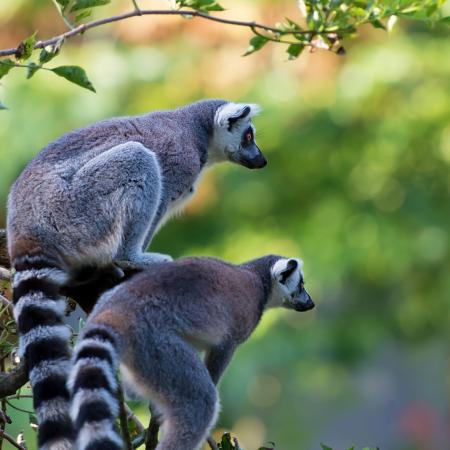
Two lemurs sit closely together on a tree branch, surveying their environment

Science Faculty Secures $18.5M in FY 2024, extending the reach and impact of science

By Hannah Ashton

The Everson lab studies Madagascan lemurs to explore how hybridization shapes genomes, species limits and the evolutionary trajectory of radiations (rapid increases in diversity).

The College of Science has a diverse portfolio of signature research, scholarship and innovation activities that enable our College to make fundamental and applied discoveries. To support society’s scientific challenges, we are invested in discovery-driven science and applied and transdisciplinary research. Our research intersects with all four research areas of priority outlined in OSU’s strategic plan, Prosperity Widely Shared.

Over the 2024 fiscal year (FY24: July 1, 2023 - June 30, 2024), the College of Science researchers received $18.5 million in research grants to support groundbreaking science. Most of that funding came from federal agencies and foundations in recognition of proposals with broad societal impacts, like increased human health, sustainable and clean energy and climate change mitigation. Our faculty pursue foundational and basic research projects and science education projects. Data science and Artificial Intelligence (AI) tools are increasingly becoming part of the fabric of much of our research. College of Science research expenditures in FY24 totaled $20.7 million.

The figure below illustrates the breakdown of funding sources for the College, with the National Science Foundation (NSF) and National Institutes of Health (NIH) each awarding about $5.1M.

Pie chart showing Science Research Funding, with details in the following caption

Research funding in 2023-24 ($18.5M total) comprised investments mostly from federal and state agencies, including the National Science Foundation (25.7%–$5.1M), National Institutes of Health (27.7%–$5.1M), Department of Energy and National Labs (9.3%–$1.5M), and others (8.8%—$1.6M). Additional funds were provided by other universities (9.5%—$1.7M), foundations (11.4%–$2.1M), foreign governments (0.2%–$40K) and industry (5.6%–$1M).

Research funding propels Team Science forward

Oregon State University is focused on big discoveries that drive big solutions. Many science faculty received grants last year in support of discovery-driven science, applied and transdisciplinary research science education and innovation in OSU’s priority research areas of integrated health and biotechnology, climate science and solutions, robotics, data science and AI, and clean energy and solutions. Below are some of the highlights—not including multi-year projects started before 2023.

Faculty honors

Astrophysicist Jeff Hazboun received a $73K Faculty Early Career Development award from the National Science Foundation. This prestigious NSF early career award is highly coveted by faculty! Hazboun’s project includes curriculum development and the implementation of a summer workshop in astrophysics-themed data analysis designed to foster inspired teaching, stimulate excitement in pulsar timing array research, facilitate the learning goals of undergraduate and graduate students, and support the community college students’ transition into four-year schools.

Mathematician Christine Escher received a $50,397 award from the NSF to host the Pacific Northwest Geometry Seminar series over three years at various Pacific Northwest universities. Escher is the principal organizer of the conference. This award supports meetings of the Pacific Northwest Geometry Seminar (PNGS), a regional meeting for researchers and educators of geometry, to be held at the University of British Columbia (2025), Seattle University (2026) and Lewis & Clark College (2027).

Integrated health & biotechnology

Materials scientist Kyriakos Stylianou, along with members of the College of Pharmacy and the College of Agricultural Science, received $2 million from the U.S. Department of Agriculture to develop improved ways of preventing stored potatoes from sprouting, particularly in the organic sector. Stylianou’s team studied nearly 200 different plant essential oils for their anti-sprouting effects. Oregon, Washington and Idaho produce more than 60% of the potatoes grown in the United States, and Pacific Northwest potato cultivation is a $2.2 billion industry.

Microbiologist Maude David is part of a multi-institution research team to receive a $4.3 million grant from the U.S. Department of Agriculture to study European foulbrood disease (EFD) in honey bees. The group is investigating the factors contributing to the high incidence of infection, and will then share their findings with local beekeepers and growers to improve mitigation efforts. Beekeepers in Oregon typically pollinate about five different crops annually. If the colonies are weakened by EFD, this results in less pollination, which is a concern for blueberry and almond growers.

A scientist in a beekeeping outfit stands next to a honeycomb

Carolyn Breece from the OSU Honey Bee Lab shows Maude David a bee colony during a field trip.

Evolutionary biologist Michael Blouin was awarded $1.86M over five years ($371K per year) from the National Institutes of Health for his project entitled, “Genetic mechanisms of snail/schistosome compatibility.” Schistosomes are water-borne blood-flukes transmitted by snails, which infect over 250 million people in more than 70 countries and cause severe and chronic disability. A debilitating helminth parasitic disease of humans, vaccines are available for schistosomiasis. This project will identify new genes that make some snails naturally resistant to infection by schistosomes, revealing potential new ways to reduce parasite transmission at the snail stage.

Statistician Robert Trangucci received $164K from the University of Michigan for his project entitled, “Data driven transmission models to optimize influenza vaccination and pandemic mitigation strategies.” Selection bias is common in infectious disease datasets due to complex observational and biological processes, and bias can arise from covariate data which is missing due to analytical limitations. The research team is addressing the concern by extending existing models to accommodate risk and data gaps over time for application in vaccination and other novel datasets.

Chemist Dipankar Koley received $542K from the National Institutes of Health for his project entitled, “Microenvironmental characterization and manipulation to prevent secondary caries.” A common reason for dental replacement is a recurrence of caries around existing restorations caused by microbial activity. The project seeks development of new and innovative materials to bias this microbial environment toward improved dental health, and the researchers are investigating the use of cations of magnesium and zinc applied with specialized release platforms.

Collaborative research at the interface of robotics, computer vision and AI

Statistician Yanming Di received $249K from the U.S. Department of Agriculture for a project entitled, “DeepSeed: A computer-vision network for onsite, real-time seed analysis.” The Willamette Valley is considered the “grass seed capital of the world.” Seed testing, used for determining seed lot quality and establishing seed value, is a fundamental phase of the agricultural marketing system. With recent advances in robotics, computer vision, and AI, an opportunity presents itself for a new wave of innovations. This project utilizes AI and robotics to innovate devices and protocols for sampling grass seeds and a computer vision system for automated seed analysis. The investigators consist of experts in seed services, computer vision, statistics, and mechanical engineering.

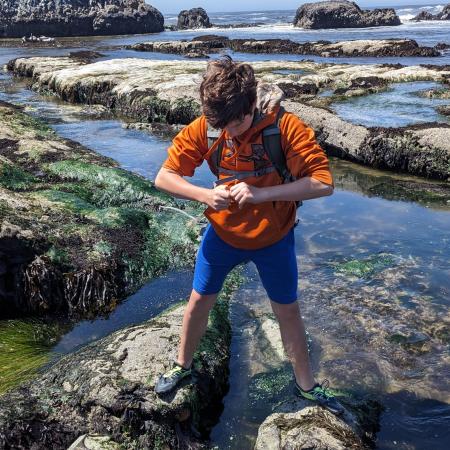
California mussels at low tide, covered in barnacles

Mytilus californianus (the California mussel) is prey for many predator species, serves as a filter for ocean particulate, and harbors hundreds of other species. Threats to this normally resilient foundation species represent risks to the entire local marine ecology.

Climate science and related solutions

Materials scientist Kyriakos Stylianou received $689K from Saudi Aramco for a project entitled “New Generation of CO2 Capture Adsorbents: Synthesis, Performance under Humid Conditions, and Scaleup.” In this project, the Stylianou group aims to discover novel adsorbents for the selective capture of CO2 from diluted sources. Successful materials will undergo scaling up and evaluation for their efficacy in removing CO2 from air.

Marine ecologist Bruce Menge received $200K from the National Science Foundation for his project entitled, “RAPID: A subtle epidemic: unique mortality of Mytilus californianus on the Oregon coast.”

The research team is investigating the major changes occurring in the Pacific Northwest marine ecosystems, with evidence these communities exhibit low resilience to climate change. For example, sessile invertebrates (mussels, barnacles, etc) become more abundant while seaweed species (kelp, etc) decline.

Evolutionary biologist Kathryn Everson received two awards for $276K from the University of Kentucky Research Foundation for a project entitled, “The role of hybridization in generating biodiversity: Insights from genomics of Madagascar’s true lemurs (Eulemur).” This project is funded by the NSF to understand how new species form in the context of complex gene flow and to expose the genomic signatures of evolutionary processes. The researchers will characterize patterns of gene flow, selection, and genome architecture for a species of lemur to gain a genomic perspective on the evolution of species boundaries. In addition, the team will construct a hybridization model using data on geographic range, diet, and social behavior for this lemur.

Clean energy and related solutions

Aerosol chemist Alison Bain received $284K from McGill University for her project entitled, “Single particle measurements.” This research aims to understand the optical properties of stratospheric aerosols. Using single particle experiments under environmentally relevant temperatures and humidities, the team will extend a wavelength-dependent refractive index model to include these conditions. They are also looking at how atmospheric aging impacts the optical properties of these materials.

Chemist Wei Kong received $110K from the American Chemical Society for her project entitled, “Superfluid helium droplets as microreactors for studies of photochemistry of fossil fuel hydrocarbons: polycyclic aromatic hydrocarbons and the corresponding endoperoxides.” The project will use superfluid helium droplets as microreactors to investigate the kinetics of the photooxidation process of a major component of petroleum (polycyclic aromatic hydrocarbons, PAH). Using several analytical techniques, the team will test the hypothesis that supercooling the helium droplets will stabilize an excited state of the oxygen molecule and prevent further reactions.

Collaborative partnerships to fuel a thriving world

Biochemist Ryan Mehl received $234K from the NobleReach Foundation in partnership with the National Science Foundation. The project “Ideal eukaryotic tetrazine ligations for imaging protein dynamics in live cells” was selected as one of the first set of 11 national pilot projects to receive $234K from the NobleReach Foundation.The partnership seeks to identify and accelerate the translation of NSF-funded research into biotechnologies and bio-inspired designs with commercial and societal impacts. This pilot will help inform future translational funding opportunities along with enabling Professor Mehl and the other selected principal investigators to accelerate bringing their research to the market and society.

Biochemist Patrick Reardon received $500K from the National Science Foundation (NSF) Research Instrumentation Program for his project entitled, “MRI: Acquisition of Helium Recovery Equipment: An integrated system for helium capture and recovery for the OSU NMR facility.” This award supports the acquisition and installation of an integrated system for helium capture and recovery for the nuclear magnetic resonance (NMR) facility. Helium is in high demand and is used for a wide variety of industrial and research applications, and it is a non-renewable resource which highlights the need for laboratories to capture and recycle this important gas. The NMR lab is supported by funding from the National Institutes of Health, NSF, M.J. Murdock Charitable Trust, and OSU, and it is a core facility and cornerstone for groundbreaking research in interdisciplinary science and engineering, chemistry, biochemistry, and biophysics at OSU, throughout the Pacific Northwest, and beyond. The facility continually strives to enhance its state-of-the-art instrumentation for the highest levels of analytical performance.

An abstract illustration of data, AI and information forming waves

College of Science hosts Inaugural Research Showcase

By Hannah Ashton

Extending the Reach and Impact of Science

RSVP Today

Tuesday, May 21, 2024
11 a.m. – 2 p.m.
Memorial Union Multipurpose Room 13

This event will feature SciRIS awardee presentations, panel discussion on artificial intelligence in the College of Science, and posters and science education demonstrations by Oregon Museum of Science and Industry (OMSI) Fellows.

Schedule of Events

11 – 11:10 a.m.

Welcome and introduction from Vrushali Bokil, Associate Dean of Research and Graduate Studies


11:10 – noon

SciRIS Awards Showcase

The College of Science Research and Innovation Seed (SciRIS) program funds projects based on collaborative research within our community and beyond. The program awards seed funding for high-impact collaborative proposals that build teams, pursue fundamental discoveries and create societal impact. Founded in 2018, SciRIS accelerates the pace of research, discovery and innovation in the College of Science by enabling scientists to work across an array of disciplines in a mentored environment. We showcase some of the recent awards made under this program.

Francis Chan: “The Hypoxic Barrier Hypothesis: have we missed a fundamental dynamic of oxygen use in microbes and ecosystems?”

Kim Halsey: “Leveraging volatile organic compounds to detect cyanotoxin contamination in Oregon lakes”

Maude David: “Leveraging organ-on-a-chip systems to mimic the gut sensory system: toward screening microbiota-vagal interactions”

Yuan Jiang: “Harnesses longitudinal microbiome data to define the ecological roles of host-associated microbes”

Alysia Vrailas-Mortimer: “A New Model to Study the role of Iron in Parkinson’s Disease”


Noon – 1 p.m.

Lunch & Networking: OMSI Communication Fellows demonstration and poster session

Oregon State University and the Oregon Museum of Science and Industry (OMSI), one of the nation's leading science centers, have enjoyed a close partnership since 2016. OMSI hosts its popular Science Communication Fellowship cohort program on OSU’s Corvallis campus every spring. More than 70 students, faculty and staff from across science at OSU have completed the training program, including the Colleges of Science; Engineering; Earth, Ocean, and Atmospheric Science; Agricultural Sciences; Forestry; and Public Health and Human Sciences. The COS partners with OMSI in offering this fellowship to our students. Here we showcase some of our COS OMSI Science Communication Fellows.

Akasit Visootsat & Yuan Gao (Physics): “What & How to see motor proteins?”

Sunni Patton (Microbiology): “Exploring the Coral Microbiome”

Austin Vick (Integrative Biology): “What can the common fruit fly tell us about our health”


1 – 2 p.m.

Panel Session: AI in Research
Moderators: Vrushali Bokil, Bettye Maddux and Jeff Hare

The panel will discuss ideas for incorporating AI and data science across four priority research areas: clean energy, integrated health and biotechnology, climate solutions and robotics.

Panelists

Tim Zuehlsdorff, Assistant Professor, Department of Chemistry

Jeff Hazboun, Assistant Professor, Department of Physics

Ryan Mehl, Professor, Director of GCE4All Research Center, Department of Biochemistry & Biophysics

Marilyn Rampersad Mackiewicz, Associate Professor, Department of Chemistry

Francis Chan, Associate Professor, Director, Cooperative Institute for Marine Ecosystem and Resources Studies, Department of Integrative Biology

Subscribe to Mathematics