Statistics

Statistics

Sunset peering through trees

Milestones: Oregon State Science at the helm for 150 years

By Srila Nayak

While the College of Science at Oregon State was formally established in 1932, science programs and departments have shaped the evolution of research and education at OSU since its 1868 land grant designation.

In fact, long before OSU’s College of Agricultural Sciences came into existence, the new agricultural curriculum was first taught in the Department of Chemistry in 1870 paving the way for the scientific study of agriculture for the first time in the Pacific Northwest. Such pioneering science programs since the earliest days of the institution were responsible for OSU’s land grant designation making it one of three land-grant colleges in the country at that time (The other two were the University of Illinois at Urbana-Champaign and the University of California at Berkeley).

The first professors of engineering at OSU in the 1890s were also professors of mathematics. Some of the university’s earliest engineering disciplines would not have flourished if it were not for the fundamental sciences. A four-year mining engineering curriculum was established in the Department of Chemistry in 1900 that led to the consolidation of early engineering programs in metallurgy.

The chemistry department was also the home of the first geology courses. It would not be an exaggeration to say that the natural and physical sciences at OSU have shaped and guided the growth of the world-class research and education that takes place across all STEM (science, technology, engineering and mathematics) fields in the university today.

The College is proud to have played a significant role in the establishment of several distinguished academic fields of study and pioneering research centers.

1870

Agricultural sciences at OSU gets its start when a new agricultural curriculum is taught in the Department of Chemistry to an inaugural batch of 25 students.

First class—one woman and two men—graduates with Bachelor of Science (B.S.) degrees.

1899

Microbiology, one of the oldest departments at Oregon State, originated as a single course in bacteriology in 1899. Today the department is at the helm of pioneering research on microbial communities in agriculture and aquatic environments.

1900

One of the earliest engineering disciplines, mining, begins in the Department of Chemistry.

1932

The School of Science (converted to College of Science in 1973) established under the leadership of E.L. Packard, Dean, 1932-1938.

1935

First Ph.D. degrees conferred (three in science and one in agriculture) during the 65th Commencement.

1941

Francois Archibald Gilfillan, Dean of the School of Science, appointed acting president of Oregon State College (presently known as OSU).

1952

The pioneering Science Research Institute, 1952-1974, promoted significant and path-breaking collaborative research between OSU scientists and leading U.S. scientific agencies.

1959

The era of scientific ocean research at OSU begins with studies in coastal oceanography in the School of Science with the active support of Dean Francois Gilfillan.

1969

Currently led by biochemist Joseph Beckman, the multi-disciplinary Environmental Health Sciences Center is established to promote research on environmental effects on humans.

1973

The Survey Research Center opens under the aegis of the Department of Statistics, bringing state-of-the-art survey methodology to state, federal and local clients.

1984

With an endowed chair in polymer chemistry, alumnus Milton Harris (1926) establishes the first endowed position in OSU.

1993

The Department of Atmospheric Sciences transfers to oceanography (now the College of Earth, Ocean and Atmospheric Sciences) from the College of Science

2011

Science at OSU receives a tremendous boost when The Linus Pauling Science Center opens its doors to students and researchers studying chemistry, biochemistry and the life sciences.

The Department of Geosciences transfers from the College of Science to create the College of Earth, Ocean and Atmospheric Sciences.

student and mentor studying section of soil

Online Environmental Sciences program ranked No.2 in country

By Srila Nayak

On campus environmental science bachelor program

“The History of Life on earth has been a history of interaction between living things and their surroundings,” writes Rachel Carson in her environmental classic Silent Spring (1962). An education in Earth’s natural and physical environments and their interrelationships is at the foundation of the top-ranked interdisciplinary Environmental Sciences undergraduate program at Oregon State.

Global warming, species extinction, air and water pollution, natural resource depletion, and renewable energy demands are rapidly changing the world we live in. These developments require the expertise and knowledge of environmental scientists who can assess, tackle and mitigate environmental challenges as well as help preserve a healthy natural environment. According to the Bureau of Labor Statistics, employment of environmental scientists is projected to increase 11 percent from 2016 to 2026.

Housed in the College of Earth, Ocean and Atmospheric Sciences, Oregon State’s online and on campus environmental sciences bachelor program is setting high standards for excellence. U.S. News & World Report features OSU in its top 40 programs for Best Global Universities for Environment/Ecology, awarding it a rank of 36 amongst similar programs worldwide.

The online program in environmental sciences was ranked No. 2 in the nation by Online Colleges in its ranking for Best Online Colleges for Environmental Science in 2018. For its rankings, Online Colleges “collected data from the National Center for Education Statistics’ Integrated Postsecondary Education Data System (IPEDS) and utilized a custom methodology to ascertain the ten best schools for environmental science in the United States.”

Students can earn an environmental sciences degree both on campus and through online courses, which are taught by Oregon State faculty, many of whom are in the College of Science. The online bachelor of science degree in environmental sciences is offered by OSU’s award-winning Ecampus. With a focus on eco-oriented programs as well as a broad swath of fields from anthropology to computer science, OSU Ecampus has racked up top place rankings in almost every prestigious survey of online degree programs. Since 2014, U.S. News & World Report has ranked OSU Ecampus in its top 10 online bachelor’s programs.

Breaking down boundaries: An interdisciplinary approach

One of the great strengths of environmental sciences at OSU is undoubtedly its interdisciplinary character. The program emphasizes the biological, physical, earth and natural sciences as well as the integration of social sciences that cover a wide range of subject areas from ethics to environmental law, policy and management.

Director of the Environmental Sciences Program Laurence Becker explains that the program offers a broad base in the sciences with a great deal of academic flexibility for students who love the environment and desire a broad exposure to both science and environmental law and policy.

An attractive feature of the program is that students can choose from one of nine options that range from studies in alternative energy and environmental science education to earth systems and environmental water resources. The most popular options are applied ecology and conservation, resources and sustainability.

In addition, the major offers two certificates: one in the popular field of geographic information science (GIS) and the other in scientific, technical and professional communication. All of the specializations are available online through Ecampus except alternative energy and environmental science education.

More often than not students discover their vocation as they experience different facets of environmental science training in this nontraditional program.

“This program allows them to remain open to different job opportunities and different areas of environmental science they are exposed to in their undergraduate career. The broad degree allows students to shift along the way if needed and many discover interests they wouldn’t have dreamed of in the beginning,” said Becker.

The science in environmental sciences

Science is a foundation for the degree because environmental studies majors need the scientific aptitude to apply complex concepts in biology, chemistry, mathematics and physics in order to understand challenging environmental issues and seek solutions. Quantitative coursework in differential, integral calculus and statistical methods prepare students to design research models and employ analytical tools to study and assess the environmental impact of development projects and businesses.

The bachelor of science degree in Environmental Sciences requires all students to complete a full year of basic science courses in biology and chemistry, as well as courses in calculus, statistics and physics.

The environmental sciences curriculum comprises many core courses that are taught in the College of Science. It offers students different specializations in the program as well as a rigorous foundation in theoretical and experimental upper-level science courses, including:

  • Ecology (BI 370), which is central to the degree program
  • Marine ecology
  • Ecological methods
  • Animal behavior
  • Human ecology
  • Conservation of marine mammals
  • Modern chemical analysis, among others.

For example, a specialization in aquatic biology comprises coursework in a diverse and exciting mix of courses in marine and invertebrate biology offered by the College of Science, oceanography in the College of Earth, Ocean and Environmental Sciences and courses in biological resources at the College of Forestry.

The strong presence of science in the basic, core and specialized components of the Environmental Sciences program enhances both its rigor and cross-disciplinary power.

Develop expertise that makes a difference to all

An experiential learning requirement offers students the opportunity to complete an environmental science related internship, research project, field course or a study abroad experience.

Becker points out that online students are encouraged to pursue internships; on-campus students often undertake research projects or internships.

The experiences often turn out to have a lasting impact on student careers, explains Becker. Students discover opportunities to pursue significant internships in the areas of hydrology, wildlife management, conservation science, biochemistry and geoscience across local and federal government agencies, research centers, environmental consulting firms and not-for-profit organizations. It is not unusual for quite a few of them to translate into longer-term opportunities and job offers.

The broad versus the narrow

Becker often meets parents of prospective students who are nervous about job prospects within a broad field of study.

“The program’s training in science and social science cultivates a broad knowledge of natural sciences with ethics and policy. We often attract students from more specialized majors such as engineering who don’t feel comfortable in a narrower choice of subjects and are motivated by a deep love for the environment.”

The most attractive feature of the degree is the wide variety of careers it throws open for graduates. Environmental scientists can work in local government, private companies, law firms, not-for-profit groups or government agencies such as the Environmental Protection Agency, the National Park Service, or the United States Geological Survey. Students also get into competitive law school programs and other graduate programs in the sciences and policy.

Due to the unique constellations of quantitative, analytical and research skills in addition to writing and communication abilities that they acquire from the interdisciplinary curriculum, environmental science students find themselves well suited to a diverse range of jobs across environmental science, policy, education and consulting firms.

“It is incumbent on us as advisors and teachers to help students find something that they are passionate about,” said Becker.

Each year Becker invites seniors and recent alumni to speak to first-year students in his Environmental Sciences Orientation class. During a recent visit, a talented environmental sciences alumnus who was also a ROTC (Reserve Officers Trainings Corps) graduate at OSU, shared insights gleaned from his professional journey.

He had easily found employment, working at positions related to the field of environmental sciences that were nonetheless very different from one another. A fourth job change landed him an enviable position in the Oregon National Guard where he leads the environmental management of their facilities.

The alumnus had a message about the enduring advantages of an environmental sciences degree: “The degree because of its breadth allowed me to apply for jobs that I hadn’t worked in.”

“Having this broad background allowed for a possibility of change when the opportunity arose,” added Becker.

Given the rising demand for experts in the field, OSU environmental scientists will be having an impact on the world around us for many decades to come.

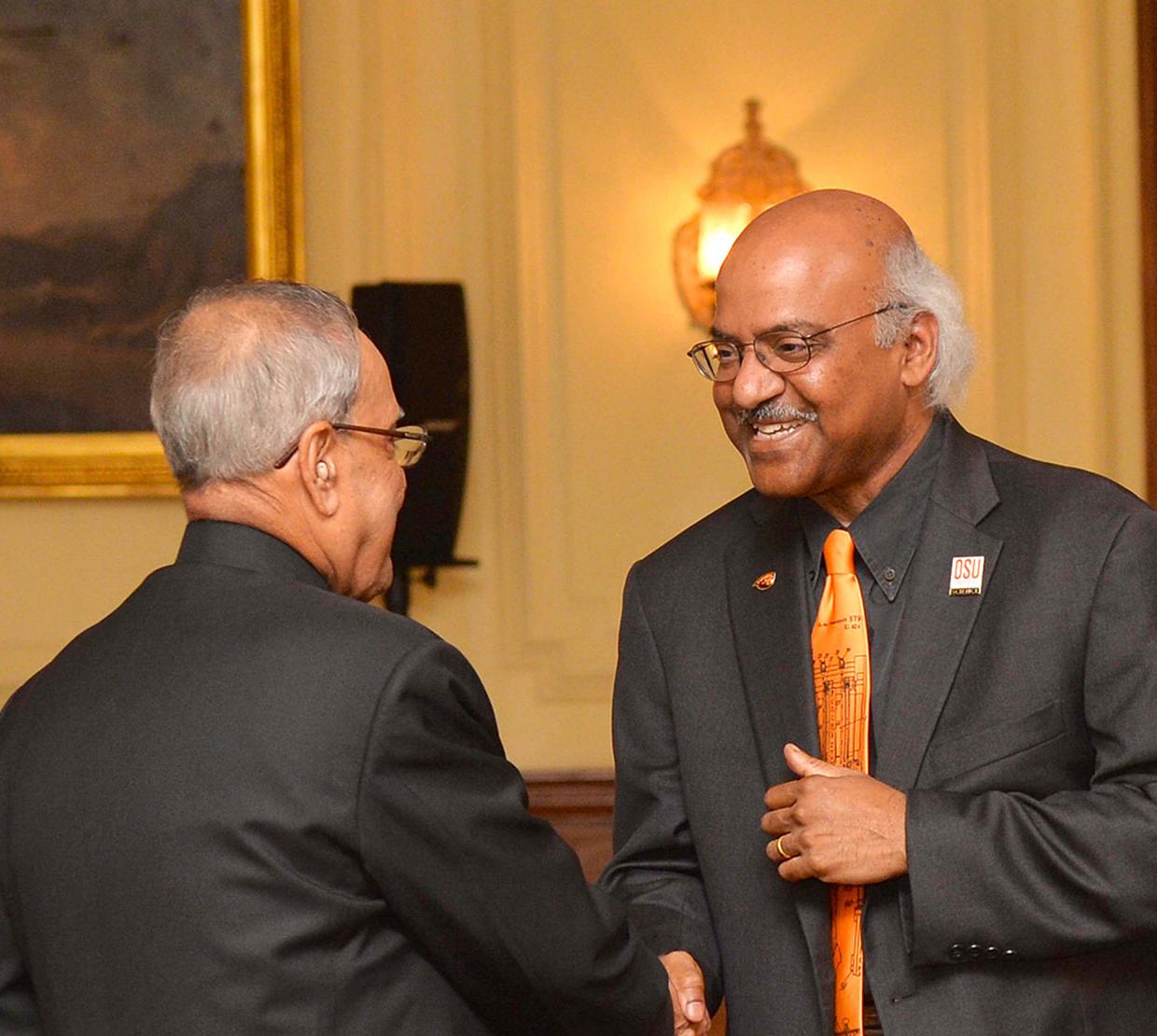
Sastry Pantula shaking hands with Mukherjee president

Oregon State statisticians in Hyderabad, India

Sastry Pantula at the 2017 International Indian Statistical Association (IISA) Conference

Statisticians from Oregon State University are in Hyderabad, India for the 2017 International Indian Statistical Association (IISA) Conference, December 27-30, 2017. The conference will take place at the Hyderabad International Convention Center. The theme of the conference is "Statistics and Data Science for Better Life, Society and Science."

Professor Sastry Pantula is a panelist in a discussion on Women in Statistics and Data Science. He is also a speaker in a special panel, entitled "Are Statisticians Prepared for the Data Science challenge?-A Career Development Panel." Pantula is a member of 2017 IISA's International Advisory Committee.

Assistant Professor Sharmodeep Bhattacharyya will present his research at a session on "Estimation and Inference in Networks and Graphical Models." Bhattacharyya will also chair a session on "Probability, Random Matrices, Big Data."

The 2016 IISA conference was hosted by the Department of Statistics at Oregon State at the Learning Innovation Center on campus, August 18-21. Emphasizing the theme of "Statistical and Data Sciences: A Key to Healthy People, Planet and Prosperity," the conference was attended by 200 statisticians from the United States and other parts of the world.

Read more: Welcoming hundreds of statisticians to campus
International statistics conference comes to campus

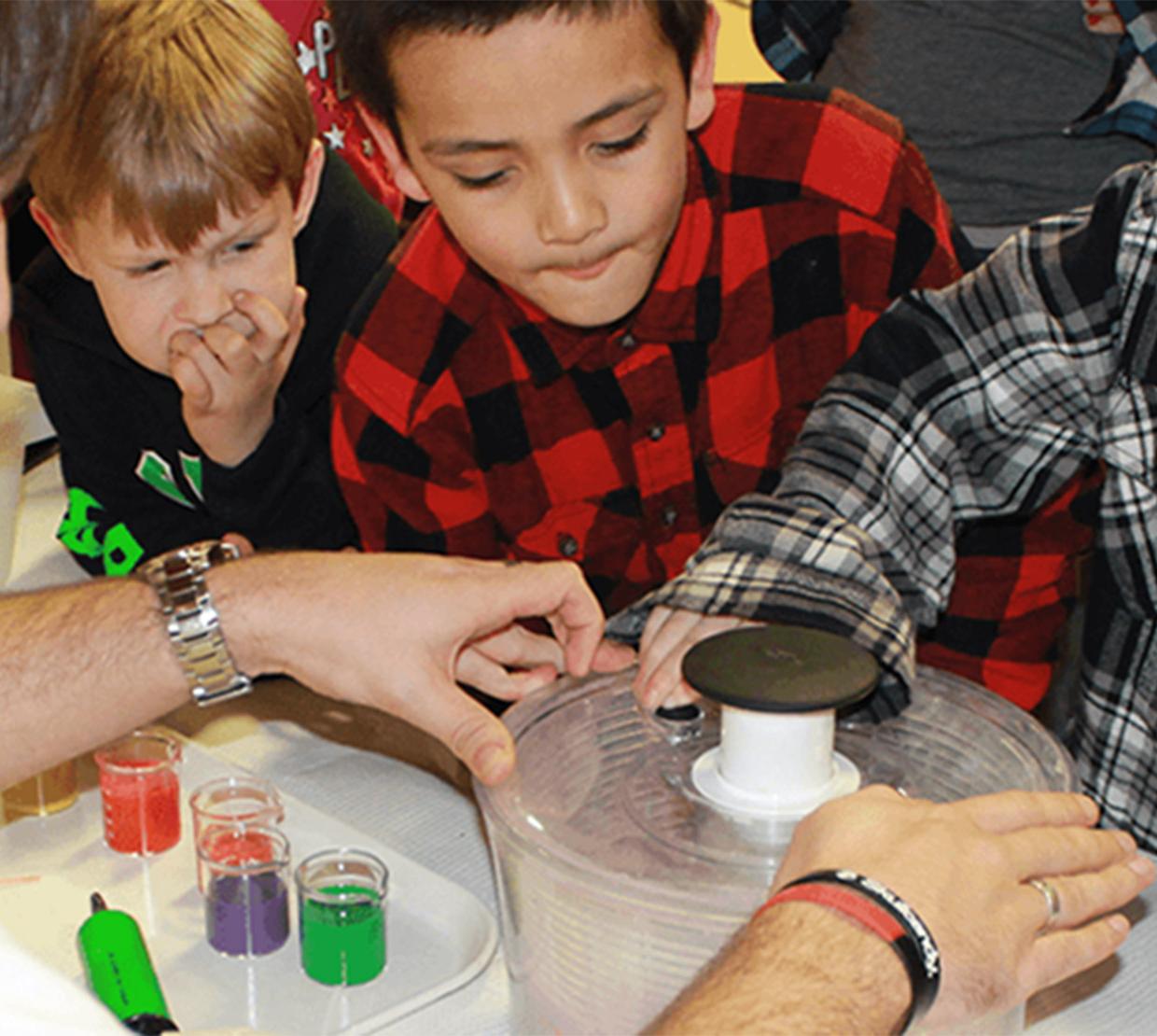
children looking at science themed booth

From the lab to the world: OMSI Science Communication Fellowships

The OMSI Science Communication Fellowship Program

Applications are open for Oregon's top academic and professional fellowship program: The Oregon Museum of Science and Industry's OMSI Science Communication Fellowship. For spring 2018, the fellowship is open to researchers or science professionals including faculty, graduate students, technicians, or other individuals in STEM and health related professions.

The deadline for applications is Wednesday, November 1.

Held primarily in Corvallis, OR on the OSU campus, OMSI Fellows participate in a series of professional development workshops that cover science communication best practices and provide opportunities for participants to practice new skills and techniques. In collaboration with OMSI, each Fellow will develop a unique hands-on educational activity designed to communicate their research to public audiences and will join OMSI in engaging museum visitors with these activities at Meet a Scientist events.

A series of four professional development workshops will focus on building skills to effectively communicate scientific research with broader audiences. Workshops are 3-4 hours each, spaced over the course of three to four months.

Tuition for the program is $1850 per participant. The Science Dean's Office will cover half the tuition for all accepted College of Science applicants.

The OMSI Science Communication Fellowship Program is an excellent way to fulfill broader impact and outreach goals for grant-funded research at OSU. Many of the participants in the Fellowship program secure their tuition through broader impacts or education and outreach components of current research grants.

An online application and further information about the Fellowship program can be found on OMSI's website.

Science students with professor looking at experiment in lab

Science students awarded second highest number of scholarships at OSU

By Steve Lundeberg

Science students in the field

The university has awarded more than $39.5 million in scholarships to students for the 2017-18 academic year, a key component of OSU President Ed Ray’s Student Success Initiative.

Roughly $24.5 million of the total is spread among 7,271 scholarships to returning students. The rest is for awards to 2,532 new/incoming students, including 34 who received a $10,000-per-year Presidential Scholarship, OSU’s most prestigious undergraduate scholarship.

Approximately 35 percent of this year’s first-year students are receiving scholarship support.

Scholarships for science students at an all-time high

College of Science students received the second highest amount of scholarship funds in the university.

More than $7.5 million in scholarship money is going to College of Science students, the college’s highest total ever, said Roy Haggerty, dean of the college. That is triple the amount awarded two years ago. Reasons for the jump include increases in university scholarships and in the number of high-achieving students enrolling in the College.

Nearly $5 million is allocated to 1,344 scholarships for returning students. The rest is for awards to 570 incoming/new students, including nine who received a Presidential Scholarship.

This year more than half of the college’s first-year students received scholarship support.

“Scholarships enable the college to attract, retain and inspire top science students, most of whom go on to high-achieving careers in industry, graduate school, medical school and other professional programs after graduation,” Haggerty said.

“Oregon State’s financial-need-based scholarships also help academically talented low-income and first-generation students from Oregon and elsewhere stay and excel in college.”

First-generation students typically have a greater financial need so scholarships are a crucial part of their educational equation, said Haggerty, who was first in his family to attend college.

“In our College, the number of first-generation students has risen from 20 percent to 29 percent in the last five years,” he said. “Many scholarship students in the College of Science attest to the value of scholarships in easing the financial burden on their families and enabling them to focus on academics, research, volunteer activities and post-college career goals.”

College of Engineering netted the highest amount in scholarship support. Thirty-five percent of engineering students are receiving scholarship support. They are receiving $12.7 million, with $7.9 million divided among 1,948 scholarships to returning students. Nineteen of the 804 their incoming scholarship students are Presidential Scholars.

In third place is the College of Business. It was awarded more than $3.7 million in scholarships, including roughly $2.3 million spread among 761 scholarships to returning students. The remainder is awarded to 276 incoming students, including one Presidential Scholar. About 29 percent of this year’s first-year business students are receiving scholarship support.

arial shot of Baltimore cityscape

Statistics researchers at JSM 2017

Joint Statistical Meetings 2017 hosted in Baltimore

Faculty and students from the Department of Statistics are participating in the Joint Statistical Meetings (JSM) 2017 in Baltimore, July 29 - August 3. JSM is one of the largest statistical conferences in the world, hosting more than 6,000 statisticians from academia, industry and government and featuring more than 600 research sessions and poster presentations.

Topics at JSM 2017 range from statistical applications to methodology and theory to the expanding boundaries of statistics, such as analytics and data science.

College of Science Dean Sastry Pantula, who is also a Professor of Statistics, will be the luncheon speaker and present a talk, "Strengths, Opportunities and Challenges in the era of BIG Data: An Asian Statistician Perspective." He will discuss: The strengths Asian statisticians bring to the profession, opportunities that exist for Asian statisticians in the era of BIG data across all sectors, how universities and professional societies can help build future leaders in statistics, the needs and challenges Asian statisticians face and how Asian statisticians can strive for excellence, enhance diversity and foster harmony in the profession.

Pantula is delivering a talk during the Pre-Conference Workshop, which is part of a continuing education course, " Preparing Statisticians for Leadership: How to See the Big Picture and Have More Influence, Part 2." The course, which is being held Sunday morning on July 30, addresses what leadership is and how statisticians can improve and demonstrate leadership to affect their organizations. It features leaders from all sectors of statistics speaking about their personal journeys and offering guidance on personal leadership development with a focus on the larger organizational/business view and influence.

Pantula is also participating in a panel discussion of current and former Deans and Provosts of Arts and Sciences who are statisticians. Panelists will share their perspectives and experiences about how to advance the mission of statistics departments in the current university environment. The panel is on Thursday, August 3.

All OSU Statistics alumni are welcomed at a special reception for them on Tuesday, August 1 from 5:30-7:00 p.m. at the Hilton Hotel on Pratt Street in Tubman A. The event offers the perfect occasion to reconnect with other alumni, OSU faculty, students and friends. We look forward to catching up with alumni to hear about their accomplishments and successes!

Below is a complete list of our faculty and student who are presenting talks and poster presentations at JSM 2017. Many of our faculty and alumni are also representing OSU on various committees, are presenting papers on which they are co-authors and participating in other ways at the conference, but are not listed below.

student working on math homework holding calculator

Students experience a summer of state-of-the-art data science research

By Srila Nayak

Research Experiences for Undergraduates (REU)

Two new Research Experiences for Undergraduates (REU) in the field of statistics are training students in cutting-edge and advanced data analytics and computational skills essential to interdisciplinary research across the fields of statistics, microbiology and quantitative sciences.

New grant trains students in data analytics

The Department of Statistics was awarded its first Research Experiences for Undergraduates (REU) grant this year. The National Science Foundation’s REU program supports comprehensive, hands-on research experience for undergraduate students in the STEM fields, and awards funds to initiate and conduct projects that engage a number of students in research.

Statistics faculty Yanming Di, Lan Xue, Thomas Sharpton (PI; joint appointment in microbiology), Duo Jiang and Yuan Jiang received the NSF REU grant from the American Statistical Association (ASA). The $380K project is for 2016-2018, to support three REU sites per year, for a total of nine REU sites across the country. The grant funds 10 weeks of research and training for four undergraduate students at each site. Each student receives a stipend of $8,000.

The overall objective of the ASA-supported REU program is to promote undergraduate research experiences in statistics and to prepare students for graduate study in statistics. According to ASA, "The students will see how statistics has an impact on fields such as engineering, atmospheric science, health care, and all kinds of public policy."

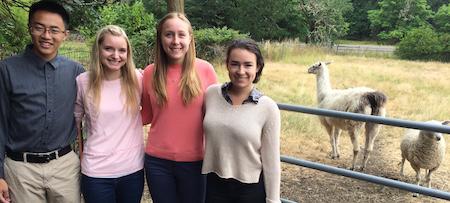
Aaron Huang, Ellen Kulinksy, Betsy Hensel and Shelby Taylor standing with a sheep and llama

Statistics REU students (from l to r) Aaron Huang, Ellen Kulinski, Betsy Hensel and Shelby Taylor enjoy the outdoors in Corvallis.

Oregon State University was chosen by ASA as one of three REU sites this year and is currently hosting students from across the country from June 19 until August 25. The four REU participants were selected from more than a hundred applicants in a highly competitive process.

The REU students are Shelby Taylor from Brigham Young University, Aaron Huang from the University of Washington, Ellen Kulinsky from the University of California-Berkeley and Elizabeth Hensel from the University of Virginia.

"The students are stellar and they are doing a fantastic job with the research. They were selected for this transdisciplinary REU because of their prior knowledge and preparation in both statistics and biology. We are very lucky to have them here," said Sharpton.

The students are gaining exposure to the entire data analysis process as it relates to biological research. They analyze DNA sequence data and use statistical methods to determine how the types of bacteria that live in the gut, known as the gut microbiome, relate to human health, lifestyle and environmental conditions.

Specifically, the students are analyzing data from a large, crowd-sourced, citizen science project led by American Gut which collects human samples, ranging from saliva to stool, along with questionnaire responses about individual lifestyles and diet. Working closely with an interdisciplinary team of faculty, each student will conduct a complete data analysis, which includes data quality control, applying statistical and bioinformatics techniques, data visualization. Faculty members will train students in all of the techniques and skills that they need to complete the project.

Students will analyze the data to gather information on how the gut microbiome varies across individuals and its association with a variety of health and lifestyle factors. Some of the REU projects explore how body mass index affects the microbiome; the relationship between age and the microbiome; and the associations between the gut microbiome and food and alcohol consumption.

REU students acquire knowledge and expertise in statistics and biology through intensive subject lectures. Hands-on experiential learning projects in bioinformatics and biostatistics give them ample opportunities to apply their theoretical and conceptual learning to design experiments and deduce results from complex data sets. The data-driven REU will prepare students to capitalize on the growing professional opportunities in data analytics.

While Sharpton and Jiang are extensively involved in guiding student research projects, the REU is a deeply collaborative process in which the other faculty are serving in important mentorship roles and providing expertise in theoretical and computational subject areas. Di, for example, has been teaching students computer coding and programming. Students are also learning R, LaTeX and Matlab as a part of their statistical and biological research.

"The REU has provided our faculty an opportunity to work with ambitious and talented undergraduate students. It has also exposed students to cutting-edge microbiome science. Through their research they are seeking answers to novel questions on human health and the microbiome, a new area of study about which much remains to be done," said Sharpton. He hopes to bring a similar opportunity to OSU students in the future.

This REU in the area of microbiome informatics research is a pivotal part of Oregon State Microbiome Initiative (OMBI), and is slated to advance education and research in the statistical, biological and computational sciences at OSU. OMBI launched this spring.

The students' research and learning experiences for the REU project are generously supported by the Department of Statistics, the College of Science and the Center for Genome Research and Biocomputing (CGRB). At CGRB, the students have conducted bioinformatics research and analysis with the aid of its biocomputing cyber infrastructure.

More information is available online.

Photo above: College of Science Dean Sastry Pantula with (l to r) Statistics REU students Ellen Kulinsky, Aaron Huang, Betsy Hensel and Shelby Taylor

The Summer Institute of Statistics targets talented, underrepresented students

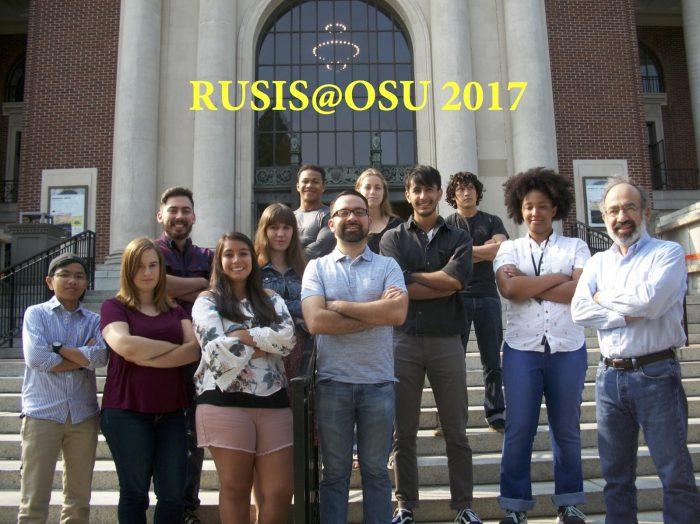
Javier Rojo with RUSIS group in front of the Memorial Union

Professor Javier Rojo (far right), who joined the Department of Statistics in January 2017, has moved his award-winning REU site, Research for Undergraduates Summer Institute of Statistics to Oregon State (RUSIS@OSU) from the University of Nevada, Reno. In 2003 as a professor at Rice University, Rojo started the country’s first Research Experiences for Undergraduate (REU) Program in the field of statistics, which has been extremely successful in recruiting, training and guiding underrepresented minority and economically disadvantaged students towards advanced degrees in mathematics and statistics.

The Institute conducts a 10-week intensive summer program for the study of statistics and its applications for a cohort of 12-15 students every year. This summer 12 students, chosen from a pool of 70 applicants, are working on statistical research projects at OSU from June 19-August 24. The REU cohort is 50 percent female and 10 of the 12 students are underrepresented minorities. They hail from institutions such as the University of Texas, El Paso, University of Arizona, Occidental College, California State University, Bakersfield, Fresno State University, Texas State University, San Marcos, Duke, and Harvard among other places.

"One of the benefits of transferring the REU program to OSU is the name recognition that will attract talented students. It is also a great recruitment tool and may inspire students to apply to the Statistics Graduate Programs at OSU," said Rojo.

There is promising data that REUs have a positive impact on graduate recruitment in host institutions. According to Rojo, approximately 10 students who received their Ph.D.s at Rice University had been RUSIS participants during the years the program was housed at Rice.

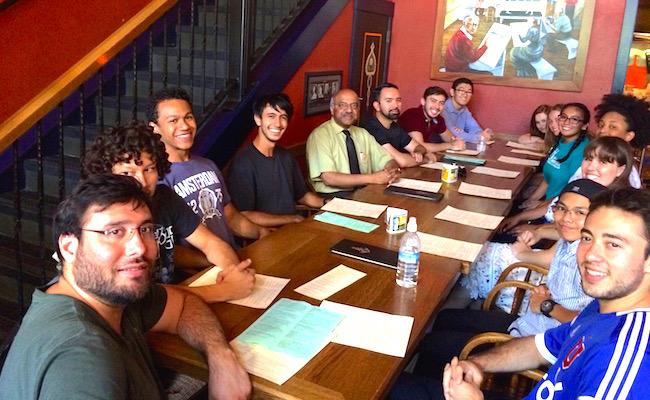
RUSIS students eating lunch at McMennamins

Current RUSIS students represent a mix of majors including engineering, computer science, mathematics and the social sciences such as psychology. Under Rojo's guidance they are pursuing research on ambitious and exciting projects that involve studying data to measure the impact of the Clean Air Act on environmental pollution, investigating studies on the impact of obesity on the environment from a statistical standpoint, using probabilistic and statistical components to model data for better financial investment decisions as well as various other research projects.

Research projects at RUSIS, Rojo points out, involve heavy computation. The students are undergoing valuable computational training and learning various programming languages such as R, LaTex, Matlab and Mathematica taught by graduate students in the Department of Mathematics. Students also go through a four-week course on statistics and probability that brings them up to speed with statistics.

At the end of the program the students are expected to produce a technical report in LaTex and present a research talk to a scientific advisory committee comprising experts from Georgia Institute of Technology, University of Arizona, University of Michigan, Rice University and the University of Texas, El Paso.

Owing to the paucity of statistics undergraduate programs in the country, Rojo has encountered fewer than one percent statistics majors at RUSIS. Most RUSIS participants come from fields such as biology, business and computer science. But he notes that nearly 30 RUSIS alumni have gone on to earn a Ph.D. in statistics and biostatistics.

"My main objective is to encourage students to obtain a Ph.D. in statistics if they have the opportunity to do so," said Rojo.

The program has been variously supported and funded by the NSF and the National Security Agency (NSA) for the last 15 years. Owing to Rojo’s sustained efforts and leadership, the American Mathematical Society (AMS) selected his REU program for its award “Mathematics Programs That Make a Difference” in 2014.

The AMS award citation states, "As the first REU in Statistics, RUSIS has served as a model program for others to emulate, both by encouraging undergraduates to pursue graduate studies in the mathematical sciences and by increasing the numbers of underrepresented minorities and women in mathematics and statistics."

Under Rojo’s leadership, the program has taken phenomenal strides: After 10 years, the REU program reported that 85% of the undergraduates who attended the Summer Institute were admitted to Ph.D. programs around the country, with roughly 61% of students hailing from underrepresented populations and 53% of the participants have been female.

These impressive results were achieved through “intensive statistics courses, close supervision of research projects and visits to various research institutes and agencies in the area” according to Rojo, who is responsible for the students’ computational training and research projects.

Read more: Internationally renowned statistician joins faculty

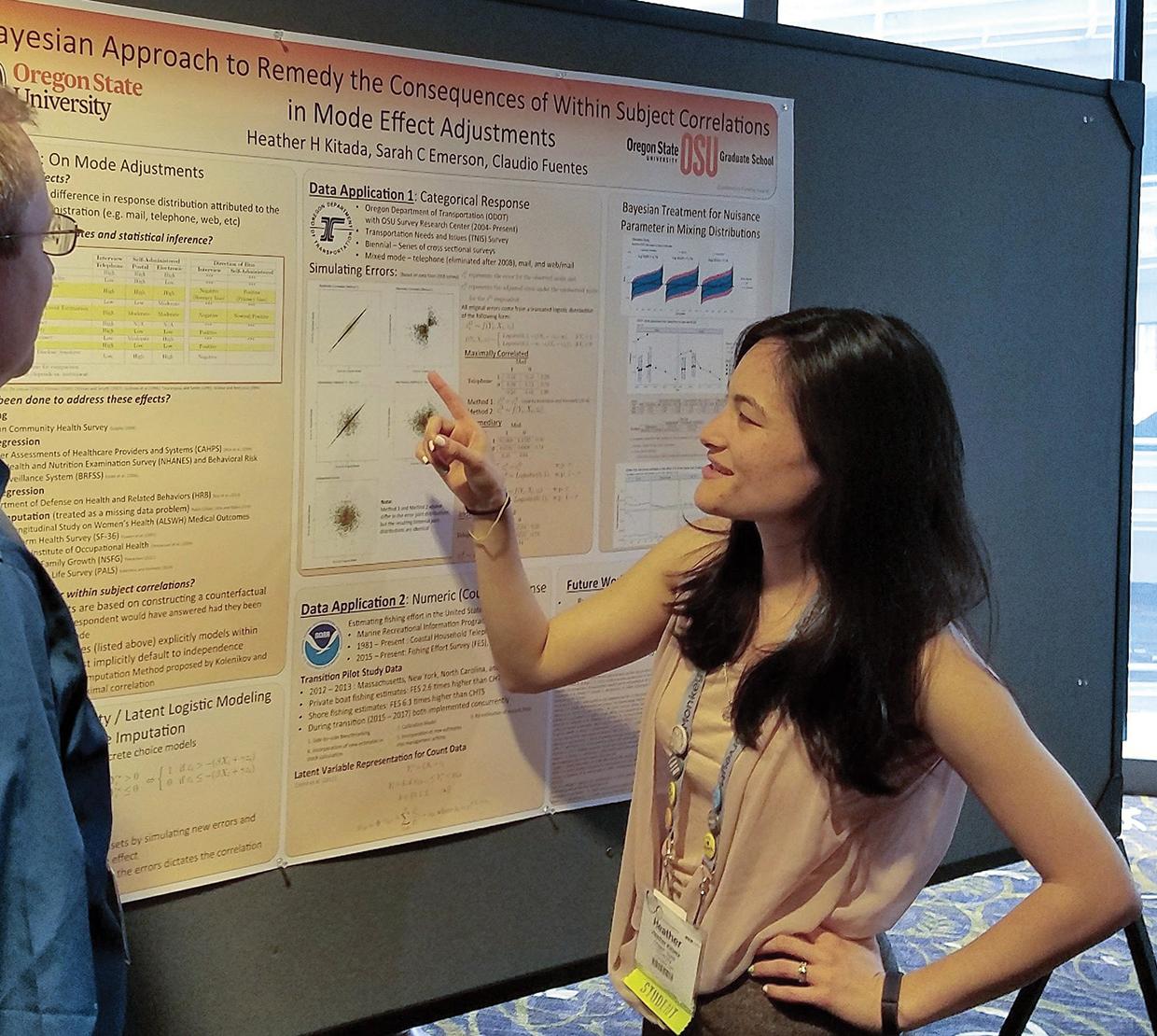
Heather H. Kitada talking about her research poster

Statistics student excels in data-driven research, teaching

By Srila Nayak

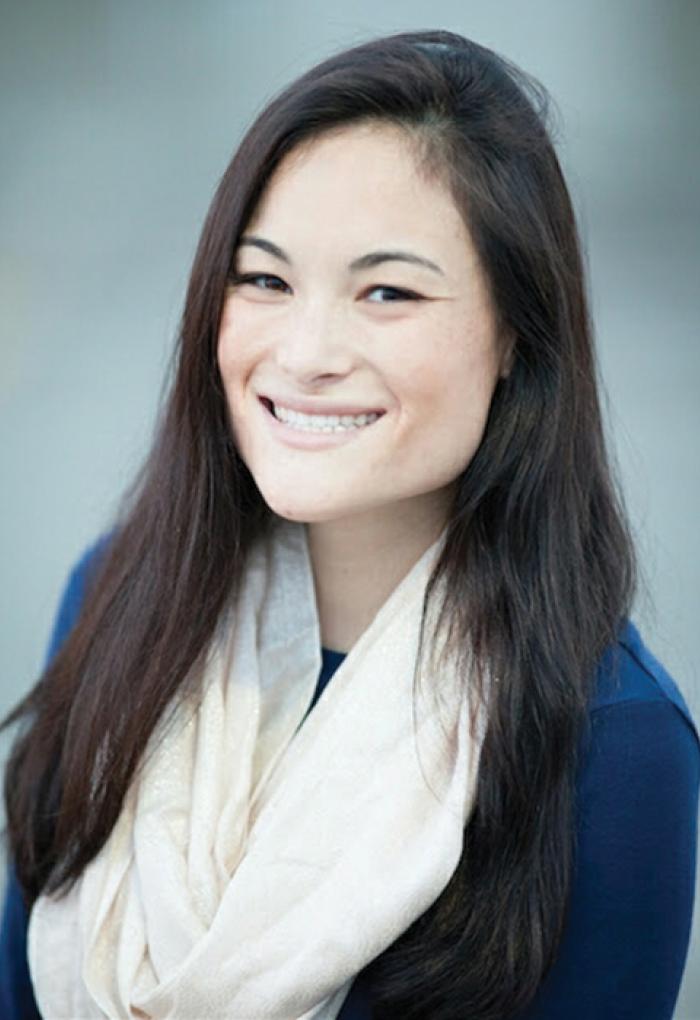
Heather Kitada, Ph.D. graduate in statistics

Ph.D. graduate Heather H. Kitada enjoys working in both statistics and the wider world of science communication, outreach and advocacy. A native of Pasadena, a third-generation Japanese-American and the eldest child of a dentist couple, Kitada grew up learning and performing Japanese dance in Pasadena’s Buddhist temples with her younger sister, competing in science fairs and taking part in girl scout activities.

Kitada achieved her cherished dream of teaching at a liberal arts college, landing a visiting assistant professor at Reed College following graduation.

She came to Oregon in 2008 to study for an undergraduate degree in mathematics at Lewis and Clark College in Portland and stayed on to pursue a Ph.D. in statistics at OSU.

Passionate about undergraduate teaching, Kitada amassed tons of teaching experience at OSU, teaching statistics courses at OSU and at OSU Cascades in Bend. She enjoys connecting with students and watching them master the material.

Heather Kitada in front of grey backdrop

Heather Kitada, Ph.D. student in statistics

“I really appreciated the experience of teaching a group of people who are interested in learning,” Kitada said.

Alongside her doctoral research, she earned a Graduate Certificate in College and University Teaching (GCCUT), a two-year program which she completed in a year. She served as a graduate teaching assistant for the GCCUT program and was the lead fellow at OSU’s Center for Teaching and Learning where she developed curriculum for training new graduate teaching assistants from all disciplines in pedagogy and school policies.

Kitada received prestigious national awards for statistical research. She led her team to victory and was awarded the first place in the ResearchHack 3.0 competition at the 2017 annual conference of the American Association of Public Opinion Research. She wrote a Shiny App that provided innovative and useful insight on employing data from several sources to help non-profits in planning future fundraising endeavors. The competition was hosted by the U.S. Census Bureau, who also provided data for the contest.

Kitada received the 2015 Joint Statistical Meetings (JSM) best poster presentation award in the Survey Research Methods Section for her poster, "Adjusting for effects of survey model differences across a longitudinal mixed-mode study." She also awarded the Rose Hill Foundation Statistics Fellowship for academic achievement.

Her graduate research focuses on sampling and survey methodology. With her advisor Sarah Emerson, Kitada explored statistical methods to correct for biases that stem from different modes of collecting surveys (telephone, mail and web) as well as different models to estimate bias.

Her decision to study for an advanced degree in statistics, she says, owes a lot to Emerson’s support and guidance.

“The reason I am so excited to work with her is because she is a great researcher and she has this drive to find answers. She is also very creative,” Kitada said.

Kitada enjoys disseminating statistical knowledge and illuminating its many uses outside the classroom. She has done a lot of statistical consulting for other scientists and for different companies, and authored a paper with area physicians after they reached out to her for statistical assistance on a patient study.

Kitada, who wants to make the most of her experience at OSU, has also served as an OMSI (Oregon Museum of Science and Industry) Science Communication Fellow, participating in STEM outreach events for young children.

“It is very important for OMSI to show children, especially young girls, that scientists are diverse. Children see us and they realize that there are so many different types of people who can be scientists and it broadens their horizons,” she noted.

Kitada wants to continue her mission of teaching and outreach in the area of statistics. She looks forward to making a difference in the lives of many more students going forward.

microscopic view of mating diatoms

Diatoms have sex after all, and ammonium puts them in the mood

By Steve Lundeberg

Diatom Arachnoidiscus

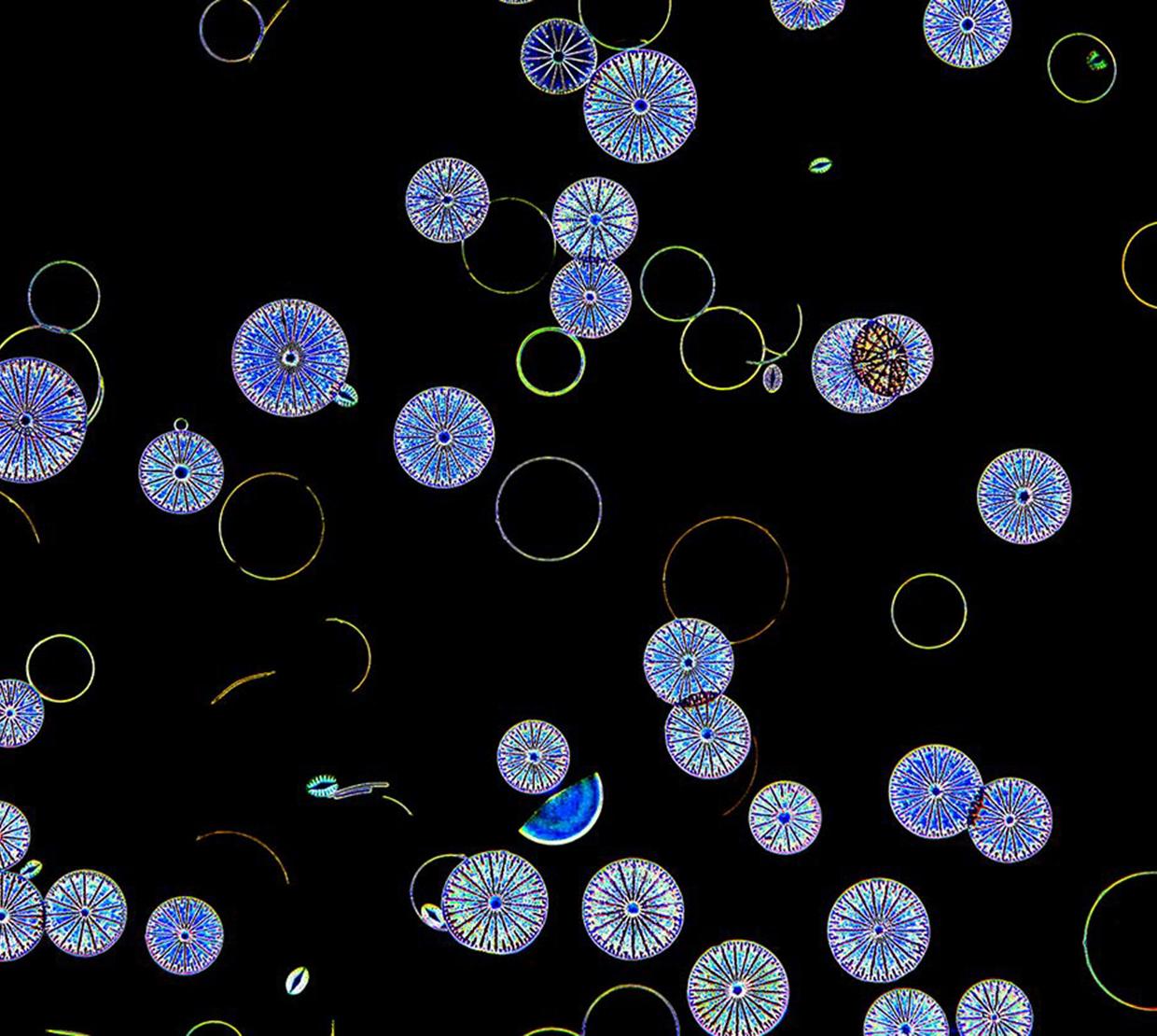
New research shows a species of diatom, a single-celled algae thought to be asexual, does reproduce sexually, and scientists learned it’s a common compound – ammonium – that puts the ubiquitous organism in the mood.

The findings, published today by microbiologist Kimberly Halsey in PLOS One, may be a key step toward greater understanding of the evolution of sexual behavior and also have important biotechnology implications.

picture of diatom mating with one another

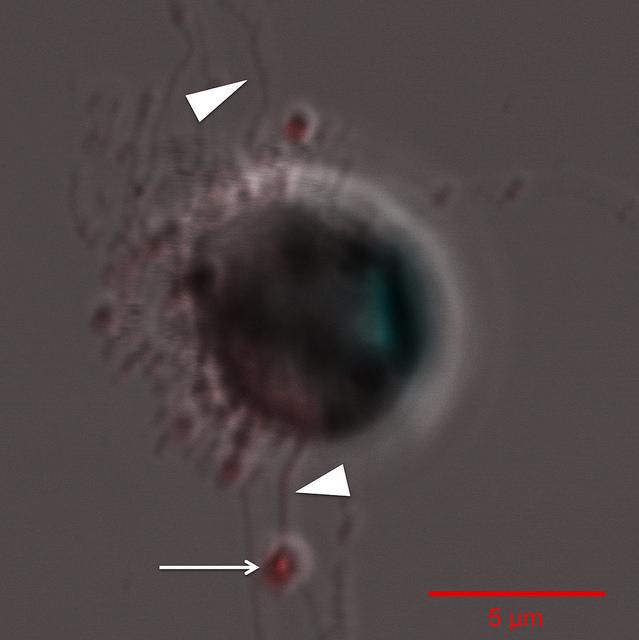
An arrow points to Thalassiosira pseudonana sperm cells and wedges indicate the flagella that allow the cells to swim to an egg for fertilization. Artificial coloring denotes chlorophyll (blue) and DNA (red).

“Our discoveries solve two persistent mysteries that have plagued diatom researchers,” said Halsey. “Yes, they have sex, and yes, we can make them do it.”

Diatoms hold great potential as a bioenergy source and also for biosensing. In addition, their intricate, silica cell walls offer promising nanotechnology applications for materials chemists and drug-delivery researchers.

Halsey and collaborators in botany and statistics from OSU’s Colleges of Science and Agricultural Sciences, including microbiologist Alexandra Weinberg and statistician Yuan Jiang, studied the “centric” Thalassiosira pseudonana species of diatom, a model organism for researchers; it’s one of two diatoms, the other being the “pennate” diatom Phaeodactulum tricornutum, to have had its genome sequenced.

“Diatoms are amazing; their silica frustules are beautiful and exquisite,” Halsey said. “Now that we can control their sexual pathway, that should open the door to being able to make crosses between different diatoms with different characteristics. We should be able to breed them just like we do with corn or rice or strawberries to select for traits that are really desirable.”

Read the full story here.

laptop icon above galaxy texture

Online data analytics students prepare for top job in the country

By Srila Nayak

OSU Statistics online data analytics programs

Josh Stevens, an army veteran and a mid-career IT analyst at State Farm in Bloomington, Illinois, had been searching for the right online data analytics program for well over a year. The perfect match continued to be elusive. Either the curriculum fell short or the prerequisites weren't a fit and more often than not the tuition costs were steep. When he came across Oregon State University's new Master of Science Data Analytics program offered by the Department of Statistics, the price tag was immediately attractive to him.

At $28-$30,000, Steven found the program to be half the cost of data analytics programs at a lot of other universities. A data scientist who reviewed the curriculum assured Stevens that it would teach "the skills that are highly sought after in the field."

Close to finishing his first year in the program, Stevens couldn't be happier with his decision. Stevens considers the excellent teaching, the rigor of the courses and the lecture delivery mechanisms and technology to be the strongest attributes of the Data Analytics program.

"I am deeply appreciative of the amount of content that was taught and impressed by the powerfully effective teaching."

OSU Statistics is giving students like Stevens access to the training that will turn them into data scientists for companies, start-ups, governments agencies and research think tanks that are flooded with big data—a mind-boggling variety and volume of information about consumers, products and processes that has not been seen before.

One of the oldest statistics programs in the country, OSU Statistics recently took the big data plunge by launching two new online programs that teach students across the country how to turn massive troves of data into structured, practical and understandable information. The department has started an online Master of Science and a Graduate Certificate in Data Analytics programs, the first of their kind in Oregon.

The 45-credit two-year master's program and the 18-credit one-year graduate certificate will train professionals to make smart analytical decisions to understand massive data sets and answer crucial questions for businesses, companies and academic research.

Job surveys for the top 10 best jobs in the last three years have consistently ranked statistics-related careers very high on a list based on the criteria of income, growth outlook, stress and environmental factors. The message is unambiguous: talented statisticians and data geeks rule the market.

The 2017 jobs report released by career website CareerCast.com has even better news: Statistician tops the list as the No.1 job, and other quantitative and data-focused jobs follow close behind: Operations Research Analyst is No. 3 and Data Scientist is No. 5. Glassdoor's list of 50 best jobs in America has Data Scientist as the No. 1 job and Analytics Manager at No. 5.

The science and art of mining and distilling useful information from huge datasets has never been in greater demand, and the department is doing its share to meet the surging need for data analytics skills in this era of data explosion.

The Bureau of Labor Statistics projects demand for statisticians to grow 34 percent nationwide between 2014 and 2024. An eye-opening 2011 report from McKinsey Global Institute indicates there could be a shortage of 140,000-190,000 analytically skilled workers by 2018. A routine search reveals hundreds of openings for data science jobs in Oregon itself, ranging from iconic Portland-area companies such as Nike and Intel to fast-paced startups and a myriad of environmental, healthcare and consulting companies.

All trends indicate that data science is a sector in which demand outstrips supply, and if you possess a love for data and a talent for numbers, a bright future awaits.

The strengths of OSU data analytics

As educational openings proliferate in data analytics, OSU Statistics easily stands out among its peers in several important ways.

OSU statisticians are highly skilled at dealing with large qualities of complex and messy data and many have extensive experience mining data for insights across the fields of environmental science, agriculture, forestry and engineering. The courses in the new data analytics program are taught by award-winning and outstanding research faculty who have extensive hands-on experience and exposure to real big data challenges across academic and non-academic fields.

The online programs are offered through Oregon State Ecampus, which consistently ranks as one of the nation’s best providers of online education. In January 2017, OSU’s online programs were ranked in the top 10 for the third year in a row by U.S. News & World Report.

Statistics professors as well as faculty from the School of Electrical Engineering and Computer Science have created a rigorous, interdisciplinary curriculum that combines statistics, computer science, mathematics and plenty of real world data projects to give students deep and valuable experience with how to grapple with large amounts of variables and expose the underlying data structure. The objective is to impart a foundation in statistical reasoning, software and programming skills, and real-world experience that will make the graduates appealing to employers in a variety of industries.

Students are trained in advanced computational and statistical skills spanning the collection and storage of data to modelling, analysis, and the efficient communication of results to stakeholders. The online graduate program also offers an option in health analytics, where students can take elective courses in topics such as quantitative genomics—a specific track for people interested in pursuing public health or pharmaceutical research.

The M.S. program finishes up with a capstone project, a concrete example students can provide to an employer as evidence that they are ready to hit the ground running.

Stanford trained statistician Sarah Emerson has taught ST 517 (Data Analytics I) and is gearing up to teach ST 558 (Multivariate Analytics) in the Fall. An associate professor of statistics, Emerson believes the program's biggest strengths are its focus on the different quantitative tools and methods in data analytics as well as an edge it offers students in practical analytics training through its combined statistics and computer science curriculum. Computer science core courses cover topics in programming, big data management and applied machine learning.

"The most tangible skills are the three different programming languages that students will learn: R, SAS and Python," Emerson said.

These three are the most in-demand and popular programming languages in the business world. But Emerson is also keenly interested in encouraging certain habits of critical thinking in her class as students engage with pressing issues that have emerged with large datasets in the present day.

“One of my goals is that students in our courses can choose appropriate statistical analysis tools given a particular data set in the real world and understand what questions can be answered with a particular methodology,” said Emerson.

So far, Stevens has taken courses in the foundations of data analytics where he has learned the gamut of statistical modeling frameworks, predictive modeling, R, Python, survey methods and machine learning. Stevens, who holds a master's of science in technology management, entered the program without much of a statistical background. But after putting in 20-30 hours of work every week on his online data analytics coursework, Stevens is closing the gap. He has acquired statistical and analytical capabilities such as data visualization that are already paying off in his workplace.

"I didn’t know how to use R earlier. Now I am able to use R at my job for a variety of tasks—exploratory data analysis, visualizing large datasets—things that are impossible to capture in Excel,” said Stevens.

Stevens is also undaunted by the amount of work required as a student of data analytics. “It is not a program you can take lightly and set aside just two to three hours for every week. If it wasn’t challenging, I would question its value. It is pretty incredible what I have been able to learn in the last three quarters."

If you are fearless about the work involved, then the data analytics program may well be your cup of tea. They are well-suited to professionals looking to develop additional skills and learn specific tools in data analytics, as well as to an on-campus OSU students who wish to understand statistics and analytic practices for their research or future career prospects.

Teaching and learning data analytics in a virtual classroom

Assistant professor Charlotte Wickham, a Ph.D. in statistics from University of California, Berkeley, is a specialist in R training and has taught online courses in data visualization and the foundations of data analytics. She has taught diverse groups of online students, some of whom are enrolled in the online Masters statistics programs and others who hail from disciplines such as fisheries and wildlife and ecology.

Wickham has been pleasantly surprised by the discoveries she has made while teaching her first course in the program, chiefly among them being high levels of peer interaction and an enthusiastic and collaborative learning atmosphere.

“Students have been really forward with asking questions in the online discussions, and not having to respond on your feet means my responses are generally more complete," said Wickham.

The online data analytics lectures leveraged by the top-ranked OSU Ecampus are of a very high standard and quality. Lectures and slides are thoughtfully prepared using state-of-the-art and innovative course delivery strategies keeping in mind student retention and engagement. There is a lot of emphasis on "student engagement, student support and student satisfaction."

“Ecampus is fantastic in terms of the resources it provides. We are fortunate that Ecampus makes class engagement a big focus in online course preparation. They provide the technological support and the necessary pedagogical feedback to ensure there is a direct interactive perspective in our lectures to keep students involved, interested and attentive," observed Emerson.

Emerson found that the discussion boards were always abuzz with ideas, voices and statistical solutions.In addition to discussion boards, online quizzes and online labs create a rich, diversified learning environment, in which students learn and achieve more than they thought possible in an online program.

“It was a multi-faceted experience. My online students were required to contribute, but their contributions went well above and beyond the required level. It works out very well for the students because it turns out to be what they needed and what fit into their lives.”

Although online courses are completely prepared and all lectures pre-recorded well before students actually go through the class, at OSU it continues to be an interactive process between students and teachers through Skype chats, emails and discussion boards.

“I expect instructor involvement is not unique to OSU. But I know that is not the way some online courses are taught. We want to keep our students interact with each other, interact with the instructor and learn from the interaction process," added Emerson.

This combination of inspiring and high-quality teaching as well as exposure to statistical and computational tools to analyze data are helping professionals succeed as data scientists. Stevens is rapidly gaining skills in advanced analytics that are helping him excel at his present job and multiplying his professional options.

"The Masters of Science program is enhancing my career prospects in several ways,” said Stevens. “It makes me more effective at work and more well-rounded in my work as an IT analyst. It also allows me more options should I decide to change careers.”

The advance of big data shows no signs of slowing and OSU's online data analytics program are training a new generation of data scientists with the rare and highly marketable combination of statistical and computational skills and scientific thinking.

Subscribe to Statistics