Statistics

Statistics

David R. Thomas

David R. Thomas

David Birkes

David Birkes

Scott Urquhart

Scott Urquhart

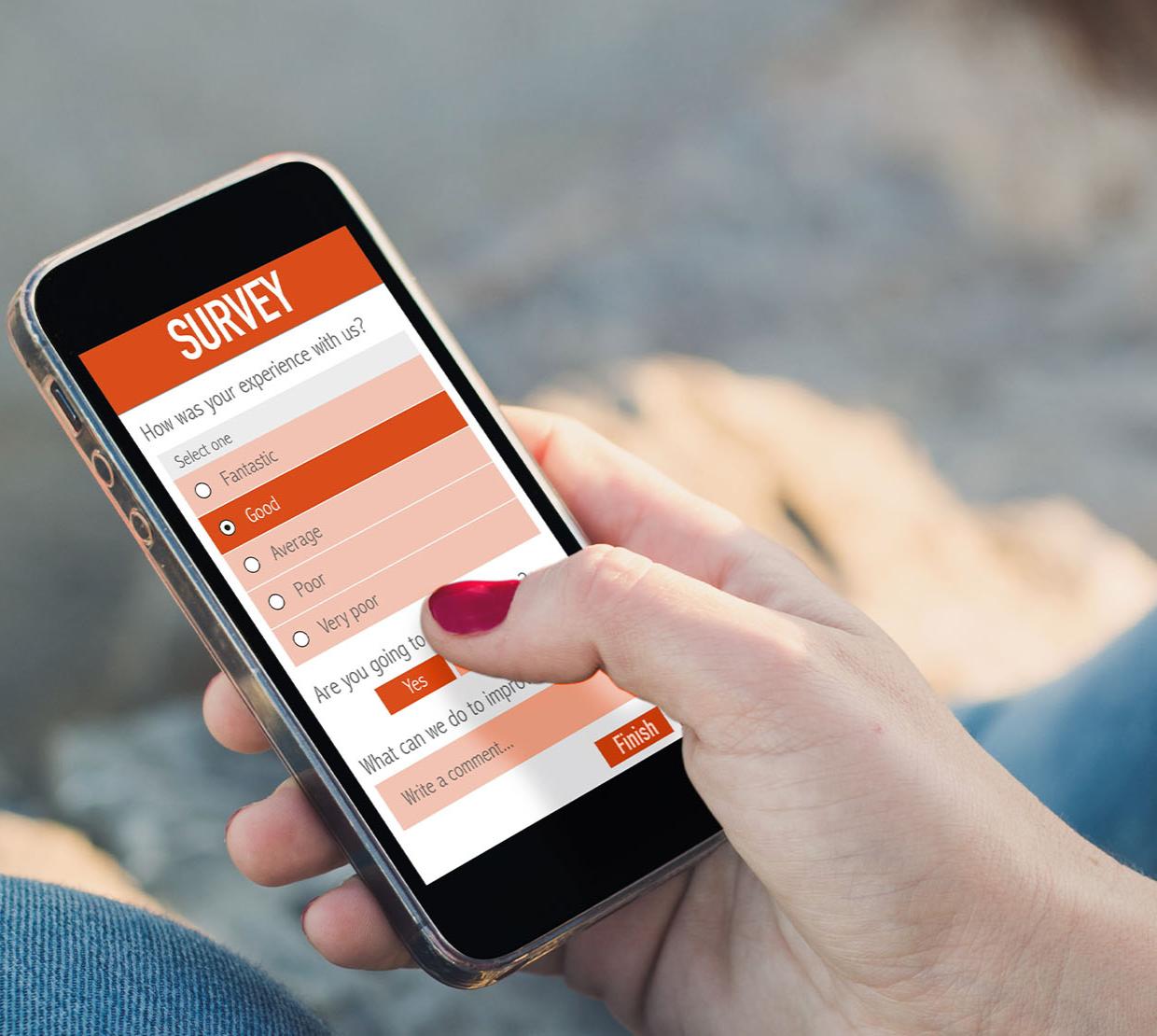
A hand with pink painted thumbnail uses a phone with an orange survey on the screen.

Oregon by the Numbers: Survey Research Center helps clients master the art of surveys

By Luke Nearhood

Imagine working for the Department of Motor Vehicles, not as a desk clerk or driving test administrator, but at the central office in Salem. Imagine that you were tasked with ascertaining how best to allocate fuel tax revenue. This revenue comes from the tax on fuel purchased for cars and trucks, marine boats, off-highway vehicles and other motorized vehicles. How would you go about distributing the revenue to the agencies responsible for these vehicles?

A survey to determine the fuel used in each category might be a good option, but where to begin? The Oregon State University Survey Research Center is ready to help. Since 1973 the Survey Research Center (SRC) has been working with Oregon State faculty and state government agencies to help them conduct and analyze surveys.

In addition to working with more than 15 different agencies in Salem including the Oregon Department of Transportation, Oregon State Marine Board and Oregon Department of Fish and Wildlife, the SRC has worked with Oregon State University faculty and staff on a variety of projects. Examples range from investigations in applied economics to surveys of students graduating from the College of Science.

"It's fascinating because I learned so much about the state for each survey we work with," said Virginia Lesser, head of the Survey Research Center.

The art of survey design

The process of survey design involves first working with the client to determine the budget and the population to be surveyed. Throughout the entire process there is constant back and forth with the client to figure out exactly what they want and what is possible.

Sometimes clients come in looking to survey a specific segment of the population, such as people who use their service. However, there is often no way of knowing exactly who comprises that population. An important component in designing surveys is to determine and accurately define the population from which the results are gathered. In order to obtain measures of confidence around any estimates, probability sampling must be used.

With probability sampling, every member of the population has an equal chance of being surveyed because they are drawn from a random distribution.

In contrast, non-probability sampling involves selecting from a non-random distribution, such as those who seek out a survey to participate in. Due to the lack of a random selection of individuals, it's impossible to identify biases or compute other measurements. Therefore, data collected using non-probability sampling should be interpreted with caution due to the impact of selection bias.

"So the challenge I have is working with a client to figure out how to get the opinions they need when they don't know who the people are that use their service," Lesser said.

Once the population has been selected, there are three primary components to designing a survey: writing the questions, selecting the probability samples and correctly analyzing the survey data. Writing questions is a bit of an art. Good survey questions should be both unbiased and flow well within a questionnaire. The sample selection depends on the population one is looking to reach and the sampling design. The statistical analysis methods must account for the sampling design and any survey errors, such as nonresponse.

The future of survey distribution

Survey administration methods have evolved significantly over the last several years. Phone-based surveys are not used as much as they were 20 years ago due to the low response rates. Web surveys have become more prominent.

Today the Survey Research Center conducts most of its probability-based surveys using a hybrid web and mail approach, combining the usability of the internet with the higher quality and response rates of mail. This ensures reaching a wider array of demographics than either form would alone.

A key advantage of mail-based surveys is that one can easily mail out surveys to every address or a random sample of addresses in an area. The list of addresses used to select the probability samples for SRC surveys covers nearly 100% of all households in the US. The hybrid web and mail approach provides the opportunity for all selected households to respond either by mail or by web. Thus not all households need to have internet access.

Another method to contact survey participants uses email addresses. Email-based surveys may also be used in cases where the SRC or the client knows the email addresses for the population and know that all potential participants have access to email, for example surveys of Oregon State faculty and students.

Increasingly, more surveys are being conducted using non-probability online panels. These panels are composed of people volunteering to complete surveys in exchange for remuneration or other benefits. They have become popular in recent years due to how cheaply and easily they can be used to get relatively large samples. However, the individuals from an online panel who complete a survey are not a random sample of the population. These respondents choose to actively participate because of personal interest, or because of some sort of incentive, such as a gift card.

Due to their self-selecting nature, estimates from non-probability panel surveys tend to be biased as compared to results from probability sampling methods. Relying on non-probability panels for unbiased information would be like relying on a jury entirely made up of people who really want to be on it.

In addition to its work helping others conduct surveys, the Survey Research Center staff also conduct original research. The main focus of their research is on comparing the effectiveness of different survey techniques, studying how even minute details such as envelope color and size, incentives and content of cover letters impact response rates.

Survey response rates continue to decrease and the research conducted by the SRC examines methods to improve response rates in their surveys. Recently, one of Lesser’s graduate students has been working on how to combine probability and non-probability samples, and thus how to integrate the two approaches.

In our ever-changing social and technological landscape, keeping a finger on the pulse of public opinion is vital. The behind-the-scenes work of designing survey questions and researching survey methods is just as vital. For the past 50 years, the Survey Research Center has done both, through their original research and the services they provided to their clients within and without Oregon State University.


A physicist works to zoom in on a microscope

New grants to support breakthrough discoveries

By Hannah Ashton

Four-dimensional tissue self-assembly, integrated river health and ultra-tiny spectrometers: The 2022 College of Science Research and Innovation Seed (SciRIS) award recipients will use collaboration to fill critical knowledge gaps across numerous scientific disciplines to drive real-world impact.

The SciRIS program funds projects based on collaborative research within the College of Science community and beyond. There are two tracks through the program: SciRIS (Stages 1-3) and the SciRIS individual investigator award (SciRIS-ii).

SciRIS Stages 1-3 funds teams in three stages of increasing funding to support training, research and capacity-building, accelerating work toward external funding opportunities. SciRIS-ii funds individual faculty to establish research relationships with external partners, enabling them to demonstrate the feasibility of their ideas and quickening the pace of scientific discovery.

SciRIS-ii Awardees

The following three scientists received SciRIS-ii awards: Bo Sun, Clayton Petsche and Ethan Minot.

Associate Professor of Physics Bo Sun’s research aims to lay the foundation for programmable four-dimensional tissue self-assembly. Current technologies have been unable to harness these naturally occurring processes to assemble dynamic tissue structures for biomedical and therapeutic applications. Four-dimensional tissue self-assembly is critical for many physiological processes including acute wound healing and in lethal tumor metastasis.

Sun and his collaborator, Yang Jiao from Arizona State University, will be building on eight years of collaborative research in the field of cell mechanics and cell migration that has resulted in eight publications.

Associate Professor of Mathematics Clayton Petsche will use his SciRIS grant to help three graduate students complete sub projects within the realm of arithmetic dynamical systems. The research will be entirely student-focused and will help establish their research credentials before entering the postdoctoral job market.

Professor of Physics Ethan Minot will use his award to bring ultra-miniaturized spectrometer technology to Oregon State and pursue follow-up opportunities.

In 2022, with co-authors from Finland, Minot was part of a study published in Science that resulted in a powerful, ultra-tiny spectrometer. Contributing to a field known as optical spectrometry, their discovery could improve everything from smartphone cameras to environmental monitoring.

Minot plans to bring the technology to Oregon to grow the new field of research.

SciRIS Stage 1 Awardees

Four groups of scientists received SciRIS Stage 1 awards up to $10K.

Associate Professor of Statistics Yuan Jiang, along with Anna Jolles, professor in the Department of Integrative Biology, received a SciRIS Stage 1 grant for a project which will help fill a knowledge gap and provide crucial tools to understand microbial community dynamics.

The team will develop a novel analytical pipeline that harnesses longitudinal microbiome data to define the ecological roles of host-associate microbes. Although the accumulation of microbial communities is essential to animal health, there are few statistical routes adequate for characterizing microbial community dynamics through time.

Integrative Biology Professor Anna Jolles and Carson College of Veterinary Medicine Professor Claudia Häse will use their SciRIS Stage 1 award to study eco-evolutionary host-bacterial-phage dynamics. Collaborating with a researcher from the University of Louisiana, the group will be using the Pacific oyster and shellfish pathogen Vibrio coralliilyticus as a model system.

In a project entitled “Bioinformatics for integrated river health,” Integrative Biology Professors David Lytle and Anna Jolles, along with Justin Sanders from the Carson College of Veterinary Medicine, will bring together expertise across disciplines to provide an integrated approach to understanding river health. The group will combine expertise in bioinformatic and genetic methods for characterizing aquatic invertebrate communities, aquatic parasite and pathogen communities, and fish microbiomes. Samples will come from the lower Colorado River, an ecologically and culturally significant ecosystem.

Biochemistry and Biophysics Associate Professors David Hendrix and Colin Johnson, along with Professor of Chemistry Claudia Maier and Patrick Reardon, director of the Nuclear Magnetic Resonance Facility at Oregon State, received a SciRIS Stage 1 award to create a pipeline of computational and experimental methods for the prediction, identification and functional characterization of microproteins. Previously dismissed due to their small size, microproteins are now thought to play significant physiological roles including pathological roles in cancer progression.

Disease Mechanism and Prevention Fund

Researching Parkinson’s disease, Associate Professor of Biochemistry and Biophysics Alysia Vrailas-Mortimer received a grant from the College of Science Disease Mechanism and Prevention Fund for a project entitled “Why is a fly a good model to study my grandmother’s tremors?”

Similar to the SciRIS-ii, the fund is focused on assisting individual faculty efforts to establish research relationships with external partners for projects specifically related to health science.

Using fruit flies, Vrailas-Mortimer’s goal is to determine how a stress response protein protects against Parkinson’s-associated iron-induced oxidative damage. Parkinson’s affects over one million people in the U.S. and her research could provide the basis for future therapeutic strategies.

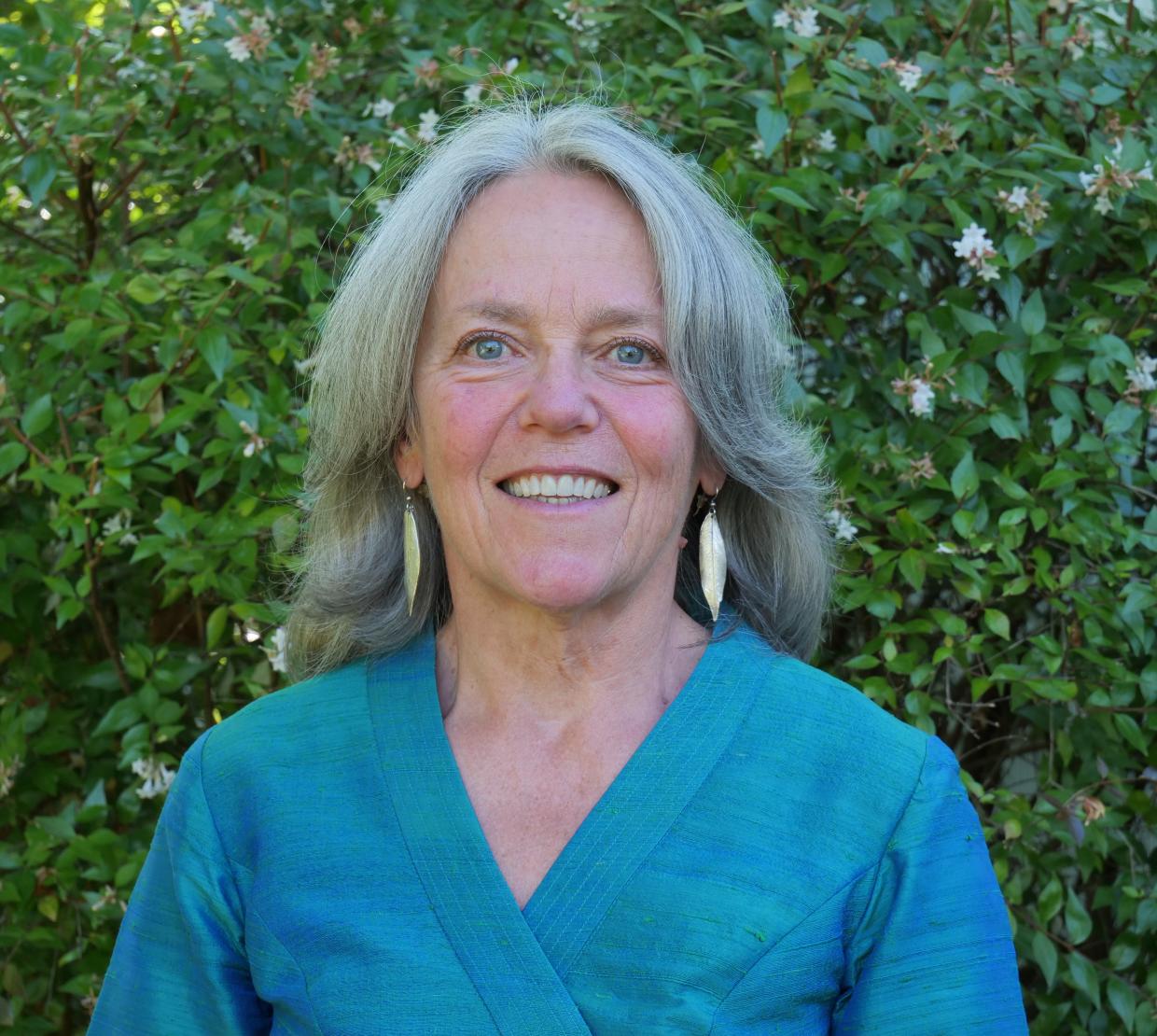
Manuela Huso in a blue shirt in front of green bushes.

Wildlife conservation: Devising statistical tools anyone can use

By Hannah Ashton

Research statistician emerita and alumna Manuela Huso (M.S., 88’) received the highest honorary recognition an employee can receive within the U.S. Department of the Interior.

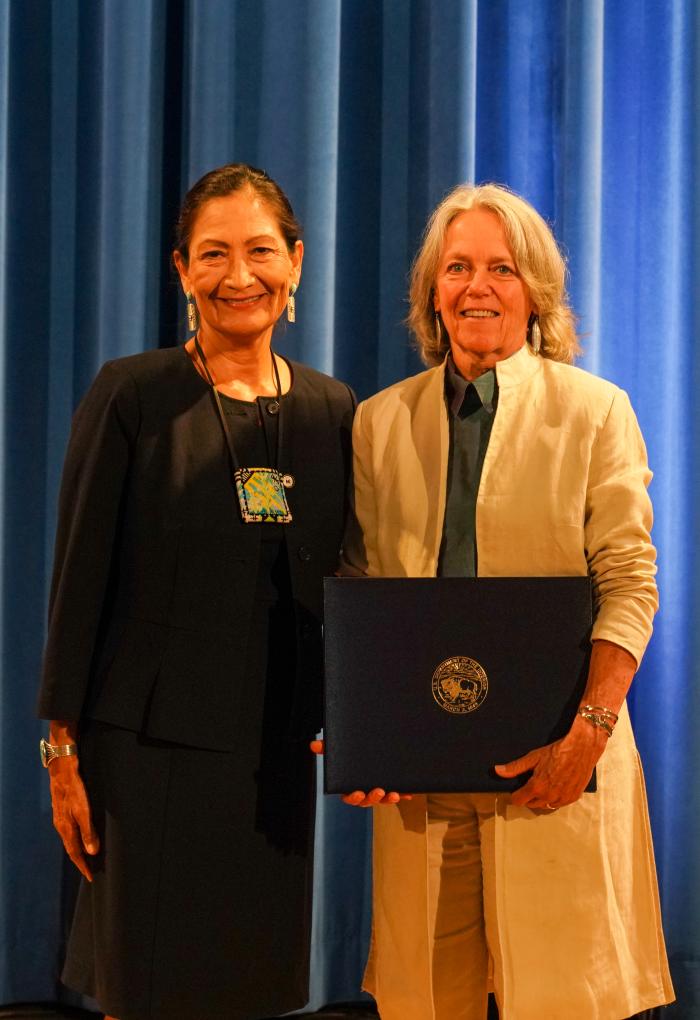
She awarded the Distinguished Service Award last fall for her “significant and highly impactful advancements in biological statistics and wildlife conservation ecology.”

Huso led the creation of statistically robust estimators of wildlife fatalities associated with wind-energy development while accounting for uncertainty in how impacts of turbine collisions are monitored.

To make these tools accessible to everyone, she put the software into packages for public use. Those programs, GenEst and Evidence of Absence, are now often required by the U.S. Fish and Wildlife Service as part of their permitting process for incidental take of wildlife at wind-energy facilities.

“It feels really good that I’ve been able to provide something that can be used by a lot of people. Whether you’re in a rich country or poor, it’s still accessible. And you don’t have to be a statistician,” she said. “It’s not a black box. That’s very important to my philosophy that whatever we do, anybody can look at the code and see what we’ve done and modify it for their own purposes.”

Huso’s passion for creating useful tools for scientists and industry started long before her work for the U.S. Geological Survey.

‘Statistically fascinating’

After graduating from Whitman College in Walla Walla, Washington, with a B.A. in Biology in 1978, Huso joined the Peace Corps.

Working as a forestry volunteer in Burkina Faso, located in West Africa, her experience was “life-changing.”

“There were incredible highs and pretty deep lows. It was an amazing opportunity to be in a part of the world and live a lifestyle that I would not otherwise have had a chance to do and work with people who were dedicated to their homes and doing the right thing for their place in the world,” she said.

During her free time, she started to think about opportunities that would combine her interests in mathematics and biology.

After the Peace Corps, she attended the University of Oregon and received her master’s in theoretical ecology, which she thought was the perfect fit. However, after entering the job market she realized her skills in statistics were worth more.

Oregon State Professor of statistics Fred Ramsey (now Emeritus) took Huso on as a student and she graduated in 1988 with a master’s in statistics. He asked her to do a Ph.D. but she declined, wanting to work in the field before making a long-term commitment.

“I went off and took a job with Oregon State in the Forest Science Department working on an acid rain project funded by the EPA,” she said. “And there I discovered that I really did like working in statistics. It was a lot of fun.”

Two women in professional attire in front of a blue background.

Manuela Huso accepting the Distinguished Service Award with the U.S. Department of the Interior Secretary Deb Haaland.

At the time, her dream job was a consulting statistician position in the College of Forestry. This role worked with students and faculty on a wide range of statistical questions from experimental design to analysis and even teaching.

When the position became available, she applied but the job was offered to Lisa Ganio, current Department of Statistics head. A few months later Huso found out Ganio was taking on a new role, and the consultant position was open again. She applied and remained in the role for 15 years.

Ganio and Huso ended up working together on a number of projects, and even co-taught a graduate statistics course for non-statistics majors.

During that time, a fortuitous encounter with a graduate student in Forest Science propelled Huso down the path of wind power and its effects on wildlife.

“I realized there was a big opening there for somebody with a statistics background to help them understand how to best estimate what the mortality was at wind power facilities using rigorous statistical tools because what they were using before was pretty ad hoc,” she said.

In 2011, Huso published a paper suggesting a statistical answer to mortality questions. Simultaneously, the Corvallis USGS office opened a research statistician position focused on wind power and wildlife and she was offered the job.

The idea for Evidence of Absence came during conversations with U.S. Fish and Wildlife. Huso worked with coauthor Jessica Kenyon (M.S. ’12), another Oregon State graduate, and David Dail, a former statistics Ph.D. student.

“I pointed out that when they go out and search for bats or birds, particularly rare ones, they didn’t have any tools to help them interpret what it meant when they found none,” Huso said. “If you have a high probability of finding something, like 90%, and you don’t find anything, you can say maybe you missed one or two, but you didn’t miss 100.”

The answer gets more difficult with a lower detection probability. If the probability of finding something is 1/10, then it would be easy to miss 10, or even 20. And when you are talking about a rare species those losses matter.

“It’s just so statistically fascinating. There are so many pieces to it and it’s so easy to think about it all the time, to think about where we can improve and what components we have missed.”

The program Huso helped design can tell government agencies and industry the probability of mortality rates based on the probability of detection. This helps them decide if mortality rates are too high for the successful management of any given species.

Her next goal was to develop statistical tools for people trying to estimate impacts, whether that was how many birds are killed at one facility, comparing across different facilities to find patterns in regions or habitat types, or testing methods for reducing mortalities. The result was GenEst.

Huso acknowledges GenEst was a team effort from the start. “I don’t want to take credit for the actual statistics and the coding of this. That was all done by Dan Dalthorp, a statistician with the USGS.” Jeff Mintz, an Oregon State statistics graduate, was also a coauthor on the project, and Lisa Madsen, professor of statistics, collaborated as well.

Beyond software creation, her work with USGS also involves experimental design. Her team takes methods that companies have proposed to reduce mortality rates and sets up experiments to test them.

After spending more than a decade working on wind power and avian species, Huso is still captivated.

“It’s just so statistically fascinating,” she said. “There are so many pieces to it and it’s so easy to think about it all the time, to think about where we can improve and what components we have missed.”

Ben Dalziel

Preparing for the next pandemic: $1M grant to create interdisciplinary research center

By Hannah Ashton

A team of Oregon State University researchers, including population biologist Ben Dalziel and statistician Katherine McLaughlin, have received a $1 million grant from the National Science Foundation to identify, model, predict, track and mitigate the effects of future pandemics.

This grant is part of a new $26M NSF program called Predictive Intelligence for Pandemic Prevention, or PIPP, which aims to support high-risk, high-payoff convergent research to help the world be better prepared for the next pandemic. Phase one PIPP grants are 18-month awards aimed at defining research priorities, developing interdisciplinary teams and pursuing initial research.

“The evidence is overwhelmingly clear that the next pandemic is going to happen in our lifetimes and I think everyone would agree that we would like the next one to go differently, in fact, we would like it to go really differently,” said Benjamin Dalziel, associate professor in the Departments of Integrative Biology and Mathematics and primary investigator. “It’s important to right now, start working as fast as we can on what ‘really differently’ means so that we don’t end up in a Groundhog Day scenario. To avoid that, we need projects like this.”

The goal of the project, entitled “Coupling Predictive Intelligence with Adaptive Response to Create Pandemic-Resilient Cities,” is to establish a multidisciplinary center, combining mathematical and computation modeling with engineering, public health and public engagement. The center will explore the design and prototyping of city-scale feedback loops that could proactively reduce the rates of transmission of pathogens with pandemic potential.

“I see a real opportunity for OSU to lead in this space because of our track record during the pandemic and because of the extraordinary capacities this university has in its community, mission and strengths."

Feedback loops allow emergent, adaptive and rapid responses to changing conditions. Dalziel said the goal is to use the unique characteristics of cities to create something similar to an “immune system.” This would allow for sensing pathogen transmission in real-time and allow the population to collectively respond, both by reducing transmission and increasing the tempo and resolution of monitoring.

“That last part about the speed and equity is critical – existing public health systems are too slow and too biased to stop the spread of pandemic threats,” he said. “During pandemics, many people who are infectious do not have quick enough access to testing and care, particularly people who belong to marginalized populations.”

During the COVID-19 pandemic Dalziel led TRACE, a public health project that gathered timely information about the presence of the novel coronavirus in communities around Oregon and at Oregon State. The TRACE team won the 2020 Beaver Champion Award for their outstanding effort and performance of the highest quality. McLaughlin was appointed TRACE co-principal investigator and is a co-pi on the Pandemic Prevention grant.

“I see a real opportunity for OSU to lead in this space because of our track record during the pandemic and because of the extraordinary capacities this university has in its community, mission and strengths,” Dalziel said.

Casey Schafer

Casey Schafer

Denice Huber

Denice Huber

Erin Howard

Erin Howard

Subscribe to Statistics