Statistics

Statistics

A nighttime image of campus.

College of Science graduate students earn prestigious awards in 2025-26

By College of Science

In the 2025-26 academic year, graduate students in the College of Science received notable recognition through a variety of competitive fellowships, scholarships and professional development awards. These honors support students at critical stages of their graduate education, helping fund research, conference travel, tuition and other opportunities that contribute to academic and professional growth.

Here are the 2025-26 recipients:

ARCS Foundation Awards

ARCS (Achievement Rewards for College Scientists) Foundation, Oregon Chapter seeks to advance science and technology in the United States by providing financial awards to academically outstanding students who are studying to complete Ph.D. degrees in science, engineering, mathematics, technology and medical research at Oregon Health & Science University, Oregon State University and the University of Oregon.

In 2025-26, the following College of Science graduate students received this award: KC Wahl (Chemistry), Lucas Allen (Mathematics) and Abigail Tripler (Integrative Biology).

Dissertation Completion Award

This award supports outstanding doctoral students who are in their final stages of their dissertations by offering an award to cover the cost of three graduate credits of tuition and mandatory fees for one academic term.

In 2025-26, the following College of Science graduate students received this award: Boo Wei Xi (Mathematics), Emily Palmer (Statistics) and Safa Alfattani (Microbiology).

Ecampus Degree Completion

This award provides a one-time tuition scholarship for enrollment in three to six online graduate-level OSU Ecampus credits.

In 2025-26, the following College of Science graduate students received this award: Kaye Brooke (Statistics) and Paul Anderson (Statistics).

Excellence in Undergraduate Research Mentoring

This award recognizes outstanding commitment to undergraduate research mentoring by OSU graduate students. The recipient has direct and significant involvement with undergraduate student researchers, along with demonstrated effectiveness and impact with respect to undergraduate student research and success.

In 2025-26, one College of Science graduate student received this award: Jessica Karr (Integrative Biology).

Fred W. Durbin and Helen E. Bette Pierce Durbin Endowment

Created by Fred and Helen “Bette” Durbin, this endowment supports graduate fellowships as determinedby the Dean. Fred received a bachelor’s in general science from OSU and Bette graduated with a bachelor’s in home economics (now the College of Health). The College of Science awarded two Fred and Helen Durbin Scholarships to Ameh Benson Agi (Chemistry) and Jonathan Dutra (Biochemistry/Biophysics).

In 2025-26, the following College of Science graduate students received this award: Tara Conrad (Microbiology), Natalie Rodgers (Physics), Ryan Wilgenkamp (Integrative Biology) and Genevive Sheehan (Chemistry).

GEM Fellowship

The GEM fellowship program invests in a competitive American workforce by supporting high-caliber students looking to pursue graduate degrees in applied science and engineering, and matches their specific skills to the technical needs of GEM employer members. Through the fellowship, students receive full financial support and a paid internship. The program has received a Presidential Award for its impact in STEM and has produced over 5000 leaders in STEM.

In 2025-2026, one College of Science graduate student received this award: Jessica Naranjo (Statistics).

Graduate Dean’s Catalyst Fellowship

This highly competitive award is designed to support students conducting dissertation research that aligns with the 2024-2030 OSU Strategic Plan, Prosperity Widely Shared: The Oregon State Plan. The fellowship provides full graduate funding for one academic quarter, allowing the recipient time to make significant research progress that supports institutional goals.

In 2024-25, one College of Science graduate student received this fellowship: Jun Cai (Integrative Biology).

Jesse A Hanson General Science Scholarship

The Jesse A Hanson General Science Scholarship is awarded to students who show high scholarship, potential for success, unimpeachable character and service to the university. Jesse Hanson was an OSU professor of poultry science from 1911-66.

In 2025-26, the following College of Science graduate students received this award: Tara Conrad (Microbiology), Natalie Rodgers (Physics), Ryan Wilgenkamp (Integrative Biology) and Genevive Sheehan (Chemistry).

Larry W Martin & Joyce B O'Neill Fellowship

The Larry W. Martin & Joyce B. O’Neill Endowed Fellowship is awarded to a graduate student from any of the seven departments in the College of Science whose research involves computational modeling. This Fellowship includes a stipend and a tuition waiver for one academic year.

In 2025-26, one College of Science graduate student received this award: Lucas Allan (Chemistry).

Nansie Gilfillan Jensen Scholarship

This fund supports incoming graduate students who demonstrate leadership experience or service to their community.

In 2025-26, one College of Science graduate student received this award: Angelina Zuelow (Integrative Biology).

NSF Graduate Research Fellowship

The National Science Foundation Graduate Research Fellowship Program (NSF GRFP) is a national award program of prestigious fellowships given each year to a select group of master’s and doctoral students in science and engineering fields in recognition of their academic and professional excellence. Students who receive the NSF GRFP benefit from a stipend, opportunities for international research and professional development, and the freedom to conduct their own research at any accredited U.S. institution of graduate education to which they are accepted.

In 2025-26, the following students received an honorable mention: Emily Branam (Integrative Biology), Brysyn Goodson (Integrative Biology), Madalyn Gragg (Physics) and Emily Parker (Integrative Biology).

Oregon Lottery Graduate Scholarship

Funds for this scholarship are provided through the Oregon State Lottery and are awarded to domestic or international graduate students enrolled in an advanced degree program at Oregon State. The scholarships are awarded on the basis of academic merit and financial need.

In 2025-2026, the following College of Science graduate students received this award: Piper Aislinn (Physics), Rodrigo Alves (Integrative Biology), Abraham Kpirikai (Biochemistry & Biophysics), Richard Logan (Mathematics), Joachim Schuder (Chemistry) and Ankit Yadav (Chemistry).

Prestigious Diversity Fellowship

The Oregon State University Prestigious Diversity Fellowship (formerly Diversity Advancement Fellowship) supports the recruitment and retention of new, meritorious graduate students from historically underrepresented backgrounds. This fellowship offers financial support to enhance diversity, fostering an inclusive scholarly environment.

In 2025-2026, one College of Science graduate student received this award: Kaylee Johnson-Jordan (Chemistry).

Professional Development Award

Many professional development opportunities exist beyond the university to help graduate students build core competencies and transferable skills. The OSU Office of Graduate Education invites students to apply for funding through the Professional Development Award to help cover costs for qualifying training, resources, and activities that contribute to professional skills development.

In 2025-26, the following College of Science graduate students received this award: Brenna Prevelige(Integrative Biology), Jun Cai (Integrative Biology) and Claire Toney (Integrative Biology).

Provost’s Distinguished Graduate Fellowships and Scholarships

The purpose of the Provost’s Distinguished Fellowship and Scholarship program is to support programs in the recruitment of Oregon State’s most meritorious graduate students. As a Provost Fellow, the student is awarded a 9-month stipend, a matriculation fee waiver, a partial mandatory fee waiver each term, an academic year tuition scholarship and subsidized health insurance.

In 2025-2026, the following College of Science graduate students received this award: Victoria Catlett (Physics) and Allissa Van Steenis (Microbiology).

As a Provost Scholar, the student is awarded a sum, disbursed in three equal installments.

In 2025-26, the following College of Science graduate students received this award: Eleni Vickers (Biochemistry & Biophysics), Rose Minoli Fernando (Chemistry), Jason Waters (Chemistry), Bianca Dawson (Chemistry), David Sensat (Chemistry), Wilson Banini (Integrative Biology), Laura Edwards (Integrative Biology), Aidan Lincicum (Mathematics), Emily Payne (Mathematics), Nicholas Bellavia (Microbiology), Sydney Pfleiger (Physics), Matthew Rosecrans (Physics), Evan Flint (Statistics) and Gavin Tovar (Statistics).

Scholarly Presentation Award

The Graduate School offers the Scholarly Presentation Award to provide graduate students with financial support to assist with certain costs associated with presenting their scholarly work at academic conferences and meetings.

In 2025-26, the following College of Science graduate students received this award: Hannah Dugo (Integrative Biology), Emily Parker (Integrative Biology), Mahya Payazdan (Biochemistry & Biophysics), Jessica Etter (Chemistry), Russell Campbell (Integrative Biology), Kristen Snitchler (Biochemistry & Biophysics), Dorothy Zahor (Integrative Biology), Oluwaseun Adu (Integrative Biology), Lauren Schreck (Integrative Biology), Alyssa Semerdjian (Integrative Biology), Kenneth Glynn (Integrative Biology), Maans Mattsson (Physics), Luke Bobay (Integrative Biology), Alice Welch (Integrative Biology), Jazlee Crowley (Integrative Biology), Emily Taylor (Integrative Biology), Dorothy Zahor (Integrative Biology), Cheyenne Jarman (Integrative Biology), Kenneth Glynn (Integrative Biology), Kevin Dimmitt (Physics), Layla Gordon (Integrative Biology), Russell Campbell (Integrative Biology), Jun Cai (Integrative Biology), Luke Bobay (Integrative Biology), Abraham Kpirikai (Biochemistry & Biophysics), Elena Conser (Integrative Biology), Jessica Karr (Integrative Biology), Valerie Brewer (Integrative Biology), Olivia Burleigh (Integrative Biology), Brandi Whiteman (Mathematics), Jun Cai, Colin Grosvenor (Integrative Biology), Margaret Mattson (Integrative Biology), Cedar Mackaness (Integrative Biology), Alexis Griffin (Integrative Biology) and Maryam Nikpayam(Chemistry).

Science Graduate Fellowship

The Science Graduate Fellowship is to be used to support students enrolled in the College of Science with a preference for students in chemistry, biochemistry and the life sciences.

In 2025-26, one following College of Science graduate student received this award: Reetu Deuba (Integrative Biology).

Wei Family Private Foundation Scholarship

The Wei Family Private Foundation, a non-profit organization, was established to honor the memory of Dr. (Mrs.) Chung Kwai Lui Wei and Mr. Hsin Hsu Wei. Its purpose is to award scholarships to graduate students with high academic credentials in science and math, with a preference for those who have lived in or are related to persons born in China.

In 2025-26, the following College of Science graduate students received this award: Lemeng Li (Statistics) and Mingcan Huang (Chemistry).

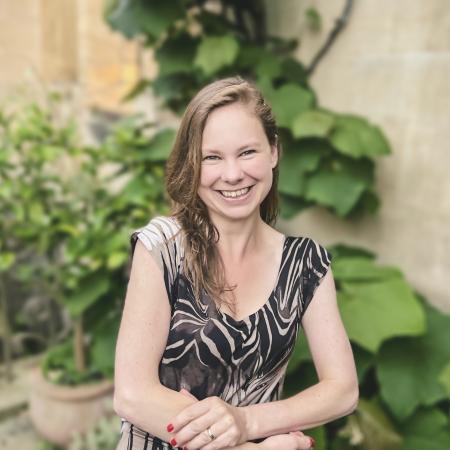
Headshot of Dr. Laura P. Schaposknik: A woman smiling with her hands folded in front of her, sitting in front of a background featuring beige stone walls and green plants.

Lonseth Lecture 2026: 'Geometry of Hidden & Broken Symmetries’

By Arie Henry

The Department of Mathematics invites you to attend the 41st Lonseth Lecture on Thursday, May 28, featuring award-winning guest lecturer Laura P. Schaposnik of the University of Illinois, Chicago. In her lecture, titled "Geometry of Hidden & Broken Symmetries," Schaposnik will break symmetry on purpose to see what drives reality:

Many systems look complicated until we ask what stays the same — at both micro and macro scales. At the micro level, exchangeable interactions and local conservation laws simplify PDEs and networks; at the macro level, these invariances organize families of solutions and predict emergent behavior. Then we’ll break symmetry on purpose to see what drives reality: anisotropy in crystal growth and snowflakes, trust biases that trigger information cascades, and more. Symmetry and its selective breaking offer a way to reduce complexity, illuminate mechanisms, and connect fine-scale rules with large-scale patterns across geometry and the applied sciences.

41st Annual Lonseth Lecture

"Geometry of Hidden & Broken Symmetries"


Date: Thursday, May 28, 2026
Time: Department awards at 3:30 p.m.; lecture at 4 p.m.; reception to follow
Location: LaSells Stewart Center, Construction and Engineering Hall

We'll begin by honoring student and faculty achievements at our annual department awards ceremony from 3:30 to 4 p.m. Then we'll settle in for Schaposnik's lecture from 4 to 5 p.m. A public reception will follow immediately after.


About the speaker

Laura P. Schaposnik is an Argentinian professor of mathematics at the University of Illinois, Chicago. Her research sits at the intersection of geometry, topology and mathematical physics, with a focus on moduli spaces of decorated bundles, and also leads applied projects in network science and mathematical modeling. Schaposnik received the 2025 Presidential Early Career Award for Scientists and Engineers (PECASE), as well as an NSF CAREER award, a Simons Fellowship and a Humboldt Fellowship. She is actively involved in mentoring and outreach, including the development of bilingual STEM books for young readers. Schaposnik will deliver the AMS-MAA Invited Lecture at MathFest 2026.


Established in 1985, the Lonseth Lecture series pays tribute to the legacy of Arvid T. Lonseth, a respected figure in the Mathematics Department at Oregon State University. Explore more about Arvid Lonseth and the lecture series to appreciate its significance within academia.


Read more stories about: events, mathematics, awards & recognition


A group of people at a conference.

What does an actuary do? Erica Baird’s path from math student to industry leader

By Hannah Ashton

Erica Baird and her coworkers at a shareholders meeting in Phoenix in 2026, along with the chairman of the board and CEO of Milliman.

Erica Baird (’05, M.A. mathematics ’09, Ph.D. mathematics and statistics ’13) didn’t set out to become an actuary. In fact, when she first heard about the career as an undergraduate mathematics student at Oregon State University, she was skeptical.

“I thought it was a scam,” she said. “You go and take all of these exams and then you get this great high-paying job and all you need is a bachelor’s degree.”

That skepticism didn’t last. As Baird learned more about the profession and the rigor behind its credentialing process, she began to see actuarial science as a disciplined field grounded in mathematics, data and real-world impact.

Today, Baird is a principal and consulting actuary at Milliman, where she leads research and development for a risk-adjustment software product while advising clients across the health care industry. Her path from southern Oregon to a leadership role in a global consulting firm was driven by a desire to use mathematics to tackle complex challenges that affect patients and health care systems.

Four people sit and pose for a photo in front of trees.

Baird and her husband Kyle pose for a photo with Baird's parents at the Trees of Mystery in California.

What is an actuary?

At its core, actuarial science uses mathematics, statistics and financial theory to manage risk and inform decision-making. While the work is rooted in numbers, it is ultimately about helping institutions understand what could happen in the future — and how to plan for it.

The profession is structured around four main practice areas: health, life, property and casualty, and pensions. Each track focuses on a different kind of risk and requires specialized knowledge of industries, regulations and financial systems.

Health actuaries, like Baird, work with hospitals, insurance companies and government programs to analyze medical costs, design insurance pricing and evaluate how healthcare services are funded and delivered.

“We’re trying to make sure that their prices are fair, and that they are financially stable,” she said.

Baird started at Milliman as an actuarial analyst, supporting a software product designed to predict individual health care costs using past claims data. She trained predictive models, validated them and answered client questions.

Over time, her role expanded. Baird discovered she excelled in consulting, working directly with clients to solve unique problems. She now leads research and development for the software product and holds a senior-level position on the consulting side. Her work ranges from pricing Medicare plans to helping hospitals understand payment models to evaluating how successful medical interventions are at improving patient outcomes.

A group of people hold hands and jump into a lake for a polar plunge.

Baird and her coworkers jump into a frozen lake for a polar plunge to benefit Minnesota Special Olympics (Baird is third from the right and her husband, Kyle, is fourth from the right).
“My days are never boring," she said. “Clients bring us hard problems and we get to design studies, build models and really dig into whether something is working.”

No two assignments look the same, she said, because no two clients are trying to solve identical problems. That variability is part of what keeps the work engaging: each project requires adapting models, interpreting data in context and explaining results to non-technical audiences.

While insurance can be a complex and sometimes frustrating system for consumers, Baird emphasizes the broader mission behind the work.

“It can be tricky, but it can also save lives,” she said. “We aren’t just there to help insurance companies make more money. We’re there to help them serve the people that need health care.”

In January 2026, Baird joined the Actuarial Standards Board, which sets standards that actuaries in the U.S. must follow in their work. It also oversees updates to those standards through volunteer expert task forces and public comment, helping ensure consistency and professionalism across the field.

“It's been a great experience because they’re all people who are really passionate and excited. We spend a lot of time in passionate discussions and debates, making sure we think through all the implications of the guidance that we’re creating. Am I setting the bar too high for actuaries? Or am I not setting it high enough?”

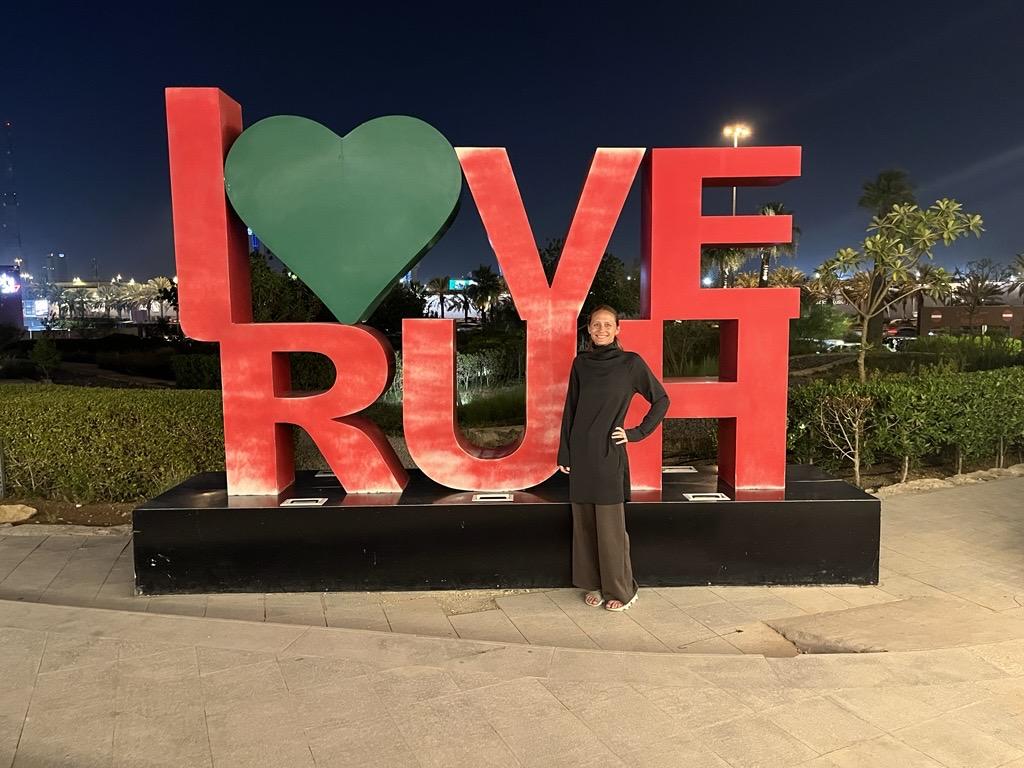
A woman poses with a giant sign that says "Love RUH."

Baird poses with the Love RUH sign in Riyadh, Saudi Arabia during a work trip.

Baird’s take on how to become an actuary

Baird grew up in Central Point, Oregon, and was interested in pursuing a degree in education, but a high school calculus class shifted her trajectory.

“I really enjoyed the problem-solving aspect of it,” she said. “It felt like the first time you moved beyond mechanics and got to how we use math to solve problems.”

That realization led her to pursue mathematics at Oregon State, where she eventually completed her undergraduate degree, master’s degree in mathematics and a dual Ph.D. in mathematics and statistics.

Her interest in actuarial science didn’t take hold until graduate school. After taking her first probability course, she began to see new possibilities, deciding to take her first actuarial exam while she was still in school.

Becoming an actuary requires a series of rigorous professional exams that unfold over several years. Candidates complete seven exams and a series of modules and other courses to reach Associate status, with several additional exams and modules needed to be fully credentialed as a Fellow. Most candidates study while working full-time, turning the exam process into a parallel track of education and career experience.

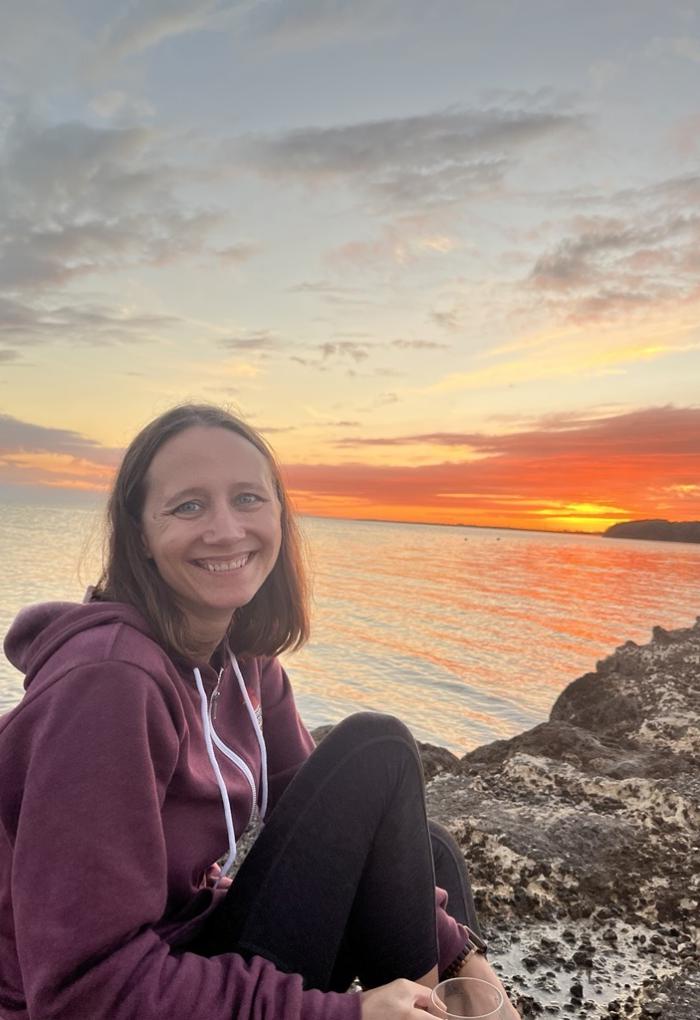
A woman poses for a photo in front of an orange sunset over water.

Baird poses for a photo during sunset in Key West during a work trip.

Always being open to learning benefited Baird when she started at Milliman. New terminology, processes and expectations felt overwhelming. Although she credits her graduate training for helping her develop critical skills like note-taking and technical writing, it took her time to adjust.

“For the first six to eight months, I felt completely out of my element,” she said.

Doubting yourself in a new role is a normal experience, Baird said, but those feelings won’t last forever. Over time, that uncertainty gave way to confidence and she took on leadership roles.

For students interested in actuarial careers, Baird recommends gaining early exposure to the field by taking exams and pursuing internships. Equally important are soft skills.

“We’re a very collaborative group,” she said. “Making sure that you can show that you have successfully worked as part of a team or led a team is helpful.”

Actuarial work goes beyond spreadsheets and equations; it’s about using math to guide decisions that affect people’s lives. From shaping how healthcare is delivered to ensuring organizations can meet their financial commitments, that work carries real consequences. For Baird, it’s a job that lets her use mathematical skills in ways that have real-world impact.

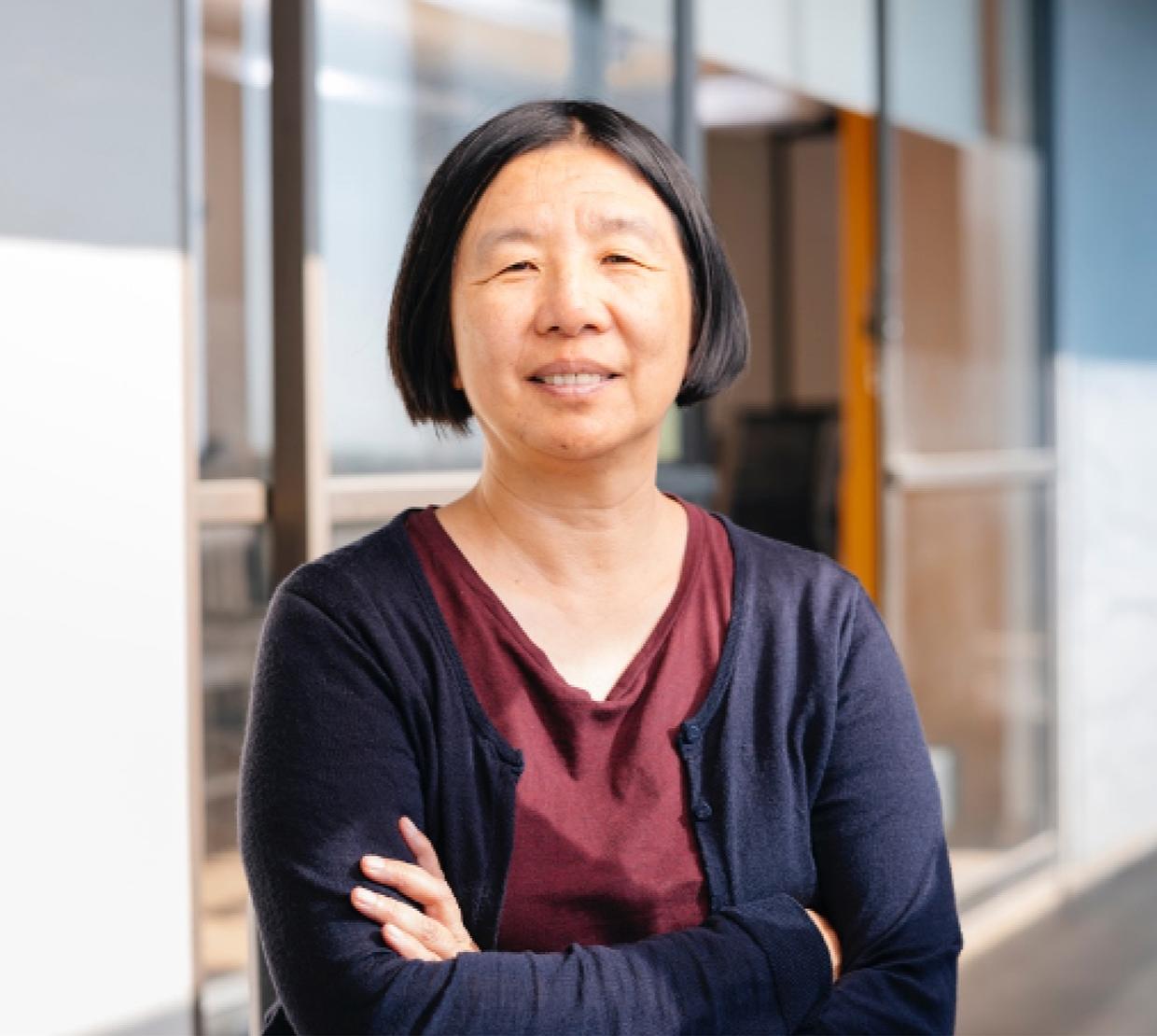
Headshot of Professor Bin Yu of UC Berkeley: woman in dark blue cardigan and maroon blouse, smiling with arms crossed while standing in front of college building with large glass windows.

Milne Lecture 2026: "Veridical Data Science for Healthcare in the Age of AI"

By Arie Henry

Data science underpins modern AI and many advances in healthcare, yet human judgment permeates every stage of the data science life cycle. These judgment calls introduce hidden uncertainties that go well beyond sampling variability and drive many of the risks associated with AI.

At this year's Milne Lecture, come learn how Professor Bin Yu and her research group are addressing those uncertainties to help improve the way AI is leveraged to heal patients.

2026 Milne Lecture

Veridical Data Science for Healthcare in the Age of AI

Date: Monday, May 11, 2026
Time: 4 to 5 p.m. (a reception will precede the lecture from 3:30 to 4 p.m.)
Location: Johnson Hall 102

Bin Yu, professor of statistics at UC Berkeley, will introduce veridical data science: Grounded in three fundamental principles — Predictability, Computability and Stability (PCS) — veridical data science makes the uncertainties surrounding human judgment more explicit and assessable, aggregating reality-checked algorithms for better results. The PCS framework unifies and extends best practices in statistics and machine learning and is illustrated through healthcare applications, including identifying genetic drivers of heart disease, reducing cost of prostate cancer detection, improving uncertainty quantification beyond standard conformal prediction, and proposing Green Shielding, a new user-centric framework for safeguarding users of AI.

Be sure to arrive early for a reception from 3:30 to 4 p.m. right outside Johnson 102!

About the speaker: Bin Yu

Professor Bin Yu leads the Yu Group at UC Berkeley, an interdisciplinary team in Statistics and EECS dedicated to advancing machine learning, artificial intelligence and veridical data science. Her group develops efficient and interpretable ML/AI methods and theory, ranging from iterative random forests (iRF) and tree-based FIGS to LoRA+ for fine-tuning deep learning and CD-T and SPEX for interpreting deep models. The Yu Group collaborates closely with domain experts in medical AI, genomics and neuroscience.

A member of both the National Academy of Sciences and the American Academy of Arts and Sciences, she has delivered major keynotes, including the 2019 Breiman Lecture at NeurIPS, 2023 IMS Wald Lectures and the COPSS DAAL Lecture (formerly Fisher Lecture). She and her team pioneered the PCS framework (predictability, computability, and stability) for veridical (truthful) data science (VDS), which has become an influential guide for transparent, trustworthy data science and AI.


Read more stories about: events, women in science, statistics


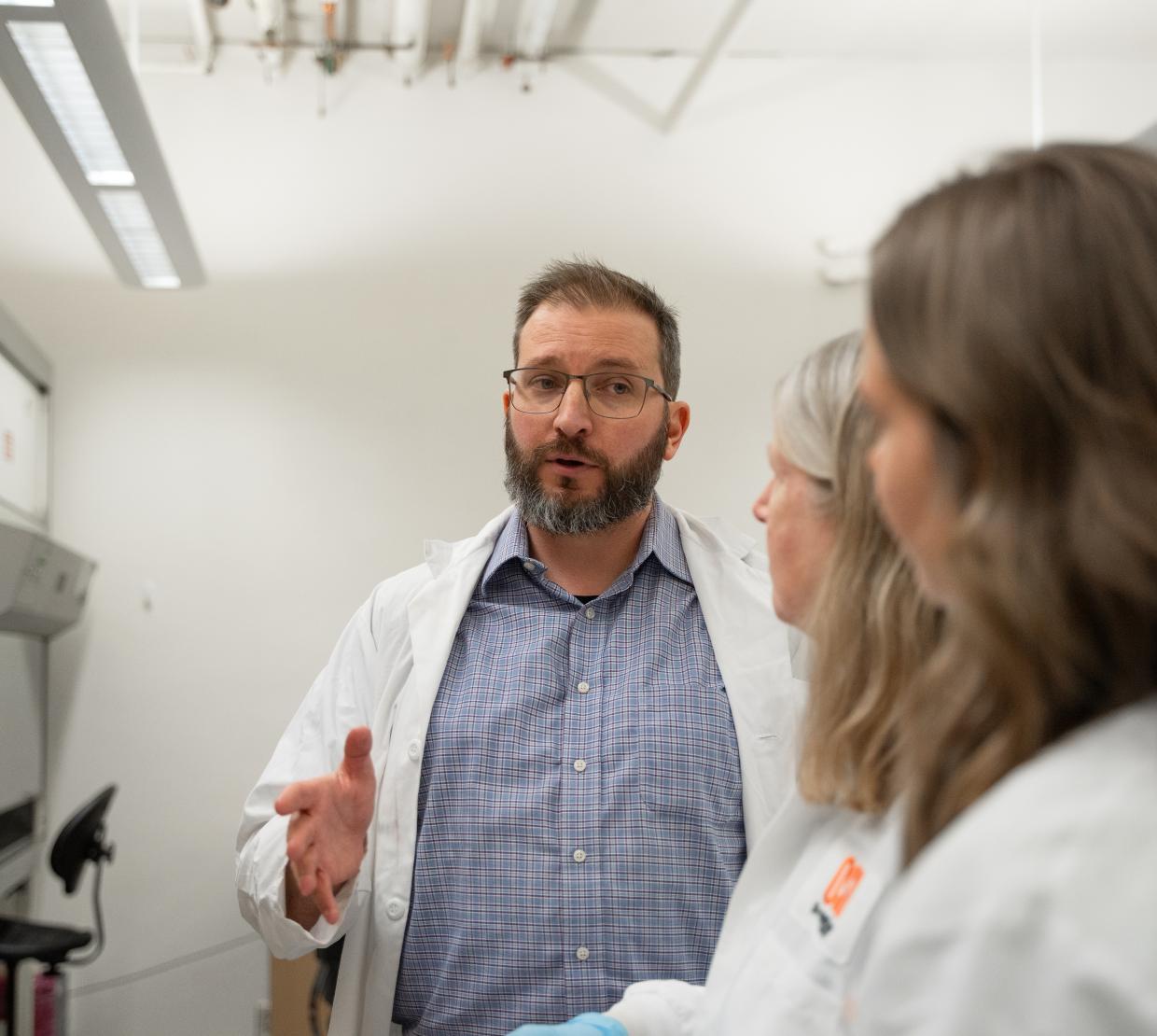
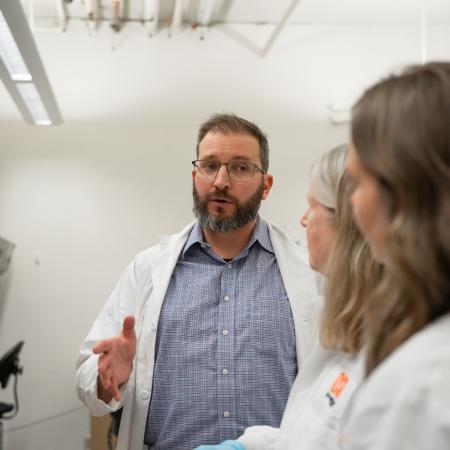
A bearded man wearing glasses and a button-up shirt beneath a lab coat speaks to two other scientists wearing lab coats toward the camera.

The science behind your gut: Oregon State researcher pushes microbiome discoveries

By Elana Roldan

Right now, your body is listening to your gut.

Chemical telephone lines are hot with messages racing to the body’s systems, but not every caller is a human cell. In fact, many of the most influential signals in your body may be coming from organisms you never see.

“The gut is a really amazing place in our body,” said Thomas Sharpton, professor in the microbiology and statistics departments, “because it is where we engage in inter-kingdom communication with the natural world.”

Trillions of microbes make a home in the intestines, and they’re not quiet passengers. This microbiome has a profound influence on our health and how we interact with our environment. Two identical people could experience the same medication or diet in unique ways depending on what species they house.

“All these major systems in our body have open ears and open minds for the messages that the gut microbiome has to say,” Sharpton (Biochemistry & Biophysics ‘03) said.

Sharpton leads interdisciplinary research to pick apart the microbiome’s impact. His work lays the path for future human health innovations that embrace the relationship with our microscopic roommates. He also helped build the Oregon State University Microbiome Initiative (OMBI), a campus-wide effort that connects researchers studying microbial communities in fields ranging from human health to agriculture and ocean science.

How gut microbes shape health

A major theme across Sharpton’s research is that microbes don’t just correlate with health. They determine how organisms — like us — experience their chemical environment.

“The gut microbiome mediates how we experience our diet, how we experience the drugs we consume and the environmental pollutants that we’re exposed to,” he said.

That principle guides the lab’s experiments on the gut-brain axis, neurodegenerative disease, behavior and cognition.

To test causality at scale, he established a unique partnership between his team’s computational skills and the zebrafish research community at Oregon State, particularly the Sinnhuber Aquatic Research Laboratory. Human microbiomes vary widely, and large, controlled clinical studies are expensive. Zebrafish enable high-replicate tests that isolate microbe-host-environment interactions. In collaboration with OSU colleagues, Sharpton’s group has shown that pollutants can restructure the gut microbiome and alter neurobehavioral development, and that removing the microbiome can flip a chemical’s effect.

A gloved woman wearing a lab coat smiles as she holds up a small tank to the camera with zebrafish swimming inside.

Ruby Scanlon works with zebrafish as an undergraduate research assistant in the Sharpton Lab.

“We studied a pollutant that drives a behavioral alteration and makes a fish hyperactive,” he said. “What happens when you take the microbiome away? All of a sudden, that pollutant makes the fish hypoactive.”

These studies reposition the microbiome as an active biochemical gatekeeper between environment and physiology. They also illuminate why two people with similar genetics and exposures can respond differently to the same diet or medication: their microbial communities and the metabolites they produce are not the same.

Sharpton’s computational work pushes the field beyond cataloging species. By integrating genomic information from gut samples and applying rigorous statistics, his lab seeks out functional signatures linked to health and disease. This shift from taxonomy to function has helped the field home in on mechanisms that are more likely to translate between species and into clinical contexts. Recently Sharpton’s team published a study titled “Modeling the zebrafish gut microbiome’s resistance and sensitivity to climate change and parasite infection” in Frontiers in Microbiomes (July 2025).

Equally important to what questions the team asks is how they answer them. The lab builds and releases open-source software and curated data resources so that others can reproduce analyses, train students and extend the findings.

“We publish everything we produce for free. It holds us accountable and helps others reproduce our results,” Sharpton said.

That openness accelerates discovery in a fast-moving field where methods evolve nearly as quickly as the microbes they study.

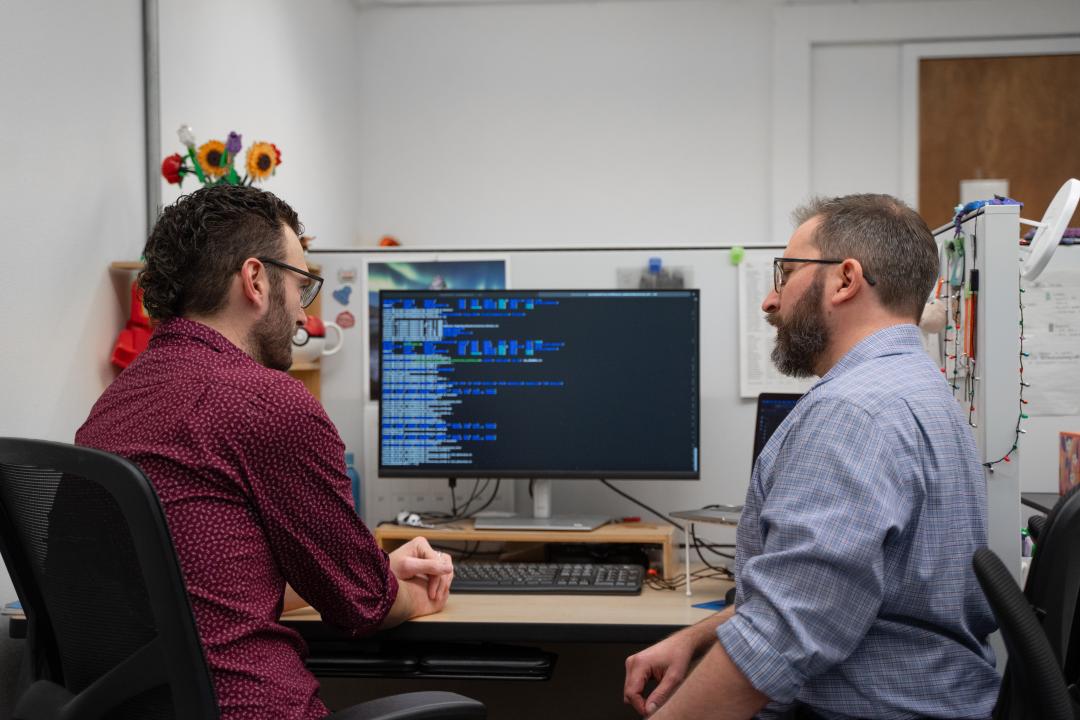
Two men sit at a desk with a monitor covered with code, discussing the information.

Sharpton integrates microbiology and statistics to sift through large datasets and draw correlations between the microbiome and health.

While zebrafish allow for fast, controlled tests, the lab’s standard of evidence requires asking whether those mechanisms translate to mammals and people. Sharpton’s group works across zebrafish, mouse and human systems (with some nonhuman primate studies) to assess findings.

“At the end of the day, we really want our research to matter to people,” he said. “We always try to swing the bat around and determine if what we’re seeing in these model systems is relevant in human systems as well.”

That translational arc is especially crucial in the lab’s gut-brain axis research. What began for Sharpton as skepticism has turned into sustained investigation. Across fish, mice, children and adults, his team and collaborators repeatedly see robust links between the microbiome and behavior or cognition. Those links raise questions for how we might treat cognitive and neurodegenerative disorders in the future.

“Do we have novel opportunities to prevent or treat these diseases that are frankly terrifying to many people?” Sharpton said. “Efforts to manage, manipulate or someday even engineer microbiomes may be a fundamental transformation in our ability to prevent, diagnose and treat chronic diseases.”

The future of microbiome science

With public interest in the microbiome surging, Sharpton is careful to separate promise from hype. “A lot of people think the microbiome is the key contributor to health, and it isn't. But it is an important component alongside other variables,” he said.

Methods are advancing, individual variation is large and proving cause and effect is challenging.

“It’s almost like you’ve got a ball of yarn that’s been tangled into a knot,” he said. “You’re having to pull apart the right pieces at the right time.”

Still, he argues, scientists have a responsibility to explain what’s known, what isn’t and why it matters. “It’s not enough for us to just publish in journals anymore. Our duty to the taxpayer is to communicate the results in a way that people can understand.”

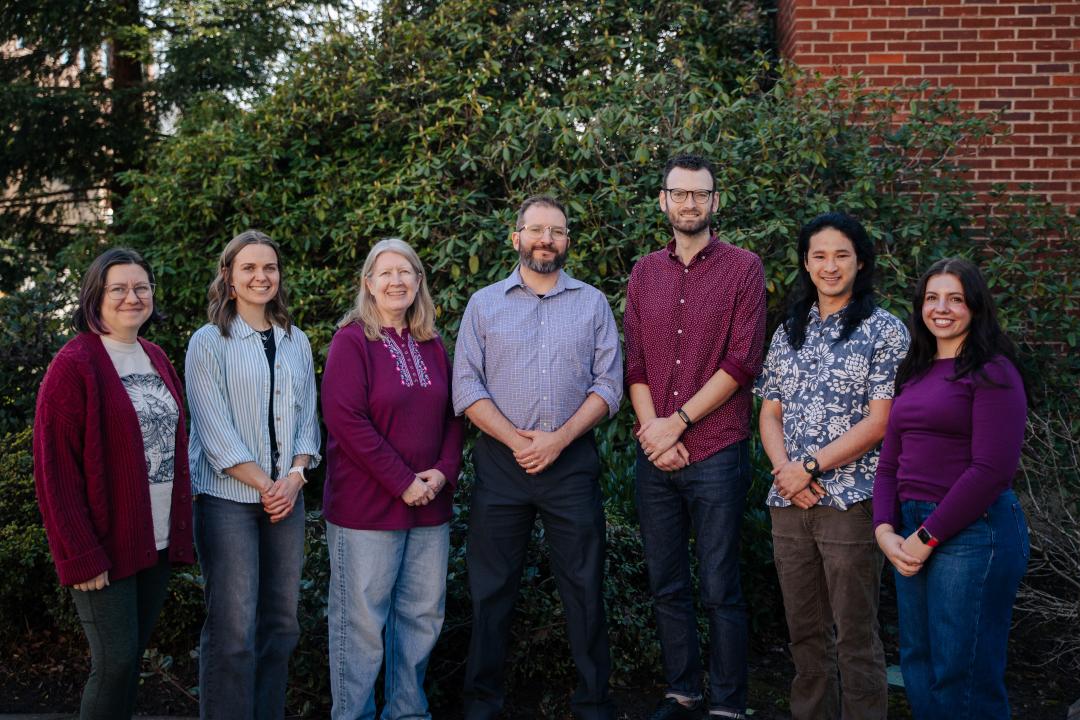
Seven members of the Sharpton Lab stand shoulder-to-shoulder outside in front of a large, green bush, each wearing matching maroon and blue shirts.

The Sharpton Lab's research has paved a path forward in microbiome research and continues to push the bounds of what we know about our symbiotic relationships.

For pioneering contributions that have advanced microbiome science from description to mechanism, Sharpton recently earned the Milton Harris Award in Basic Research and position as the Burgess and Elizabeth Jamieson Chair in Healthspan Research. These honors recognize a body of work that spans high-impact zebrafish experiments, human-relevant translation, openly shared analytical frameworks and a collaborative research ecosystem that has elevated OSU as a hub for microbiome discovery. Reflecting on the Milton Harris Award, Sharpton called it “a milestone. Validation that I’m on the right track.”

The practical stakes of his work are high. If the microbiome helps determine how we process a meal, respond to medication or endure a pollutant, then understanding and, one day, managing these microbial communities could transform treatment for chronic disease.

“What microbiome science is telling us is that we are, in effect, symbiotic organisms,” Sharpton said. “We depend on our microbiome to be healthy.”

To understand human health, we have to listen closely to our gut — and the microbes calling from within.

Learn more about how the small but mighty microscopic world is studied at Oregon State here.

A girl in black sweatshirt works on a computer in a classroom.

Oregon State launches data science degree for today's data-driven careers

By Hannah Ashton

The world’s most urgent challenges are no longer held back by a shortage of data. They’re limited by our capacity to understand the mountains of information we generate every day.

From climate modeling and environmental policy to biomedical research and artificial intelligence, data now underpins nearly every scientific and societal challenge. Preparing students for today’s careers, no matter the field, now requires fluency in data. It requires graduates who can move confidently between disciplines, translate complex analysis into clear decisions and understand the ethical responsibility that comes with influence.

To meet this need, the College of Science launched a new undergraduate major in data science in January. The program marks a significant expansion of the College’s interdisciplinary science education and its response to how research, industry and public decision-making increasingly rely on data.

“Data influences decisions that affect communities, economies and ecosystems,” said Lan Xue, statistics department head. “Our role as a public research university is to prepare graduates who understand both the power and the responsibility that comes with that influence.”

Watch a video on the new flexible, future-ready degree in data science.

The new data science major builds on Oregon State’s long-standing strengths in statistics, mathematics and computer science, while connecting those tools to real-world applications across the sciences, economics and environmental studies. Administered through the Department of Statistics, the program reflects years of collaboration among faculty across campus.

Rather than duplicating existing degrees, this major complements them. It is designed as both a standalone program and a strong pairing with other fields, allowing students to deepen disciplinary expertise while gaining advanced quantitative and computational skills.

Students can pursue a general data science degree or select from several interdisciplinary options that connect quantitative skills with focused areas of study. These include advanced data science, economics, environmental economics and policy, life science and psychological science.

“Data is always growing. It’s not something that is ever going to go away,” said Erin Howard, senior instructor I in the Department of Statistics. “And so, whatever field students might be interested in, there’s a place for data science.”

Demand for data-literate professionals continues to grow across nearly every sector, including healthcare, technology, government, business and environmental science. National workforce projections show data-related careers growing much faster than average, underscoring the importance of graduates who can interpret complex information and communicate it clearly. The Bureau of Labor Statistics projects 34% growth from 2024 to 2034.

A defining feature of the program is its emphasis on responsible data use. Courses address not only technical proficiency, but also issues of bias, equity and communication. This prepares graduates to work with data in ways that serve the public good.

That approach aligns closely with Oregon State’s mission as a land-, sea-, space- and sun-grant university, where research and teaching are deeply connected to community needs. Faculty across the College of Science already apply data science to challenges such as sustainable resource management, health outcomes and economic resilience; the new major creates a clear academic pathway for students to join that work.

The data science major is initially available on the Corvallis campus, with plans to expand online through Ecampus. Its launch represents both a response to current demand and a signal of where the College of Science is headed, toward deeper collaboration, broader impact and education that reflects the realities of modern science.

For more information about the major, visit the College of Science website.


Read more stories about: students, statistics, data, ai and robotics


A black background with orange glitter and a pair of googles with the year 2026.

Celebrating excellence in research: 2026 College of Science Awards

By Hannah Ashton

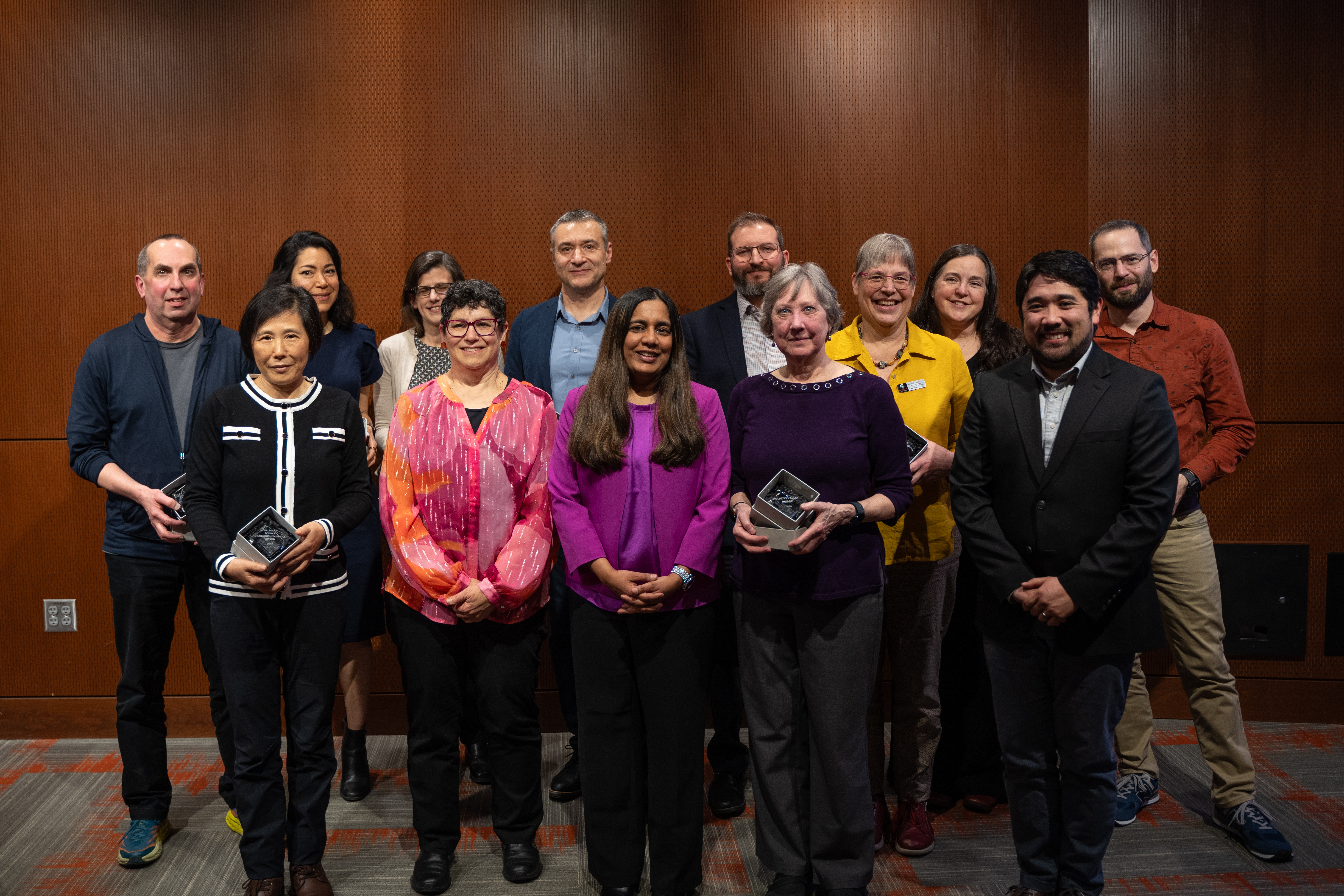
The College of Science gathered on Feb. 17 to recognize and celebrate our high-achieving faculty and staff at the 2026 Awards Ceremony. The evening celebrated the very best in the College, from teaching, advising and research to inclusive excellence, administration and service.

The following faculty and staff received awards in research.

Congratulations to all the awardees!

F.A. Gilfillan Award for Distinguished Scholarship in Science

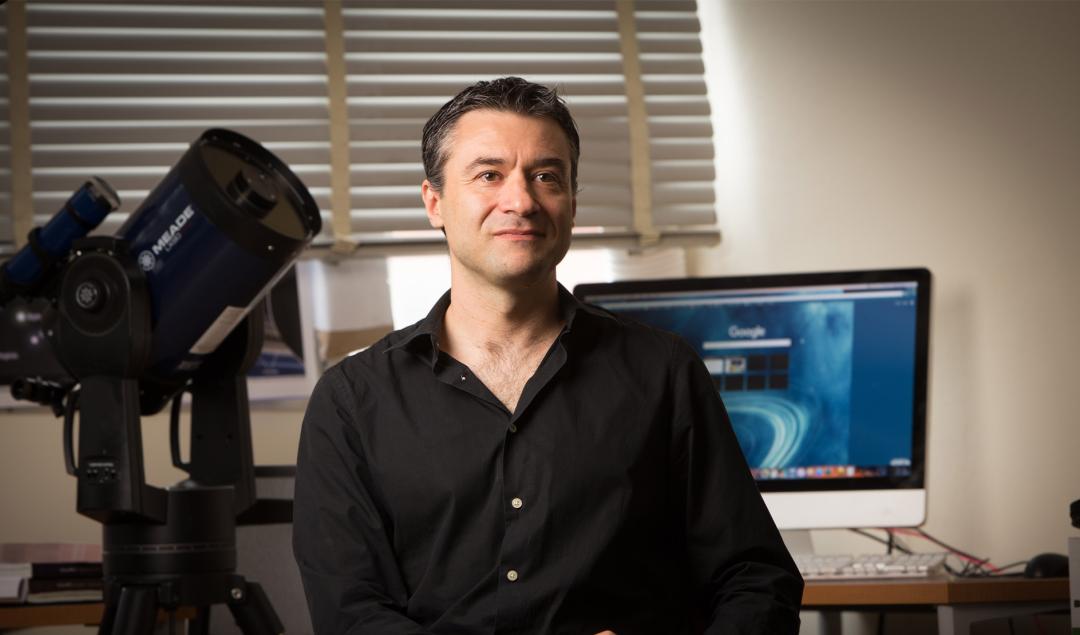
Davide Lazzati sitting in office.

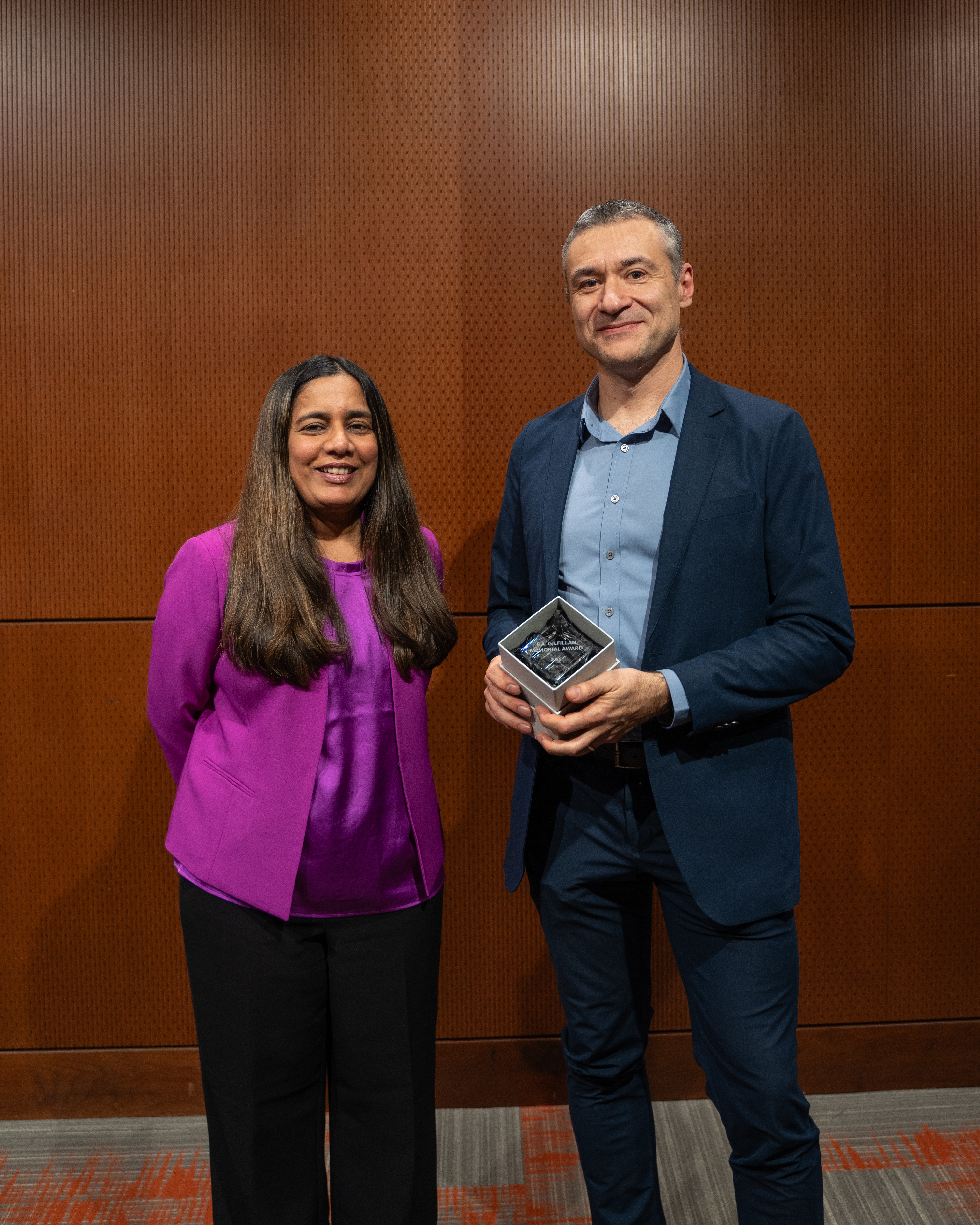
Davide Lazzati, from the Department of Physics, has received the F.A. Gilfillan Award for Distinguished Scholarship in Science.

Davide Lazzati, from the Department of Physics, has received the F.A. Gilfillan Award for Distinguished Scholarship in Science.

Lazzati’s scholarly achievements place him among the most influential astrophysicists of his generation. With more than 190 peer-reviewed publications, over 11,000 citations and an h-index of 57, his work has shaped high-energy astrophysics and multi-messenger astronomy for more than two decades. His research spans theory, computation and observation, and many of his papers are regarded as foundational benchmarks in gamma-ray burst physics, compact-object mergers and the emerging field of gravitational-wave astronomy.

A leader in multi-messenger astrophysics, Lazzati was among the first to predict the electromagnetic signature of a binary neutron star merger — insight that proved essential to interpreting the historic 2017 GW170817 event. His modeling of structured relativistic jets and off-axis emission provided the conceptual framework that allowed scientists to connect gravitational-wave detections with their electromagnetic counterparts. His work continues to guide the field as new detectors expand the frontiers of discovery.

Lazzati’s scholarship is marked by sustained creativity and rigor, supported by a strong record of competitive NASA and NSF funding. He is also a dedicated mentor and leader. Lazzati has advised 10 graduate students, mentored postdoctoral researchers, and guided 28 undergraduate researchers, several of whom have published first-author papers. His early adoption of a formal mentoring compact, now increasingly recognized as a best practice, reflects his commitment to transparency, equity and student success. His leadership as department head further strengthened the inclusivity and effectiveness of the graduate program.

One nominator wrote, "Professor Lazzati’s record of scholarship is nothing short of extraordinary — marked by sustained excellence, transformative impact and remarkable breadth. His work often anticipates new discoveries, redefines longstanding problems and helps set the direction for future studies.”

Milton Harris Award for Basic Research

A man in a blue plaid shirt with glasses and a beard poses for a headshot.

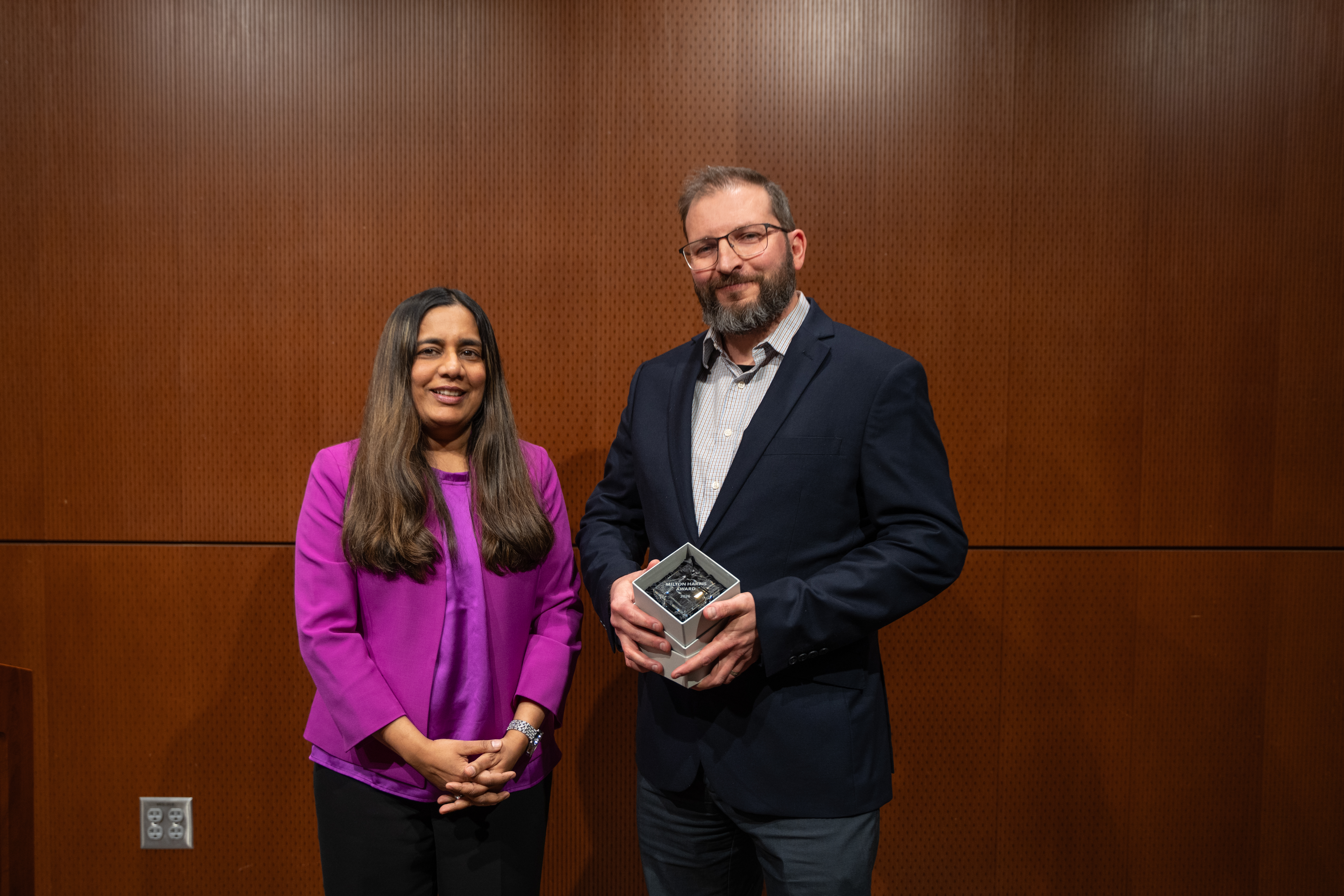
Thomas Sharpton, professor in the departments of Microbiology and Statistics and the Burgess and Elizabeth Jamieson Chair in Healthspan Research, received the Milton Harris Award for Basic Research.

Thomas Sharpton, professor in the departments of Microbiology and Statistics and the Burgess and Elizabeth Jamieson Chair in Healthspan Research, received the Milton Harris Award for Basic Research.

Sharpton is a pioneering microbiome scientist whose work has fundamentally advanced the basic biological understanding of how host-associated microbial communities function. Since joining Oregon State University in 2013, he has built an interdisciplinary research program that integrates computational biology, statistics and molecular microbiology to uncover the mechanisms by which microbiomes influence health, development and disease. His analytical frameworks, statistical models and experimental systems have become foundational tools used across the field.

His research has produced major insights into how the gut microbiome contributes to inflammatory bowel disease, neurobiological function and parasite infection, among other complex conditions. Sharpton has published more than 100 peer-reviewed papers, including in Nature, PNAS and Nature Communications, and his work has been cited over 23,000 times. He has secured more than $24 million in research funding from agencies including the National Institutes of Health, National Science Foundation, U.S. Department of Agriculture, Department of Defense and the Moore Foundation, and has developed widely used open-source software and databases that have accelerated microbiome research worldwide.

Sharpton’s leadership has also strengthened OSU’s research ecosystem. As founding director of OSU Microbiome Initiative and director of the OSU Microbiome Core, he has catalyzed interdisciplinary collaborations and expanded access to cutting-edge microbiome technologies. He is a dedicated mentor and educator, having guided more than 40 trainees and co-developed influential courses in microbial bioinformatics and quantitative genomics. His commitment to equity and inclusivity is reflected in his work on NIH and USDA diversity programs and his efforts to improve departmental monitoring practices.

Nominators emphasized both his scientific impact and his collaborative leadership. As one wrote, “His innovative approaches and unwavering commitment to scientific rigor make him an exceptional scholar and an indispensable collaborator.”

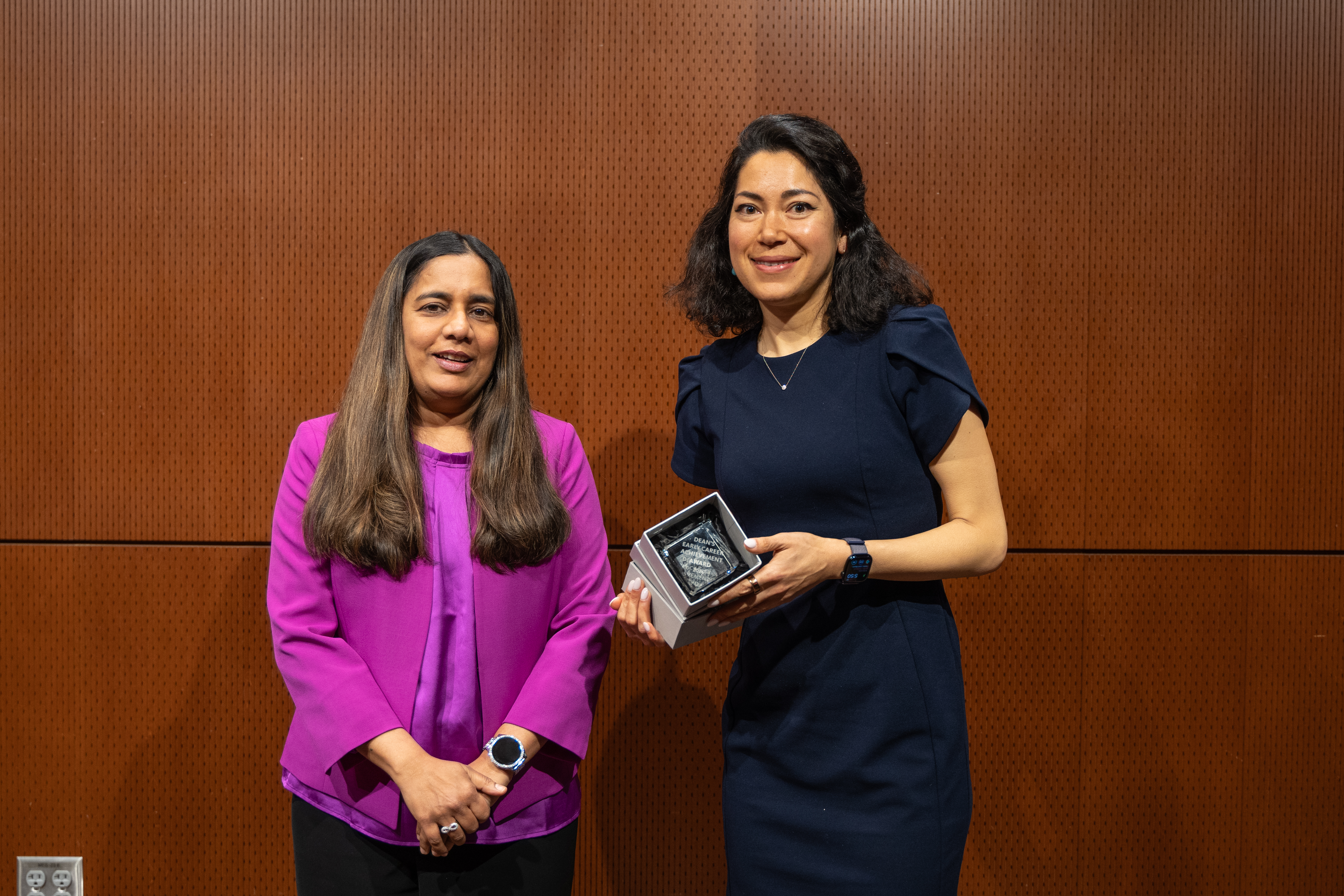
Dean’s Early Career Achievement Award

A woman in a pink shirt and black blazer with dark hair poses for a photo.

Katherine McLaughlin from the Department of Statistics, received the Dean’s Early Career Achievement Award.

Katherine McLaughlin from the Department of Statistics, received the Dean’s Early Career Achievement Award.

McLaughlin is an internationally recognized expert in developing statistical methods for studying hard-to-reach and hidden populations, including victims of human trafficking and communities at high risk for HIV. Since joining Oregon State University in 2016, she has published 19 peer-reviewed papers in top journals, delivered talks at venues including the CDC and the National Academies of Sciences, Engineering, and Medicine, and helped bring approximately $3.4 million in research funding to OSU.

Her work has had a major global impact. McLaughlin developed the “Visibility SS-PSE” model, now one of the main methods used to estimate population sizes in the UNAIDS Key Population Atlas, helping guide international HIV prevention and treatment policy. She also serves as an advisor to the U.S. Department of State-funded Prevalence Reduction Innovation Forum, helping shape how human trafficking is statistically measured worldwide.

At OSU, McLaughlin played a critical role in the TRACE and PIPP pandemic response projects, designing and analyzing large-scale community COVID-19 surveys and helping integrate wastewater data into public health decision-making.

“My first reaction upon a careful read through her materials is to wonder whether Prof. McLaughlin lives within the same 24-hour day that the rest of us do,” wrote a colleague who nominated McLaughlin. They added that she is “a rare case of ‘the complete package’” whose contributions are “uncharacteristically comprehensive.”

Photo of Dr. Annie Qu: Woman with short hair and glasses, smiling and wearing white collared shirt and blazer.

Nereo Lecture 2026: Annie Qu to address challenges in heterogeneous datasets

By Arie Henry

The Department of Statistics is launching the Val Nereo Lecture Series, open to the public, students, staff, faculty and statistics lovers in the OSU community. The inaugural guest speaker is Annie Qu, professor in the Department of Statistics and Applied Probability, at University of California, Santa Barbara.

In the era of big data, large-scale, multi-modal datasets are increasingly ubiquitous, offering unprecedented opportunities for predictive modeling and scientific discovery.

However, these datasets often exhibit complex heterogeneity, such as covariate shift, posterior drift and missing modalities, which can hinder the accuracy of existing prediction algorithms.

In her lecture, Qu will describe how she and her research team are addressing these challenges by proposing a novel Representation Retrieval (R2) framework.

Inaugural Val Nereo Lecture: "Representation Retrieval Learning for Heterogeneous Data Integration"

Date: Monday, Feb. 16, 2026
Time: Reception from 3 to 4 p.m.; Lecture begins at 4 p.m.
Location: Reception held in Weniger 245; Lecture held in Weniger 151

The R2 framework integrates a representation learning module (the "representer") with a sparsity-induced machine learning model (the "learner"). Qu and her team introduce the notion of “integrativeness” for representers, characterized by the effective data sources used in learning representers, and propose a Selective Integration Penalty (SIP) to explicitly improve the property.

Theoretically, her team demonstrates that the R2 framework relaxes the conventional full-sharing assumption in multi-task learning, allowing for partially shared structures, and that SIP can improve the convergence rate of the excess risk bound.

Extensive simulation studies validate the empirical performance of the team's framework, and applications to two real-world datasets further confirm its superiority over existing approaches.

About the speaker: Annie Qu

Annie Qu is a professor in the Department of Statistics and Applied Probability at the University of California, Santa Barbara. She received her Ph.D. in Statistics from the Pennsylvania State University in 1998. Dr. Qu was a faculty member in Oregon State University's Department of Statistics from 1999 to 2008. She went on to become a Data Science Founder Professor of Statistics and the Director of the Illinois Statistics Office at the University of Illinois at Urbana-Champaign during her tenure in 2008-2019, and Chancellor's Professor at UC Irvine in 2020-2025.

Qu’s research focuses on solving fundamental issues regarding structured and unstructured large-scale data and developing cutting-edge statistical methods and theory in machine learning and algorithms for personalized medicine, text mining, recommender systems, medical imaging data and network data analyses for complex heterogeneous data.

She was a recipient of the NSF Career award from 2004 to 2009. She is a Fellow of the Institute of Mathematical Statistics (IMS), the American Statistical Association and the American Association for the Advancement of Science. Qu was also a recipient of IMS Medallion Award and Lecturer in 2024. She currently serves as Journal of the American Statistical Association Theory and Methods Co-Editor from 2023 to 2025, IMS Program Secretary from 2021 to 2027 and ASA Council of Sections of Governing Board Chair in 2025. She is also the recipient of the 2025 Carver Medal of IMS.


The Val Nereo Lecture Series is made possible through a generous gift from the Val Nereo Women in Applied Statistics Endowed Fund. This series is dedicated to highlighting the work of leading women in statistics and data science, with the goal of inspiring students and scholars — especially women — in our department and broader community.


Read more stories about: events, women in science, statistics


A woman in a black shirt poses for a photo in front of a stunning blue mountain lake.

New faces in the College of Science: Zhirui Hu advances genomic research

By Kaitlyn Hornbuckle

After studying math and physics (B.S.) and bioinformatics (M.S.) at Tsinghua University, Zhirui Hu attended Harvard University to pursue a Ph.D. in statistics. After graduating from her studies, she entered the Pollard Lab at Gladstone Institutes and UC San Francisco as a bioinformatics fellow. She helped develop CellWalker2, a graph diffusion-based computational method for annotating and mapping data. Utilizing this tool, they were able to discover cell type-specific regulatory programs in complex tissues (blood and brain) and quantify both conserved and divergent cell type relationships across species.

Now an assistant professor at Oregon State, she mentors students in the classroom and continues to conduct research at the intersection of data science and health. She develops innovative statistical methodologies for analyzing complex biological data, including phylogenetic and single-cell omics, and deep learning approaches for measurement error models. Her research focuses on developing AI-driven models to unravel gene regulation across species and in disease contexts.

"My goal is to build interdisciplinary partnerships that push the boundaries of knowledge while mentoring the next generation of innovators," Hu said. "Together, we can transform ideas into meaningful impact for our communities and beyond."

She chose Oregon State because of its strong commitment to innovation, collaboration and impact-driven research.

"We are excited to welcome Zhirui Hu to the department!" said Department of Statistics Head Lan Xue. "By integrating advanced statistical theory with cutting-edge applications in genetics and multi-omics data, Hu enhances the department's capacity to address high-dimensional data challenges and fosters interdisciplinary collaboration in data-driven biological research."

Outside of work, Hu enjoys running and hiking along Oregon’s scenic trails.

A man in a brown suit stands next to a woman wearing a red and black dress jacket. The woman is holing a glass award.

Recognizing excellence at 2025 Alumni Awards

By Hannah Ashton

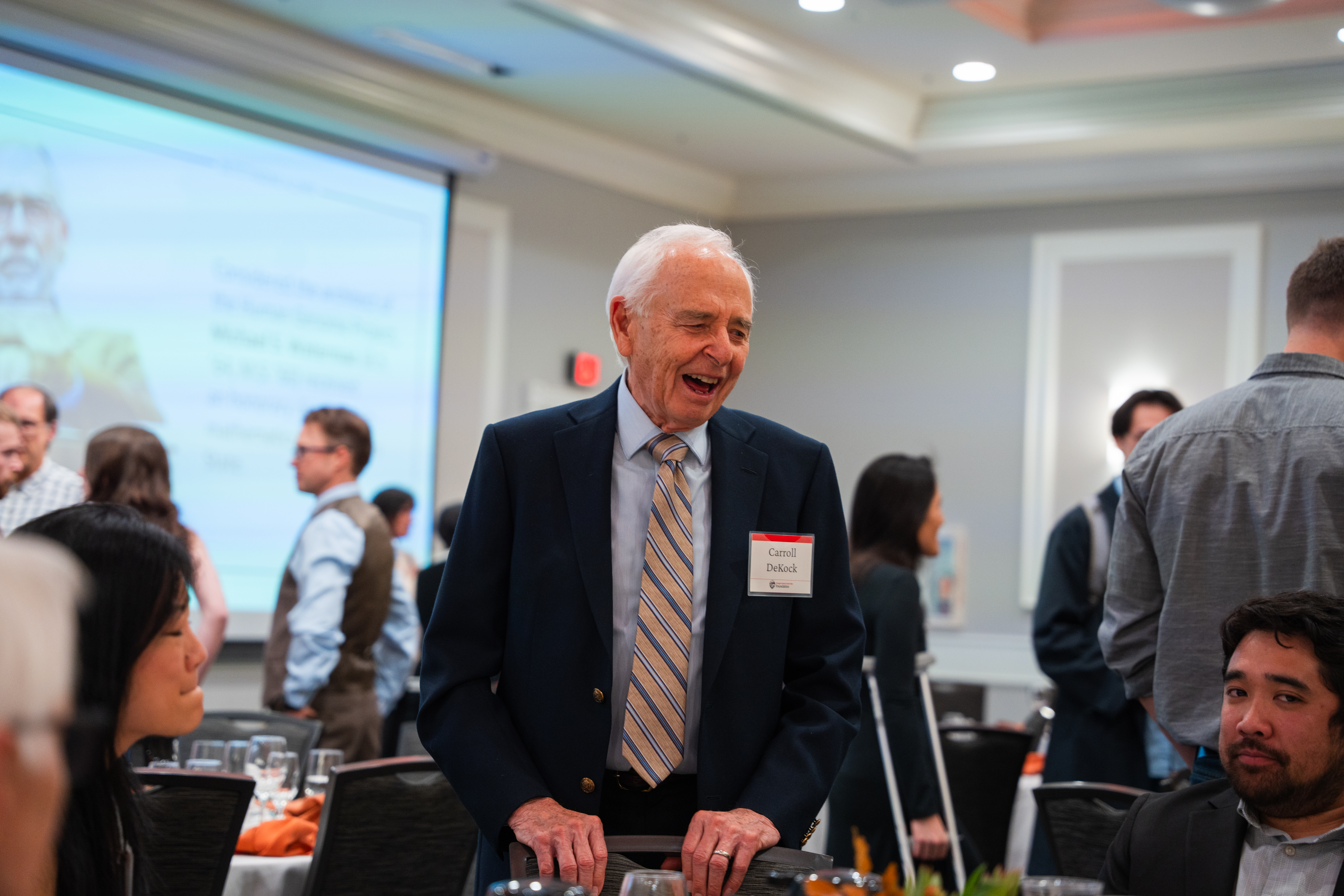
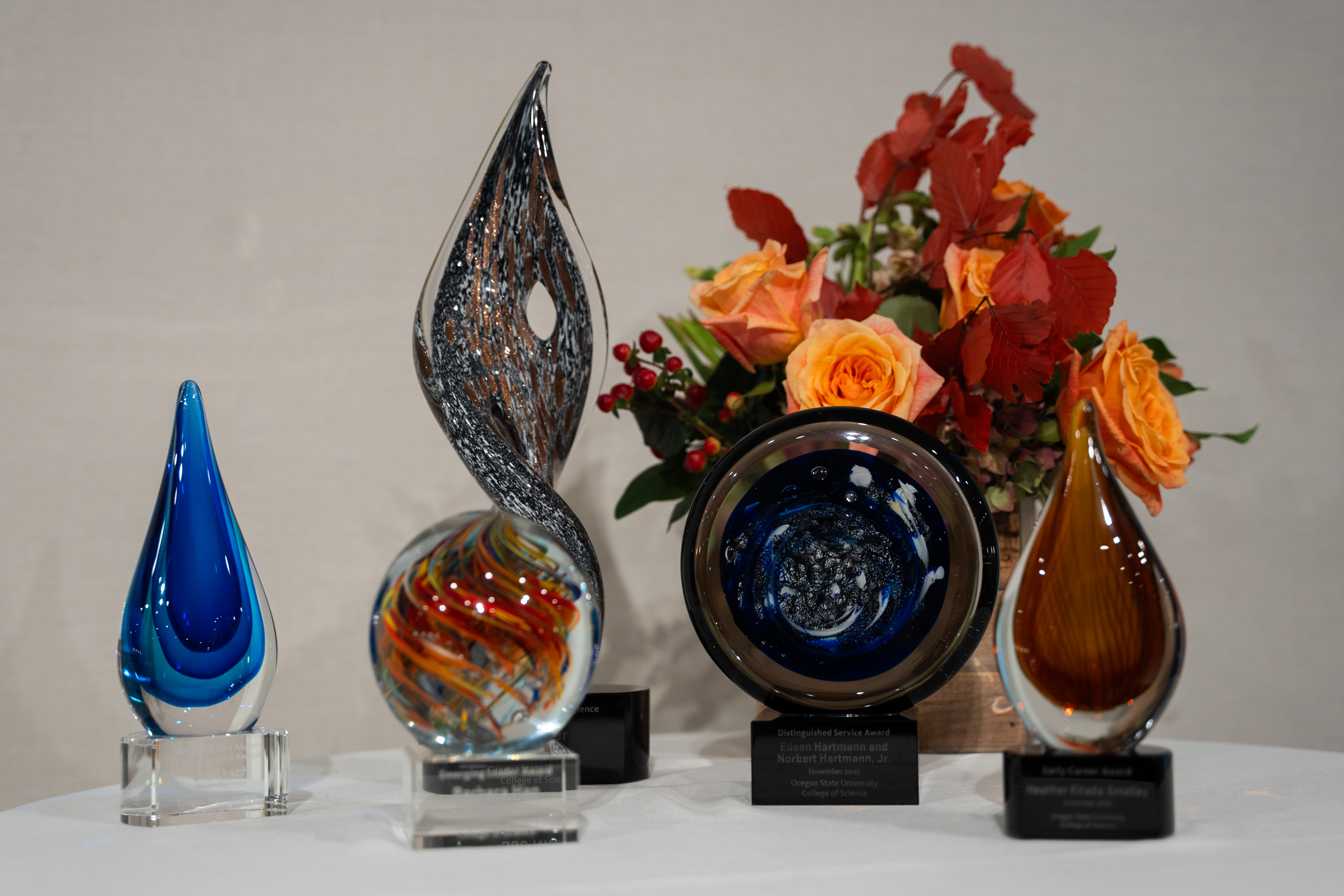
On November 14, 2025, the College of Science applauded groundbreaking achievements in science by our six alumni award recipients. Thanks to their hard work in a variety of scientific disciplines, impressive strides in research were made, livelihoods were improved and science was better understood by many.

Heather Kitada Smalley ('18) received the Early Career Award; Barbara Han ('09) received the Emerging Leader Award; Eileen ('74, '76) and Norbert Hartmann received the Distinguished Service Award; William (Bill) Skach received the Distinguished Alumni Award; and Joe Nimbler ('63) received the Lifetime Achievement in Science Award.

Below is just a snapshot of their many accomplishments.

A woman in a black dress accepts an award from a woman in a black and red dress shirt.

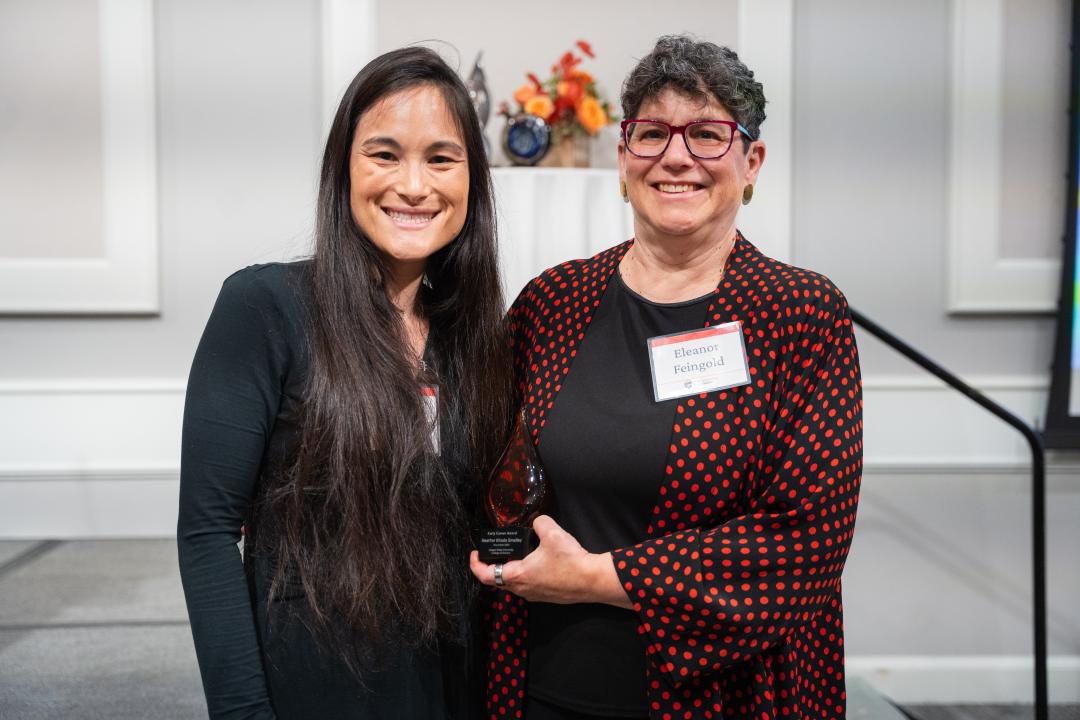
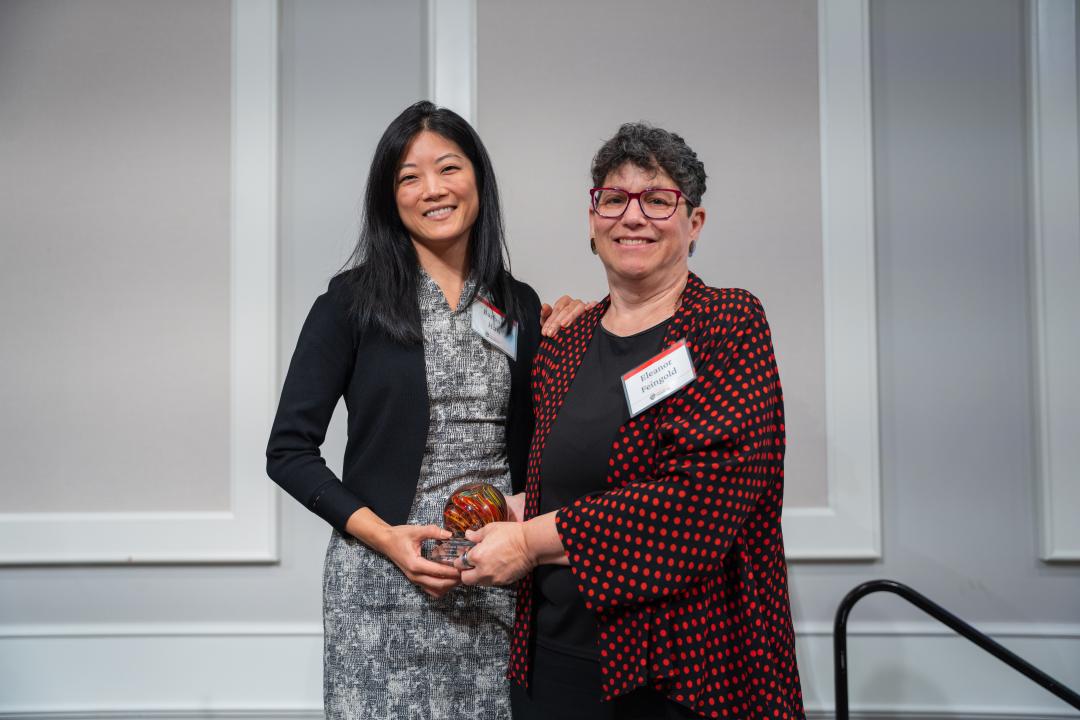
Heather Kitada Smalley accepts the Early Career Award from Dean Feingold.

Heather Kitada Smalley is a passionate statistics professor. She earned her Ph.D. in statistics from Oregon State in 2018, where she discovered her passion for teaching and for applying data to meaningful problems. Today, she is an Albaugh Associate Professor of Statistics and Data Science at Willamette University, where she helped build the university’s new School of Computing and Information Science, from shaping its curriculum to securing a $2 million Department of Education grant that helped bring the programs to life.

Drawing on her Oregon State experience, Smalley designs classes that are both creative and practical. She uses hands-on learning to help students see how data connects to the real world — showing that statistics isn’t about memorizing equations, but about curiosity and discovery.

Read more about her research and teaching philosophy.

A woman in a black and white dress accepts an award from another woman in a black and red blazer.

Barbara Han accepts the Emerging Leader Award from Dean Feingold.

Barbara Han's journey to Oregon State began when Distinguished Emeritus Professor Andy Blaustein, who became her Ph.D. advisor, inspired her while she was an undergraduate at Pepperdine University. Her early fascination with amphibians and their ecosystem has grown into a career conducting groundbreaking work at the intersection of ecology, machine learning and infectious-disease prediction.

Today, Han is an Associate Scientist at the Cary Institute of Ecosystem Studies in New York, where she develops AI-based tools to forecast when and where zoonotic diseases, those transmitted from animals to humans, may emerge. Her models compare traits of known disease-carrying species with thousands of others to predict which animals might become carriers in the future, helping protect lives, ecosystems and communities. During the COVID-19 pandemic, her team’s predictions about which mammals could spread the virus were later confirmed in the field.

Learn about she is merging ecology and machine learning.

A man in a suit stands with two women in dress clothes. One of the women is holding a glass award.

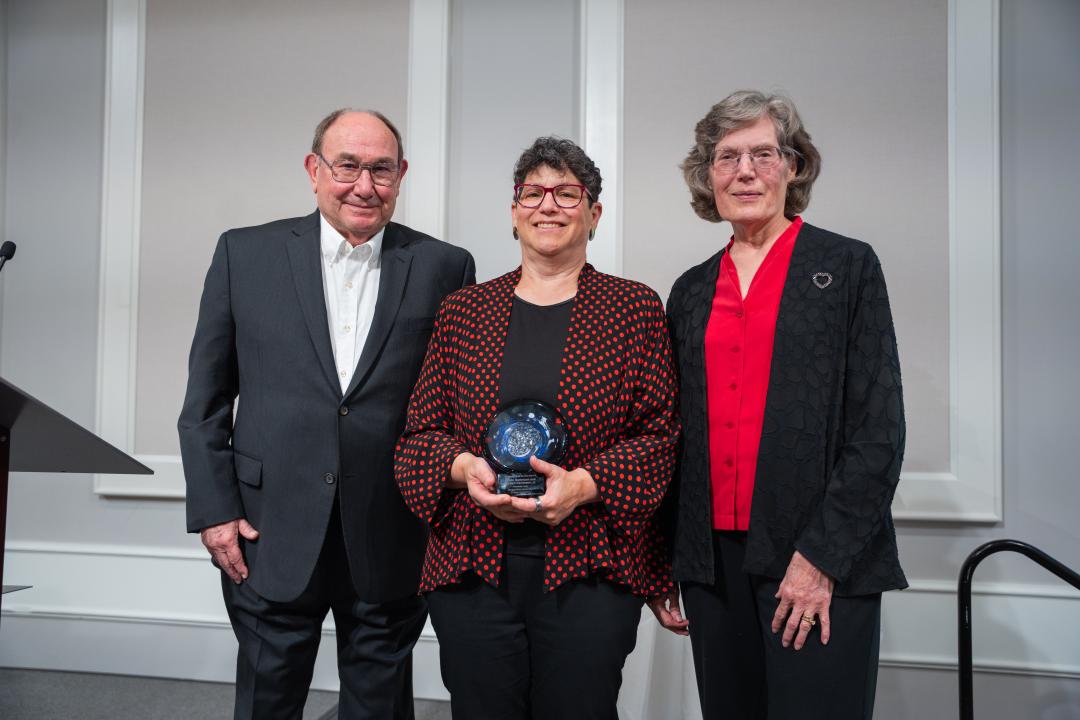
Norbert and Eileen Hartmann accept the Distinguished Service Award from Dean Feingold.

Eileen ('74, '76) and Norbert Hartmann each grew up in modest circumstances where opportunities in science and higher education were slim. With perseverance and family support, they built lives defined by hard work, service and a deep belief in education as a force for opportunity.

Together the Hartmans have made philanthropy a shared mission. Their generosity to Oregon State includes endowments that support faculty in the College of Science and scholarships in women’s basketball and baseball – investments that reflect their belief in education, access and opportunity for future generations. They have also generously given of themselves as advisors to a succession of College of Science Deans - Eileen just recently rotated off of our Board of Advisors, where she is greatly missed.

Discover their journeys from rural towns to fulfilling careers.

A man in a blue suit coat accepts an award from a woman in a red and black blazer.

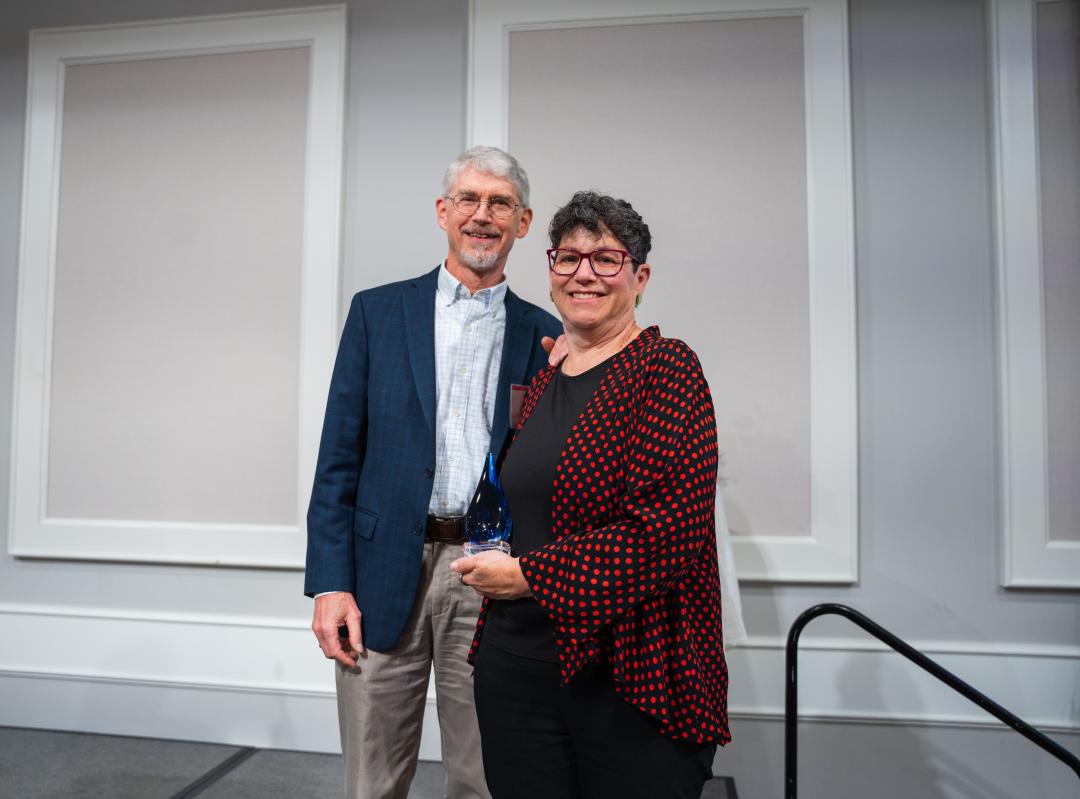
William (Bill) Skach accepts the Distinguished Alumni Award from Dean Feingold.

The Distinguished Alumni Award, honoring alumni whose work has had an extraordinary impact on science and society. This year’s recipient, Dr. William Skach ('79), played a pivotal role in research that helped transform care for people living with cystic fibrosis.

Skach graduated from Oregon State with degrees in biochemistry and biophysics and crop science, then earned his M.D. at Harvard Medical School. As a physician-scientist at the University of Pennsylvania and later at Oregon Health & Science University, he devoted more than 25 years caring for cancer patients and studying how proteins fold inside the body – research that helped lay the groundwork for treatments that revolutionized cystic fibrosis care.

Read about a breakthrough moment in his career.

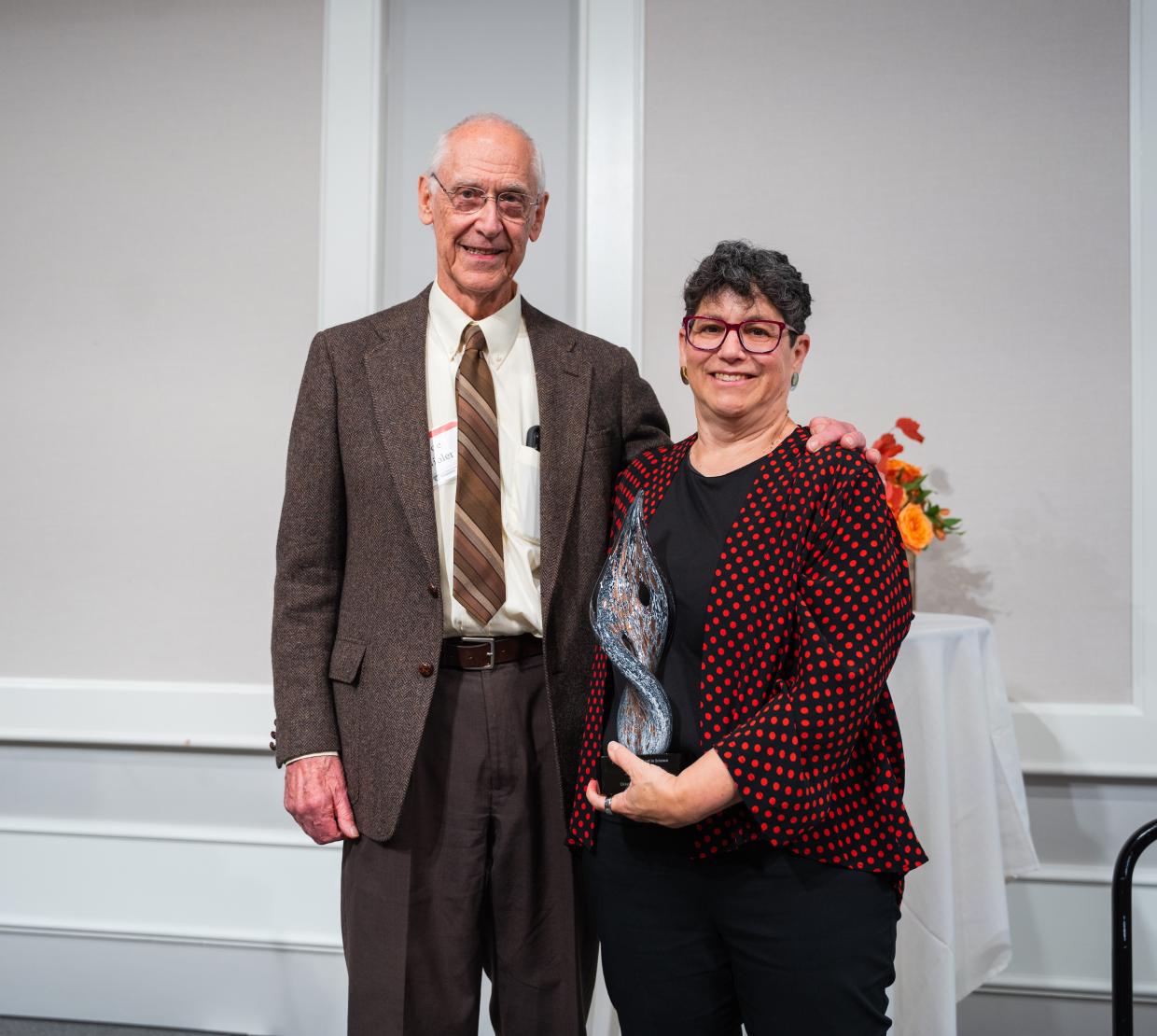
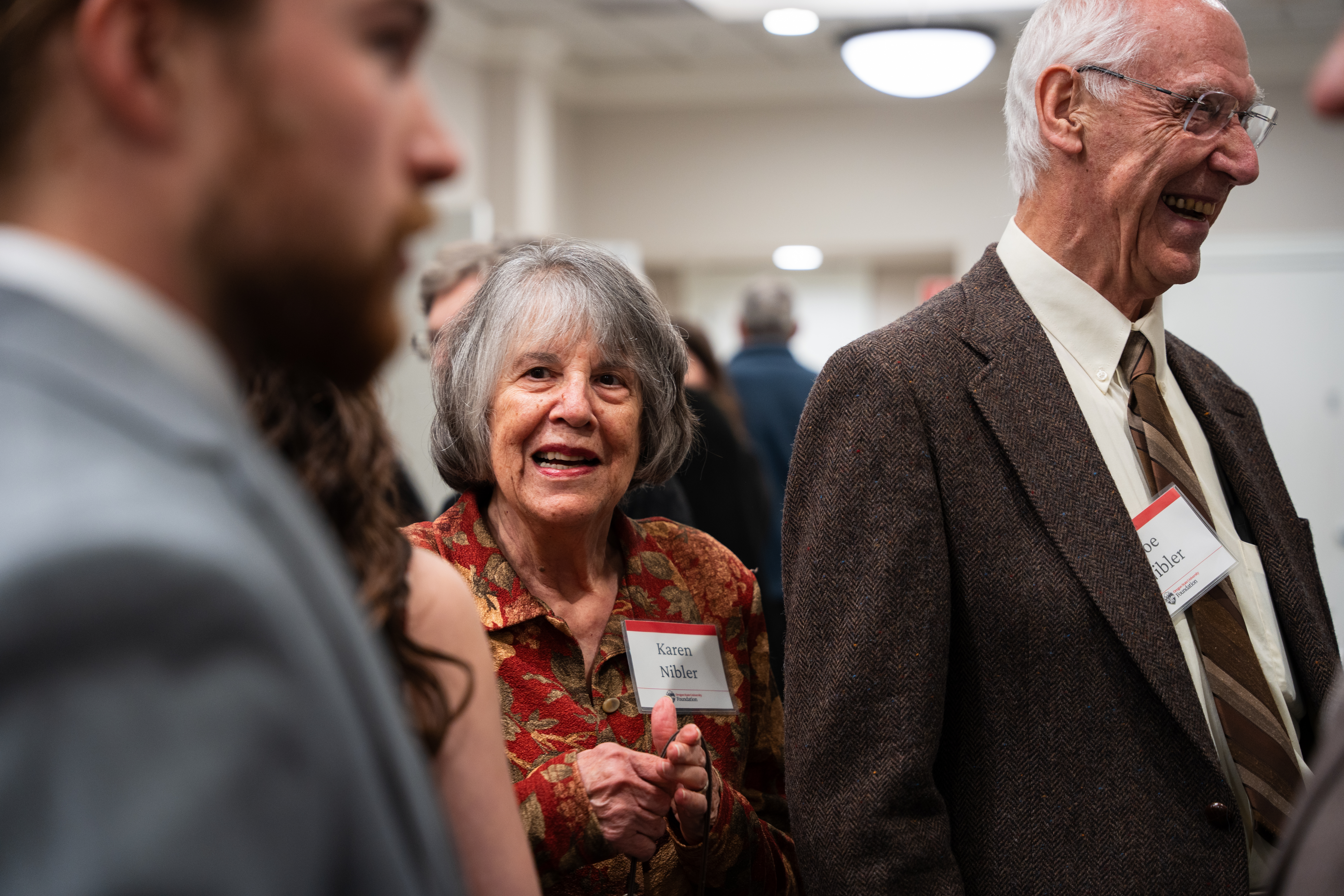
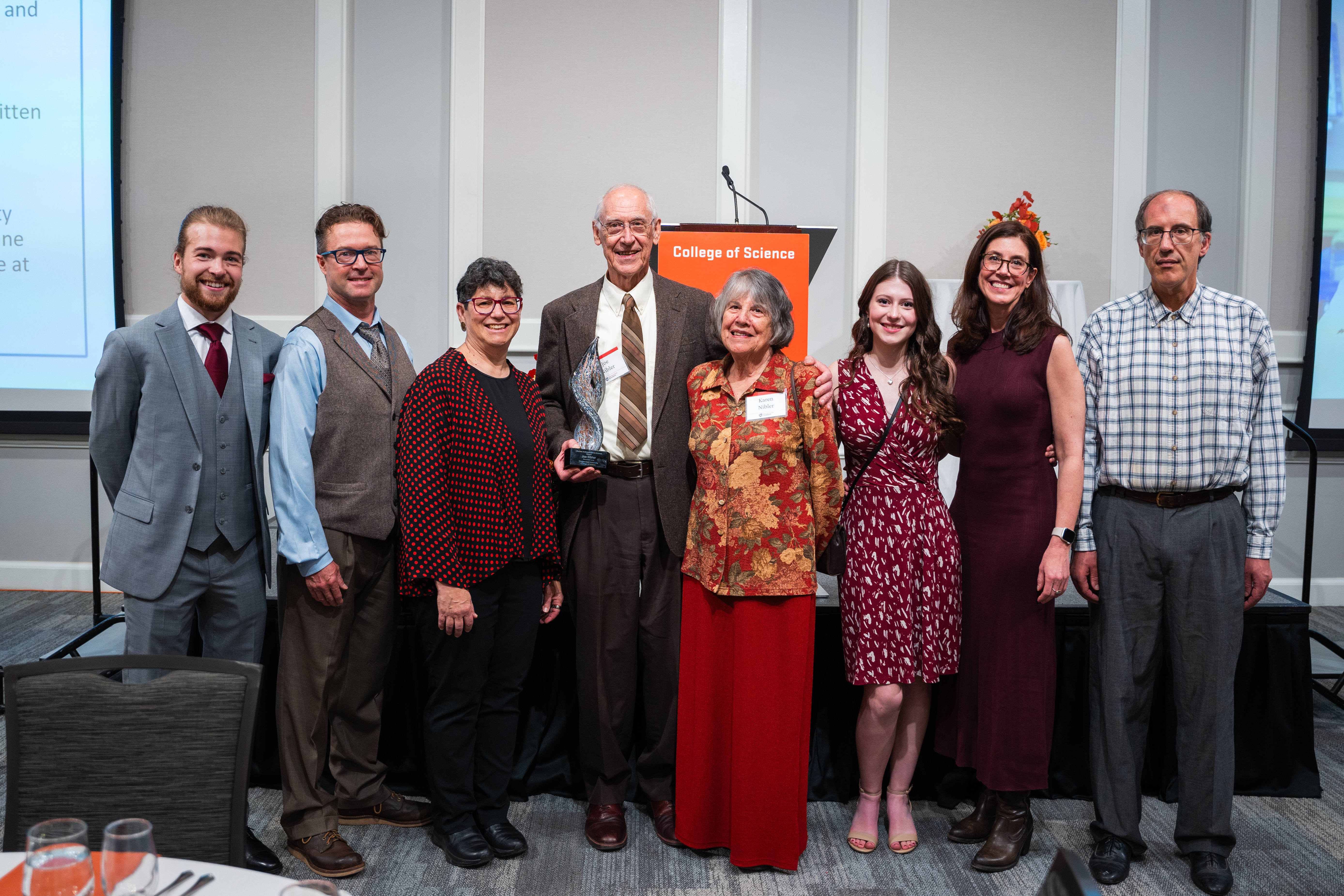
A man in a brown suit stands next to a woman wearing a red and black dress jacket. The woman is holing a glass award.

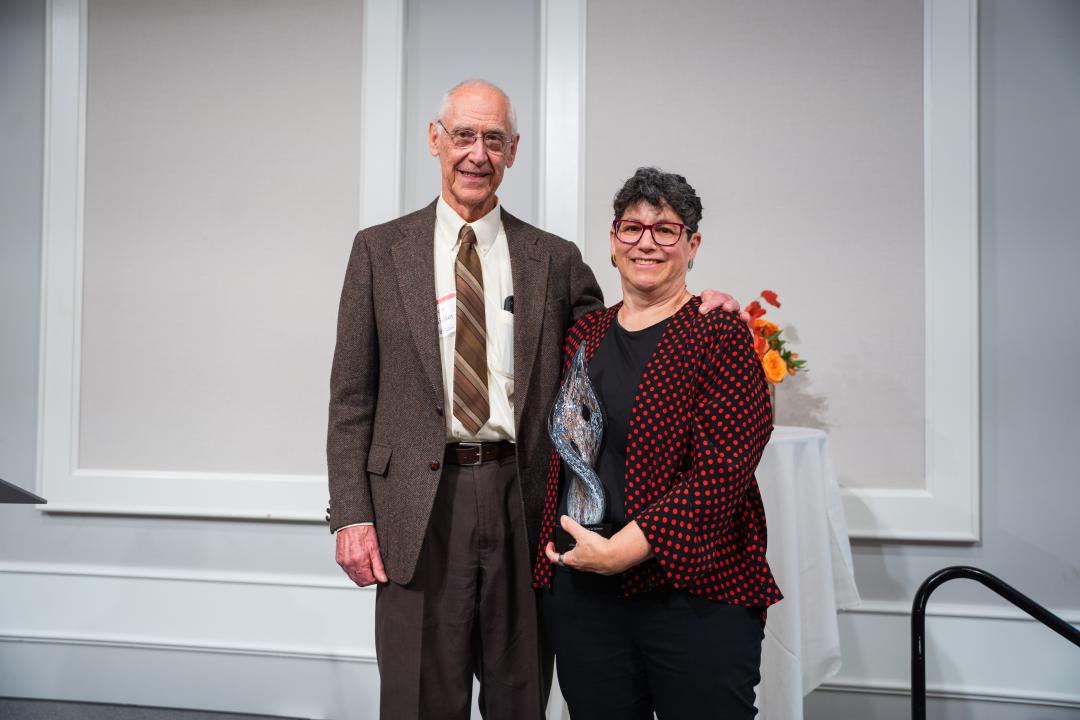
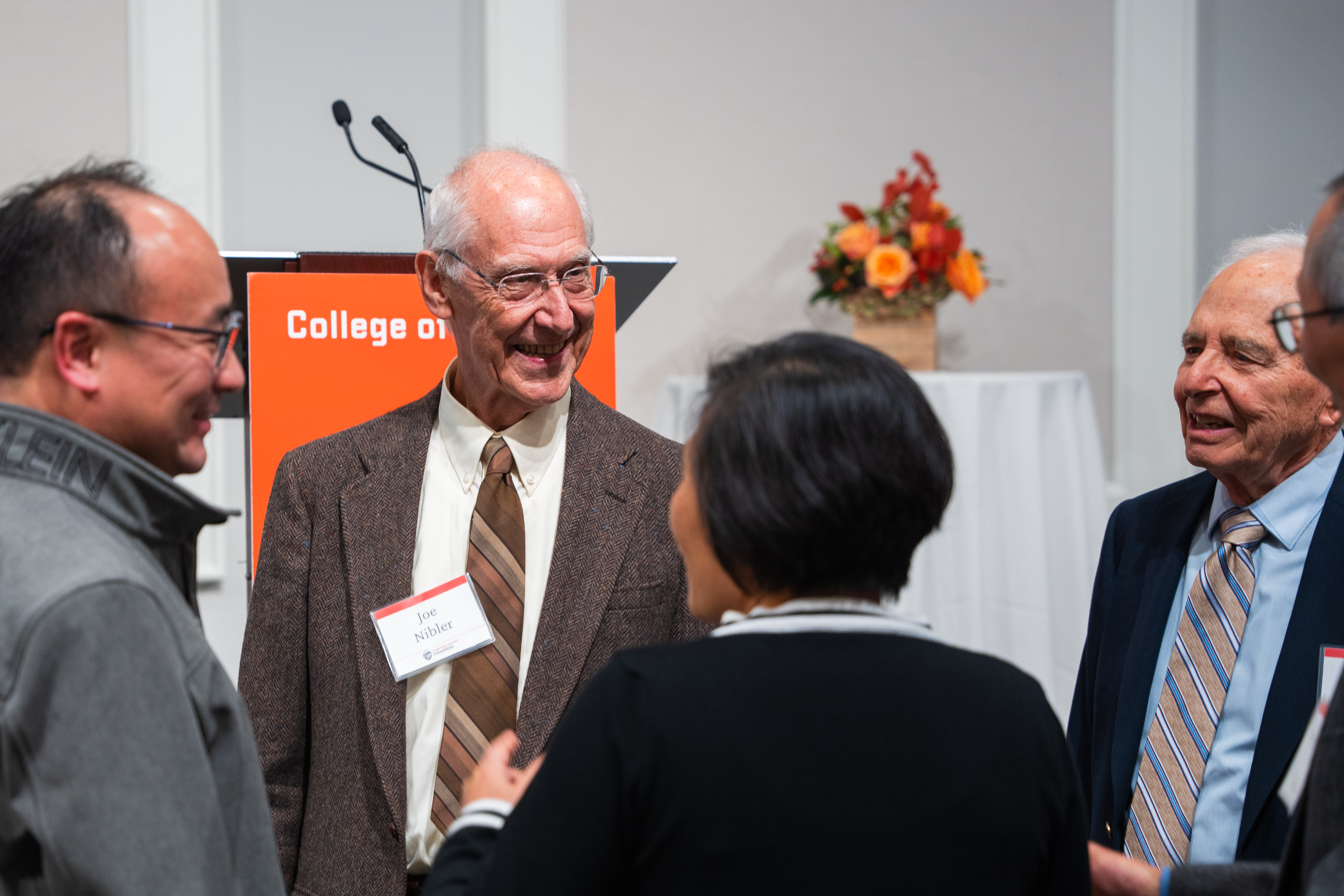
Joe Nibler accepts the Lifetime Achievement in Science Award from Dean Feingold.

Professor of Chemistry Emeritus Joe Nibler has spent his career exploring the invisible world of molecular motion – events that unfold in billionths of a second but define how matter behaves. A fourth-generation Oregonian and proud Oregon State graduate, he helped pioneer Coherent Anti-Stokes Raman Scattering, a laser-based technique that made it possible to watch molecules reacting in real time and opened new frontiers in experimental chemistry.

With support from the National Science Foundation, he established Oregon State’s first Coherent Anti-Stokes Raman Scattering laboratory, bringing laser tools that allowed scientists to observe how molecules move and react on ultrafast timescales. That ability — to see molecular bonds form and change in real time — transformed how scientists study the fundamental processes that power chemistry, from combustion to biology. His work positioned Oregon State among the early leaders in experimental spectroscopy, training generations of researchers who carried those methods forward.

Joe is also celebrated as a teacher and mentor. He co-authored Experiments in Physical Chemistry, a textbook used by students around the world, and mentored generations of scientists who are now advancing science in universities, companies and research labs across the country.

Find out what Nibler finds most rewarding.

Subscribe to Statistics