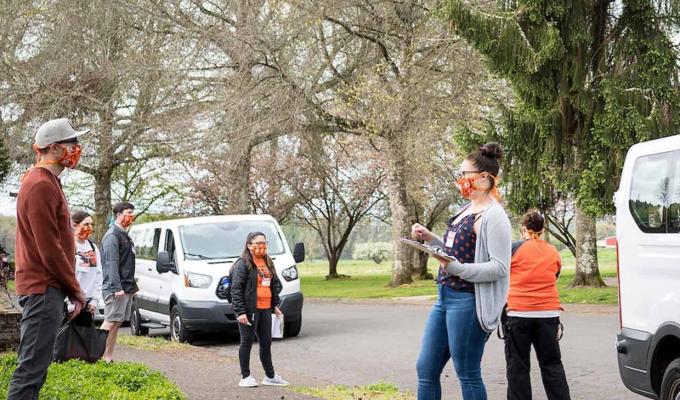
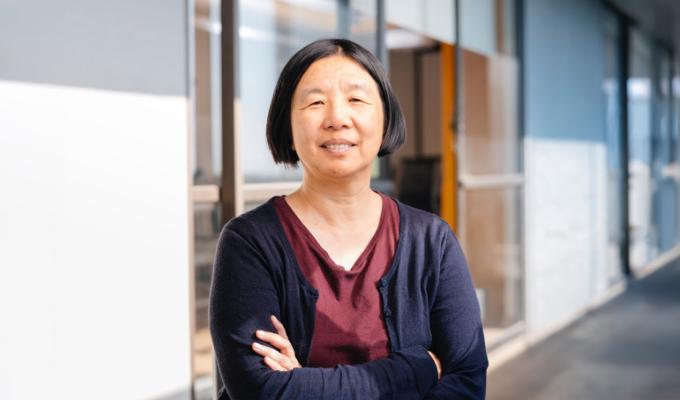
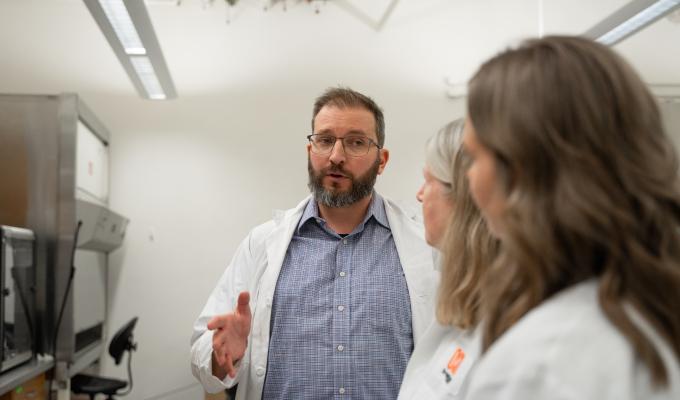
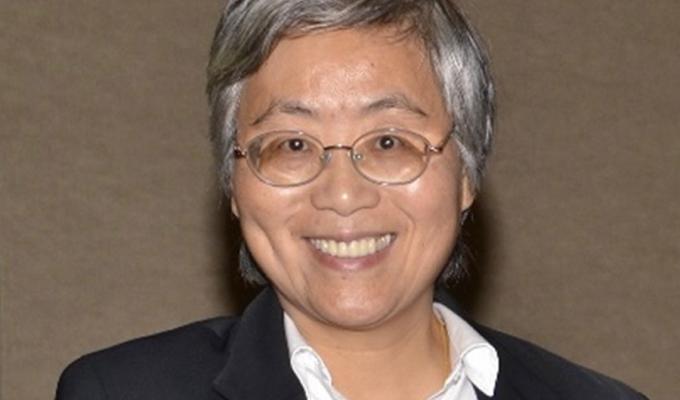
The StoryCorps recordings highlight how Oregon State researchers built a statewide partnership that helped communities track COVID-19 and make informed public health decisions through innovative data and wastewater surveillance.
The second day of Oregon State's AI Showcase highlighted new approaches to scientific discovery, with faculty demonstrating how machine learning is reshaping research across the College of Science.
In the 2025-2026 academic year, graduate students in the College of Science received notable recognition through a variety of competitive fellowships, scholarships and professional development awards. These honors support students at critical stages of their graduate education, helping fund research, conference travel, tuition and other opportunities that contribute to academic and professional growth.
The Department of Mathematics invites you to the 41st Lonseth Lecture on Thursday, May 28, with guest lecturer Laura P. Schaposnik. In her lecture, titled "Geometry of Hidden & Broken Symmetries," Schaposnik will break symmetry on purpose to see what drives reality.
Erica Baird (’05, M.A. mathematics ’09, Ph.D. mathematics and statistics ’13) didn’t set out to become an actuary. In fact, when she first heard about the career as an undergraduate mathematics student at Oregon State University, she was skeptical.
At this year's Milne Lecture, Professor Bin Yu of UC Berkeley will introduce veridical data science: Grounded in three fundamental principles — Predictability, Computability and Stability (PCS) — veridical data science makes the uncertainties surrounding human decision-making in healthcare more explicit and assessable, aggregating reality-checked algorithms for better results.
How statistics students can land jobs at top companies like AbbVie — the power of conferences at Oregon State University. Alumna Chenyang Duan (Ph.D. Statistics, ‘23) landed a full-time position as senior statistician at AbbVie, one of the top pharmaceutical companies in the world.
The world’s most urgent challenges are no longer held back by a shortage of data. They’re limited by our capacity to understand the mountains of information we generate every day. From climate modeling and environmental policy to biomedical research and artificial intelligence, data now underpins nearly every scientific and societal challenge. Preparing students for today’s careers, no matter the field, now requires fluency in data. It requires graduates who can move confidently between disciplines, translate complex analysis into clear decisions and understand the ethical responsibility that comes with influence.
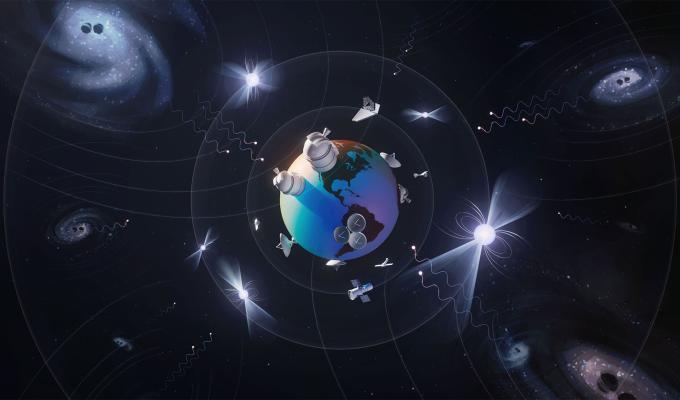
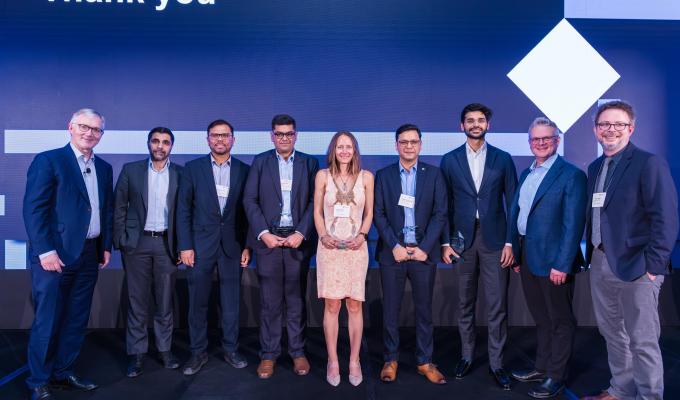
This year’s research honorees are advancing knowledge at the frontiers of statistics, microbiome science and astrophysics, with discoveries that shape public health, global policy and our understanding of the universe. Their scholarship reflects both international impact and a deep commitment to mentoring, collaboration and research excellence at Oregon State.
In the inaugural Val Nereo Lecture, presented by the Dept. of Statistics, UCSB professor Annie Qu discusses the challenges associated with multi-modal datasets, proposing a a novel Representation Retrieval (R2) framework.