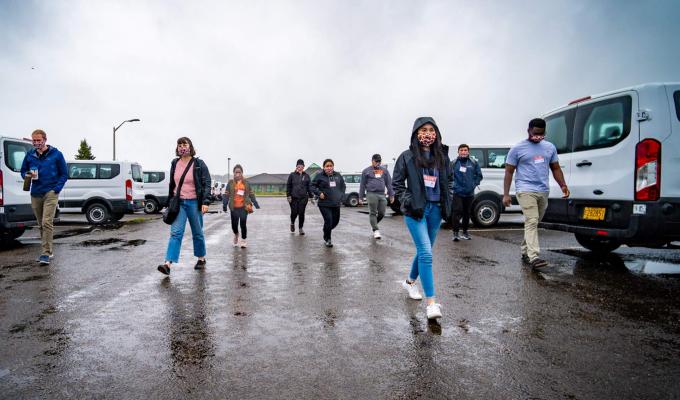
Team-based Rapid Assessment of Community-Level Coronavirus Epidemics, or TRACE-COVID-19, was launched by OSU in April 2020 with door-to-door sampling in Corvallis and expanded to other cities around the state while also adding a wastewater testing component. In December, OSU received a $2 million grant from the David and Lucile Packard Foundation to create a national TRACE Center that will expand the OSU’s COVID-19 public health project to other states.
Scientists at Oregon State University acted swiftly to the greatest public health emergency of our time, leveraging the College of Science’s unique capabilities in biomedical research and the quantitative sciences to investigate and contain the coronavirus crisis.
OSU scientists take an interdisciplinary approach to human health, working across the life, physical and mathematical sciences to spur fresh thinking and innovations.
Two new Research Experiences for Undergraduates in the field of statistics are training students in cutting-edge data analytics and computational skills essential to interdisciplinary research.
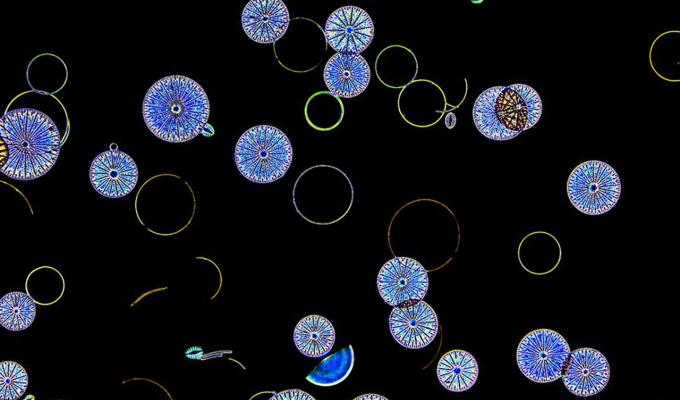
New research shows a species of diatom, a single-celled algae thought to be asexual, does reproduce sexually—a finding with important biotechnology implications.
Researchers are interpreting and advancing biohealth sciences in innovative new ways by applying the natural sciences, such as mathematics, statistics and chemistry.