Statistics

Statistics

A blue background with the year 2025

Celebrating inclusive excellence, administration, service and performance: 2025 College of Science Awards

By Hannah Ashton

The College of Science gathered on Feb. 26 to recognize and celebrate our high achieving faculty and staff at the 2025 Combined Awards Ceremony. The evening celebrated the very best in the College, from teaching, advising and research to inclusive excellence, administration and service.

The following faculty and staff received awards in Inclusive Excellence, Administration, Service and Performance.

Congratulations to all the awardees!

Headshot of Hannah Stuwe, a woman with short curly hair and black shirt.

Hannah Stuwe, graduate student in the Department of Biochemistry and Biophysics, received the Inclusive Excellence Award.

College of Science Inclusive Excellence Award

Hannah Stuwe, graduate student in the Department of Biochemistry and Biophysics, received the Inclusive Excellence Award.

Department Head Elisar Barbar, who nominated Stuwe, said she has engaged in a wide-ranging set of service, outreach and training that is truly impressive. First, Stuwe conducted a GFP protein purification activity for middle and high school students from the Chemawa Indian School, Jewell High School (Seaside), and visited groups of black and Latinx students from the Portland area.

She planned, wrote and edited a handbook of science experiments geared towards middle school aged students, their parents, and teachers to fill the void of not having a BB summer camp. This handbook now serves as a free and open access resource for community members.

Stuwe is the founder of the non-profit organization Corvallis Music Collective. They have engaged in community service and activism by providing live music for events and rallies. Recent events include the Basic Needs Center Fall Welcome Party, the Disabled Students Union Disability Justice Rally and Jackson Street Youth Services National Runaway Prevention Month “Skate Park After Dark” Show.

Amy Timshel

Amy Timshel, assistant head to the department head in the Department of Microbiology, received the Gladys Valley Award for Exemplary Administrative Support.

Gladys Valley Award for Exemplary Administrative Support

Amy Timshel, assistant head to the department head in the Department of Microbiology, received the Gladys Valley Award for Exemplary Administrative Support.

Her colleagues describe her as proactive, always seeking ways to improve processes and deeply committed to making the department a better place for everyone. She is highly regarded by students, faculty and staff for her professionalism, broad knowledge and ability to get things done. In fact, Department Head Anne Dunn noted that when she polled faculty on department strengths during strategic planning exercises, Timshel's critical role in the department was consistently highlighted.

She has a deep understanding of university policies and constantly looks for ways to improve them. She listens, advocates for students and colleagues, and takes initiative to make the department more inclusive and equitable. For example, her work on the Core Values Committee led to the addition of gender-neutral restrooms in Nash Hall and improvements to scholarship and travel fund policies.

Beyond her administrative role, Timshel actively fosters a sense of community within the department. She organizes fundraisers and charity events and regularly attends student events to show her support.

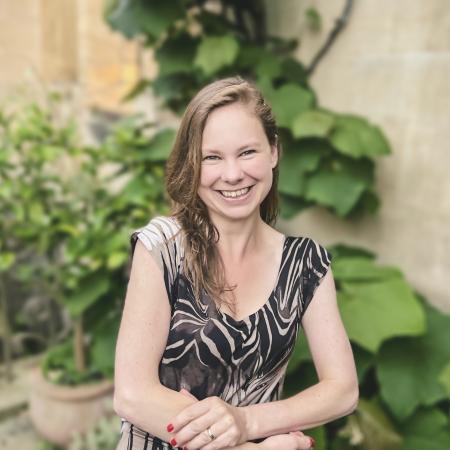
A woman in a red top poses in front of plants.

Elaine Cozzi, assistant head and associate professor in the Department of Mathematics, received the Distinguished Service Award for her impactful service to her department, the College and the broader mathematics community.

Distinguished Service Award

Elaine Cozzi, assistant head and associate professor in the Department of Mathematics, received the Distinguished Service Award for her impactful service to her department, the College and the broader mathematics community.

Cozzi served as interim associate dean of academic and student affairs for the College in Spring of 2024, managing various projects, including the university’s revision of its undergraduate advising system, assessing teaching resources and addressing countless student issues. She was overwhelmingly generous with her time in responding to the many challenges and the needs of her colleagues.

Before and after serving as associate dean, Cozzi served as assistant department head for mathematics, responsible for scheduling upper-level courses and ensuring adequate staffing for the Department’s teaching mission. This affects the hiring of instructors, graduate students, and undergraduate graders.

Jon Kujawa, Department of Mathematics head and Cozzi’s nominator, noted, “It is hard to overestimate the impact of Elaine’s planning on the smooth operation of the teaching side of the department. And she readily pivots when unexpected events disrupt the plans.” Additionally, Elaine led the assessment of the Mathematics undergraduate program for several years, playing a crucial role in student success, he shared.

Cozzi also contributes significantly to the mathematics profession as Associate Editor for the American Mathematical Monthly – the most widely read mathematics journal in the world. She is also an active member of SIAM, a professional society for applied mathematics, where she helps organize meetings and contributes to administrative efforts and regularly serves as a grant evaluator for the NSF and the Simons Foundation, helping to shape the future of mathematical research.

Virginia Lesser in front of shrubbery

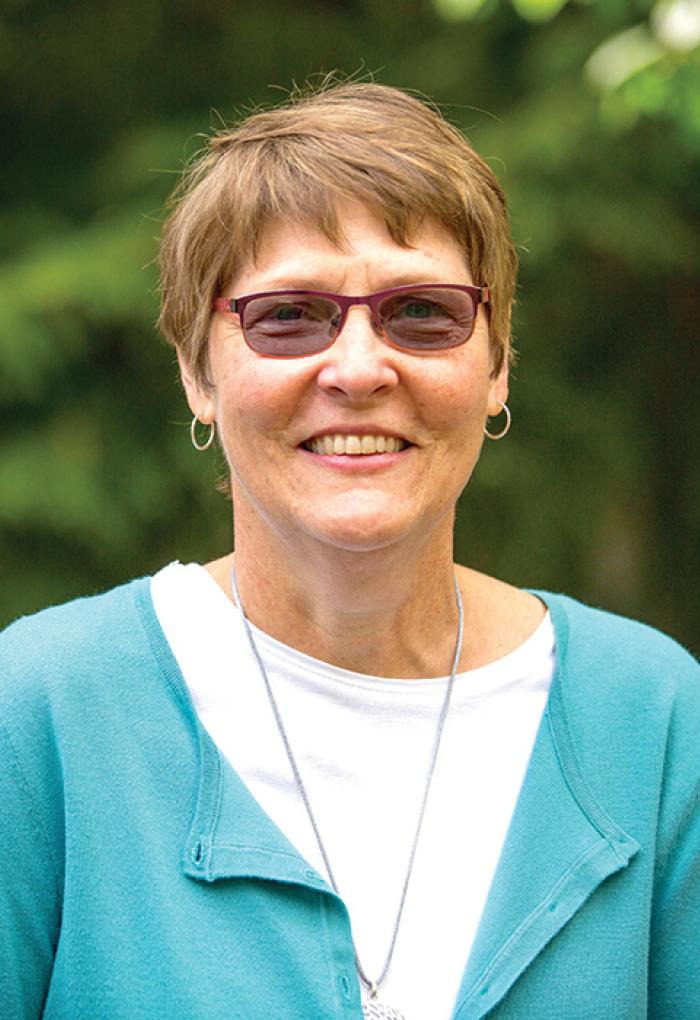
Virginia Lesser, Department of Statistics Head, received the Champion of Science award.

Virginia Lesser, Department of Statistics Head, received the Champion of Science award for her significant contributions to the field of statistics and to Oregon State University throughout her distinguished career. After earning her PhD in Biostatistics from the University of North Carolina at Chapel Hill, she joined OSU’s Department of Statistics in 1992.

A year later, she became Director of the Survey Research Center, a role she held until her retirement in December 2024. Lesser's expertise in probability sampling, survey design, and data collection methods ensured that the center upheld the highest standards. Under her leadership, the center became a premier institution, offering expertise in survey methodology, sampling and data analysis – supporting projects that inform policy, environmental monitoring, economic studies and public opinion research. Its work has helped agencies such as the Oregon Department of Transportation, the Oregon State Marine Board, and the Oregon Department of Fish and Wildlife make data-driven decisions, not to mention numerous initiatives within the University.

Lesser's groundbreaking research in survey methodology, environmental statistics, applied statistics and ecological monitoring has advanced the field and influenced practice. She has authored over 55 journal articles and conference proceedings, earning national and international recognition – including being named a Fellow of the American Statistical Association and an elected member of the International Statistical Institute.

Lesser's leadership also transformed the statistics department and elevated Oregon State University’s role in the field as department head from 2011 to 2018.

Lesser has also been a dedicated mentor and advocate for students and colleagues. Over the course of her career, she guided more than 220 graduate students and fostered a welcoming, supportive community within the department. Her colleagues regard her as an exceptional mentor and an inspiring leader, someone who consistently goes above and beyond – whether leading major academic initiatives or simply making sure the department potluck had a home-cooked turkey.

Madeleine Sherry

Madeleine Sherry

A closeup of a scientist sorting seeds for a computer to analyze

Helping Oregon farmers thrive with smarter seed testing solutions

By Hannah Ashton

Statistician Yanming Di is working to modernize an outdated system for seed purity analysis.

The Willamette Valley is known as the “grass seed capital of the world.” With its ideal climate and soil conditions for growing high-quality grass seed, the region produces more than 90% of the grass seed used in the United States and a significant portion of the global supply.

Being a hub for 500 million pounds of grass seed annually comes with complex challenges, such as outdated testing methods and cumbersome tools — ones that Oregon State University researchers aim to solve. Addressing these problems means farmers would throw less seeds away and have higher quality seed lots.

A multidisciplinary research group is combining expertise in robotics, artificial intelligence, computer science, statistics and crop science to create a modern solution for an outdated system.

“A land grant university is bringing together people with diverse backgrounds and skills to help the people within Oregon. And that is essentially the entire mission of land grant universities,” said OSU Director of Seed Services and collaborator Dan Curry.

For hundreds of years, farmers and scientists have used the same methods to analyze the purity of seed lots. Determined by the amount of weed seeds, unwanted crops and inert materials, seed lot quality impacts every stage of agriculture. To calculate this value, specialized workers use a magnifying glass or microscope to carefully scrutinize a sample. It’s time-consuming, labor-intensive work that invites a degree of human error.

Supported by $255K of grants from the U.S. Department of Agriculture, the Oregon Grass Seed Commissions, and the OSU College of Agricultural Sciences, the group aims to develop a computer vision system for real-time, onsite seed analysis — a tool that could revolutionize farming in Oregon and beyond.

Four people stand in front of a microscope.

Yanming Di (middle, orange shirt) works with the tabletop Ergo Vision to analyze seeds. The researchers take high-quality images of seeds to train the artificial intelligence to differentiate between species.

Eight years ago, members of Oregon State Seed Services envisioned a modern way to inspect seeds. While training an artificial intelligence model to analyze an image is not new, applying this technology to seed purity is. What sounds like a simple task on the surface, actually involves many intricate steps and disciplines.

Before the tool is even developed, understanding the importance of seed testing and the current limitations is crucial, and that’s where Dan Curry stepped in.

When farmers raise a seed lot, they want to ensure customer satisfaction. If weed seeds start growing on someone's newly planted lawn instead of grass, that wouldn’t be good. Or if the seeds aren’t healthy, it directly impacts yield and productivity. Different agencies including the Oregon Department of Agriculture use testing to issue quality tags for seed lots that meet specific quality standards.

Seed growers use giant machines to clean out most of the weeds. This requires constant stopping and analyzing the system to make sure they are cutting enough. In other words, throwing away enough to remove the bad seeds. Because growers don’t want to cut too hard and throw away profits, they are constantly grabbing a sample, shutting their machines off and driving miles to a lab.

Analyzing seeds by hand is hard work. It takes three to five years of training to identify up to 200 different seed species and hundreds of hours spent uncomfortably staring at tiny images. Employees who look at hundreds of thousands of seeds each day will make mistakes.

If the grass seed growers of Oregon not only had a more accurate method of testing, but also a portable version, they would throw less away and have higher quality seed lots.

Building on this understanding, a cross-disciplinary research group formed, combining five faculty members, three graduate students and three undergraduates from the College of Science, College of Agricultural Sciences and College of Engineering.

Pictures of seeds use to train AI model.

The artificial intelligence used by the DeepSeed research team learns to differentiate between seed species by analyzing photos like these that only contain one specific seed.

The first challenge is capturing high-quality images of seeds to train the computer to see the differences. Next, it’s figuring out how to maintain consistent conditions while they’re training and testing because if those conditions change, what’s used for training may not apply to testing.

Statisticians like Di are needed to calculate levels of uncertainty, while computer scientists will provide feedback on the neural networks used by AI to perform tasks that typically require human intelligence. Neural networks are algorithms that mimic the human brain’s structure to recognize patterns and make decisions based on data.

In the 21st century, the boundary between statistics and artificial intelligence has started to blur, with both fields analyzing data and trying to make sense of it.

“I don’t really think too much about which area I’m working on, whether it’s AI or statistics. I believe on this team, we just focus on solving the problem,” Di said.

The goal is to have the entire processes automated, requiring the contributions of robotics engineers. To add to the complexity, the group is developing two different versions, the tabletop lab Ergo Vision and a portable light box.

“The idea is we can send the light box to the farmers so they can analyze seeds onsite so they don’t have to send their sample to the seed lab and wait a couple of hours before they can make a decision,” Di said.

The 3D printed prototype currently sitting in the crop science building was made by Ameyassh Nagarajan, an OSU graduate student in computer science and crop science and Logan Snell, an engineering undergraduate.

“I usually work on a lot of theory and engineering, but this is the first time I’ve been involved in something that’s solving a real-world problem,” Nagarajan said.

In the tabletop version, seeds will rest on a stationary flat platform, whereas the lab model incorporates a conveyor belt to transport seeds through the system seamlessly. The tabletop version is designed for high-throughput analysis in lab settings, while the portable light box provides farmers with an on-site solution.

By the start of this year, the group has trained the AI on five types of common seeds. In reality, the system could see a few hundred different seed types, meaning one of the big tasks is to gather more species and introduce them to the model.

Afterward, Di will be involved in working with the computer science collaborators to improve the AI model itself.

“If the machine has say a one percent error rate, it sounds very low. But in practice, the percentage of true weed seeds is also very low. So that means even if you have only one percent of error, that is still a lot of false positives,” Di said.

By applying cutting-edge science to the needs of local stakeholders, Yanming Di and collaborators are turning a centuries-old challenge into an opportunity for multidisciplinary innovation. This collaborative effort underscores the power of science and highlights the commitment of Oregon State to helping Oregonians thrive.

A graphic of a star is in front of lab test tubes.

College of Science graduate students earn prestigious awards in 2023-24

By Hannah Ashton

As a land grant institution committed to teaching, research, and outreach and engagement, Oregon State University promotes economic, social, cultural, and environmental progress for the people of Oregon, the nation, and the world. Oregon State University is deeply committed to the principle that every student we admit — in person or online — should achieve their goal to graduate, and awards of Scholarships and Fellowships contribute to this goal in an impactful way. The College of Science invests in the success of our graduate scholars by providing financial support to students that we recruit and students that are currently enrolled among other ways of supporting their development, progress and growth.

Graduate students in the College of Science earned notable recognition during the 2023-24 academic year, receiving a range of awards which highlight their achievements and contributions to Oregon State. Below, we highlight some of these noteworthy Graduate School Awards. From state specific honors like the ARCS Foundation Scholarship to institutional support through the Provost’s Distinguished Fellowship, these awards recognize graduate students who embody the values of Team Science.

ARCS Foundation Awards

ARCS (Achievement Rewards for College Scientists) Foundation, Oregon Chapter seeks to advance science and technology in the United States by providing financial awards to academically outstanding students who are U.S. students studying to complete Ph.D. degrees in science, engineering, mathematics, technology and medical research at Oregon Health & Science University, Oregon State University and the University of Oregon.

In 2023-2024, two College of Science graduate students were awarded ARCS scholarships. Karlie Wiese, doctoral student in Chemistry, received the ARCS Oregon 10th Anniversary OSU Scholar Award. Lucas Kolanz, doctoral student in Physics, received the Beth Ray ARCS Foundation Scholar Award. This award is funded through ARCS, the OSU Graduate School and by contributions from past OSU President Ed Ray in memory of his wife Beth.

Delson Bridge to the Future Fund

Pritha Biswas, doctoral student in Physics, is the recipient of the Delson Bridge to the Future Fund, designed to assist graduate students who are facing critical financial emergencies that could impede degree completion.

Dissertation Completion Award

Two doctoral students were awarded the Dissertation Completion Award. This award supports outstanding doctoral students who are in their final stages of their dissertations by offering an award to cover the cost of three graduate credits of tuition and mandatory fees for one academic term. The recipients are Adaline De Chenne from Mathematics and Njesa Totty from Statistics.

Graduate Dean’s Catalyst Fellowship

Two doctoral students, Theodore Bambakidis (Microbiology) and Jesse Howe (Biochemistry and Biophysics) were awarded the Graduate Dean’s Catalyst Fellowship. This award is a pilot program launched for the 2023-24 academic year to support graduate students nearing completion of their doctoral degrees.

Herbert F. Frolander Graduate Teaching Assistant Award

Steven Tran (Chemistry) received the Herbert F. Frolander Graduate Teaching Assistant Award, which recognizes outstanding and professional involvement with both faculty and students by a graduate teaching assistant at Oregon State University. This award is presented to one graduate student from across the entire university during University Day in the fall. Hear from faculty and staff who nominated Tran here.

Laurels Block Grant Program

The purpose of Laurels funding is to provide financial support to academic units so they may diversify and strengthen their graduate programs. This is achieved by providing tuition support to assist with the recruitment of new graduate students to OSU. Two College of Science students received funding in 2023-24, masters student Bailey Sharon (Mathematics) and doctoral student Courtney Clement (Microbiology).

Oregon Lottery Graduate Scholarship

Three doctoral students received funding from the Oregon Lottery Graduate Scholarship. Funds for this scholarship are provided through the Oregon State Lottery and are awarded on the basis of academic merit and financial need. The 2023-24 recipients are Matthew Nguyen (Chemistry), Steven Tran (Chemistry) and Kaitlin McHugh (Integrative Biology).

P.F. and Nellie Buck Yerex Graduate Scholarship

Nilanjana Das, masters student in Microbiology, is the recipient of the P.F. and Nellie Buck Yerex Graduate Scholarship. This scholarship is awarded to graduate students who are pursuing study in a scientific or technological field. It is awarded on the basis of academic achievement and promise for the future.

Prestigious Diversity Fellowship

Two doctoral students received the Prestigious Diversity Fellowship, intended to support the recruitment and retention of graduate students from historically underrepresented backgrounds who demonstrate scholarly promise at Oregon State. The recipients are Hallee Boyd (Chemistry) and Nyazia Sajdah-Bey (Integrative Biology).

Professional Development Award

The purpose of the Professional Development Award is to help cover costs for qualifying training, resources and activities that contribute to professional skills development. In 2023-24, the Graduate School funded the following students:

Alice Welch (Integrative Biology)

Olivia Burleigh (Integrative Biology)

Emily Taylor (Integrative Biology)

Pritha Biswas (Physics)

Kevin Dimmitt (Physics)

Provost’s Distinguished Graduate Fellowships and Scholarships

The purpose of the Provost’s Distinguished Fellowship and Scholarship program is to support programs in the recruitment of Oregon State’s most meritorious graduate students.Ian Clifford (Integrative biology) and Ben Daniels (Microbiology) received the distinguished Provost Fellowship award.

In 2023-24, the College of Science awarded Provost Scholarships to the following students:

Joline Nguyen (Biochemistry and Biophysics)

Emily Hiatt (Chemistry)

Sanpreet Hira (Chemistry)

Jack McLaughlin (Chemistry)

Gage Rios (Chemistry)

Rodrigo De Almeida Alves (Integrative Biology)

Brysyn Goodson (Integrative Biology)

Olivia Noonan (Integrative Biology)

Stefanie Fazekas (Mathematics)

Heather Fogarty (Mathematics)

Mansi Sanjay Mahajan (Mathematics)

Courtney Clement (Microbiology)

Lynn Kaneko (Microbiology)

Katelyn Spadavecchia (Physics)

Kalista Wayt (Physics)

Ian Moran (Statistics)

Scholarly Presentation Award

The Graduate School offers the Scholarly Presentation Award to provide graduate students with financial support to assist with certain costs associated with presenting their scholarly work at academic conferences and meetings. In 2023-24, the following College of Science students received this award:

Mona Khorani (Chemistry)

Nan-Chieh Chiu (Chemistry)

Anshika Nagar (Chemistry)

Ankit Yadav (Chemistry)

Jesse Laney (Integrative Biology)

Angelika Kurthen (Integrative Biology)

Jun Cai (Integrative Biology)

Erick White (Integrative Biology)

Jalyn Devereaux (Integrative Biology)

Jared Freedman (Integrative Biology)

Jesse Fritz (Integrative Biology)

Dorothy Zahor (Integrative Biology)

Jessica Karr (Integrative Biology)

Giovanni Crestani (Integrative Biology)

Kaitlin McHugh (Integrative Biology)

Kenneth Glynn (Integrative Biology)

Jazlee Joon Crowley (Integrative Biology)

Brenna Prevelige (Integrative Biology)

Jeremy Lilly (Mathematics)

Måns Mattsson (Physics)

Thurgood Marshall Graduate Fellowship

The Thurgood Marshall Graduate Fellowship is intended to support the retention of meritorious graduate students whose accomplishments and activities demonstrate leadership, service and commitment to fostering a just and equitable community. Val Sawiccy (Integrative Biology), currently an instructor at the University of Oregon, is this year’s recipient.

Wei Family Private Foundation Scholarship

The Wei Family Private Foundation, a non-profit organization, was established to honor the memory of Dr. (Mrs.) Chung Kwai Lui Wei and Mr. Hsin Hsu Wei. Its purpose is to award scholarship grants to graduate students with high academic credentials in science and math, with a preference for those who have lived in or are related to persons born in China. In 2023-2024, the College of Science awarded one Wei Family scholarships to Lemeng Li (Statistics).

Mark and Vicki Hehnen Veterans Science Scholarship

The Mark and Vicki Hehnen Veterans Science Scholarship supports science students who are veterans and provides financial support other than tuition. This award was established by Mark Hehnen (’78 Ph.D.). In 2023-2024, the College of Science awarded two scholarships to Ebony Stretch (Microbiology) and Angela Mellisa Thompson (Zoology).

Jesse A Hanson General Science Scholarship

The Jesse A Hanson General Science Scholarship is awarded to students who show high scholarship, potential for success, unimpeachable character and service to the university. Jesse Hanson was an OSU professor of poultry science from 1911-66. The following four students received this scholarship during the 2023-2024 academic year: Joshua Byrnes (Statistics), Jessica Etter (Chemistry), Elena Gasiorowski (Integrative Biology), and Mikaela Lee (Microbiology).

Fred W. Durbin and Helen E. Bette Pierce Durbin Endowment

Created by Fred and Helen “Bette” Durbin, this endowment supports graduate fellowships as determined by the Dean. Fred received a bachelor’s in general science from OSU and Bette graduated with a bachelor’s in home economics (now the College of Health). The College of Science awarded two Fred and Helen Durbin Scholarships to Ameh Benson Agi (Chemistry) and Jonathan Dutra (Biochemistry/Biophysics).

Science Graduate Fellowship

The Science Graduate Fellowship is to be used to support students enrolled in the College of Science with a preference for students in chemistry, biochemistry and the life sciences. The College of Science awarded one Science Graduate Fellowship during the 2023-2024 academic year to Emily Parker (Integrative Biology).

*When possible, links to students' directory profiles are included.

Headshot of man

The versatile statistician: Jon Francis' career across industries

By Hannah Ashton

Jon Francis (statistics, ‘96) has built a career working for some of the biggest names in business, including Amazon, Fred Hutchinson Cancer Research Center, Nike, T-Mobile, Starbucks, PayPal and currently General Motors. What education has allowed him to shift seamlessly from coffee to cars? A master’s degree in statistics from Oregon State University.

“Statistics is core to so many different industries and companies. It’s not like you have to go into a specific field or there’s only a few sets of companies or domains that you could work for,” Francis said. “Statistics applies to everything. It’s been really fun for me to have such a transferable set of skills.”

With 25 years of professional experience, Francis has learned valuable lessons and made a few mistakes along the way. Attending Oregon State, however, remains one of his best decisions.

Opportunities in every direction

As the chief data and analytics officer for the largest automaker in the United States — General Motors — Francis wears many hats.

“I am responsible for the stewardship of all our enterprise data, everything from manufacturing to customer data, to product development data. I am also tasked with finding where we can solve some of the company's hardest problems by applying statistics, data science, machine learning and AI,” Francis said.

On the customer side, he works with the marketing organization to ensure effective communication with customers when they are in the market to buy a vehicle. This includes determining which vehicles to highlight and what incentives to offer.

On the safety and vehicle quality side, GM is working to use diagnostic data proactively.

“If we could use machine learning and predictive analytics to predict when a car might have a problem and alert the customer to take it in, it would enhance customer lifetime value, improve loyalty and increase efficiency for GM in terms of costs,” he said.

Francis didn’t start on the business side of statistics. His first job after graduating from Oregon State was at the Fred Hutchinson Cancer Research Center in Seattle, Washington, where he worked as a statistician on the Women’s Health Initiative.

A series of clinical trials that kicked off in 1991, the initiative focused on studying major health issues for post-menopausal women. Francis helped design the analytics for the studies and reporting.

After that role, he moved into business, taking roles at Amazon, Expedia, T-Mobile, Microsoft and Nike. In 2011 when he joined Nike, the company was just starting to prioritize building more customer relationships directly with customers through digital experiences like their membership program. As the director of data science and technology, Francis helped move a lot of their analytic work toward the cloud and Amazon Web Services. He also explored what capabilities needed to be built around personalization and understanding what drives customer loyalty.

Reflecting on his early career, Francis admits that he changed jobs frequently, sometimes driven by frustration rather than strategic growth. Over time, he realized that similar challenges exist across companies, and the key to professional development lies in resilience and addressing problems rather than avoiding them. “Instead of running from the problems, how can I build a growth mindset and be part of the solution?” he explained.

His advice to students: pursue new opportunities thoughtfully, ensure they align with personal growth and long-term goals, and focus on running toward opportunities, not away from challenges.

“What’s happening with AI and machine learning are things we couldn’t even have dreamed of back then.”

Another important lesson he learned is to invest time in understanding stakeholders’ work, challenges and business needs.

“I think the core idea is to lead with humility. The best way for you to have an impact through the work you do is to build that relationship and earn that credibility by understanding what the challenge is for someone and how you can bring statistics to help solve those problems,” he said.

Statistics has become even more important in the 21st century.

“The world has changed. When I started some things were not possible because the technology wasn’t available. We didn’t have cloud computing, we didn’t have the scale that we have now in terms of the problems we can solve,” Francis said. “What’s happening with AI and machine learning are things we couldn’t even have dreamed of back then.”

As technology continues to advance, Francis believes there will always be a role for foundational statistical understanding. For him, statistics is more than just numbers on a page; it’s a language that decodes mysteries and solves problems across every industry.

From health research to Fortune 500 companies shaping the future of transportation, his career exemplifies the boundless potential of a statistics degree from Oregon State University.


Read more stories about: alumni and friends, statistics, career outcomes


A male college student engages with children during Discovery Days

Empowering communities: Highlights from the College of Science’s 2023-24 outreach

By Hannah Ashton

The College of Science is committed to making science accessible, engaging and relevant to people’s lives. Through outreach, we support science literacy, connect with communities and help students see themselves in STEM. From hands-on activities in classrooms to public science events and student-led programs, outreach is one way we ensure science makes an impact. Here are a few examples of 2023-2024 outreach from across our departments:

In Integrative Biology, faculty and students participated in events such as Science Nights at local schools, Discovery Days, and sea-themed summer camps, with activities ranging from avian behavior trials to DNA sequencing workshops in Nepal. The department also contributed to public presentations and fundraisers for undergraduate research.

The Mathematics department hosted significant events like the Lonseth Lecture and Math For All Conference, while also providing educational enrichment through math circles and problem-solving sessions. Faculty gave lectures internationally and led outreach programs in local schools, aiming to make math accessible to all.

Biochemistry and Biophysics highlighted women leaders in STEM, hosted symposia and webinars, and engaged the public through biophysics demonstrations. The department's outreach extended to local schools, community events, and artistic projects that made science more approachable.

In Physics, outreach efforts included attending elementary school science nights and giving tours to high school students. Educators can visit the physics website to schedule a classroom visit from an OSU physicist.

The Chemistry department’s outreach initiatives aim to broaden access to STEM education and inspire a diverse range of students to explore science. Through a variety of programs, the department offers hands-on experiences, community events, and immersive camps that connect underrepresented and local students with real-world science opportunities. Learn more about chemistry outreach.

The Microbiology department organized creative and educational events such as agar art, career panels, and science nights, while also hosting a microbiology camp for high school students to explore STEM careers.

The Department of Statistics held outreach activities focused on recruitment and research growth including a joint research forum with Shanghai University of International Business and Economics. The department also held two conferences in Corvallis during the 2024 summer.

In the Dean’s Office, the Science Success Center organized Discovery Days where OSU welcomed more than 1,300 elementary students to experience science outside the classroom. Discovery Days, a biannual outreach event, brimmed with activities for kids to enjoy while they met graduate and undergraduate students eager to share their enthusiasm for the inspiring field.

The Dean’s Office also did recruitment outreach, visiting community colleges and middle and high schools to promote STEM programs and science career paths, engaging over 300 students in total.

These collective efforts typify the College’s commitment to science education, community engagement and inspiring future generations in STEM.

Lisa Ganio smiling in front of bookshelves

The Department of Statistics Expresses our Deepest Gratitude for Retiring Faculty Member Dr. Lisa Ganio

By Lauren Hudachek

It is with great appreciation that we announce a pillar of the Department of Statistics, Dr. Lisa Ganio has transitioned to an emeritus faculty role and will be fully retiring at the end of the 2024 - 25 academic year. Dr. Ganio’s academic journey began at Humboldt State University, where she worked towards her B.S. in Zoology and Botany with initial plans of becoming a biologist. During her studies she began to grow passionate about the field of statistics and the opportunity the field offered to collaborate with individuals from a wide range of disciplines. This interest ultimately led her to Oregon State University where she earned her M.S. (1986) and Ph.D. (1989) in Statistics. While earning her doctorate, Dr. Ganio was advised by Dr. Daniel Schafer who would become to Department Chair in 2008.

Upon graduating with her doctorate, Dr. Ganio continued to pursue her passion of ecological research and started her career off as a consulting statistician for the Ecotoxicology group within the Corvallis Environmental Protection Agency Research Lab. While it has, “Always been ecological research that got me [Dr. Ganio] out of bed in the morning,” she, “Missed students and the culture of research in the university.” Therefore, she returned to OSU’s campus as an assistant professor in the College of Forestry. During this time, Dr. Ganio began conducting her own research on silviculture, botany, fisheries, wildlife, and statistics. From 1999 - 2018 she also led the College of Forestry’s Statistical Consulting Program. On top of her College of Forestry commitments, she made time to serve on the Faculty Senate Graduate Council from 2014 - 2018.

In 2018, Dr. Ganio rejoined the Department of Statistics, stating she was ready to, “Return to the discipline that had always been the foundation of her work,” and took on the leadership roles of Department Head (2018 - 2024) and later the Director of the Data Analytics MS Program. Some of her successes as a leader in the department include playing a key role in expanding the data analytics certificate program and leading the department through the challenges of the Covid-19 pandemic. In the Department of Statistics, she has also continued to investigate the boundary between applied statistics and ecology. Her work has brought new awareness of the need for careful research design and sampling, particularly in non-standard applications such as in stream networks and wildfire settings.

During the 30 years Dr. Ganio has devoted to OSU, she has managed to build the reputation of a well respected scientist and mentor for rising academics. She has (co)authored 60 peer-reviewed publications, taught ~97 classes since 1999, and led ~$6 million in cooperative agreements with US Forest Service colleagues. For her excellent mentorship she was awarded the Dean’s Award for Outstanding Achievement in Advising and Mentoring and was recognized twice by the College of Forestry for mentoring and instruction (2003 & 2008). Forest Ecosystems & Society Professor, Christopher Still commends Dr. Ganio for the, “Statistical rigor she brought to discussions and her ability to think about a very wide variety of research topics.” Not only is Dr. Ganio well appreciated by our OSU family, her work for groups such as the Washington Department of Natural Resources and the National Park Service have extended her reputation to the national level.

Those who have had the fortunate opportunity to work with Dr. Ganio know that she is as fierce of a leader as she is a kind and compassionate individual. Professor and Director of the Center for the Future of Forests & Society, Michael Nelson notes that he, “Always greatly appreciated her humanity: whether that was focused on helping students succeed or working hard to address some challenge within the department or college,” as well as the, “Warp of her steady and principled nature.”

It is this combination of drive and empathy that makes Dr. Ganio an invaluable team member and successful mentor. When reflecting on Dr. Ganio’s leadership abilities, Professor and Interim Department Head, Dr. Lan Xue appreciates that Dr. Ganio has always been a, “Strong advocate for inclusivity within the graduate program, prioritizing diversity in scholarships, admissions, and student funding,” and feels that, “Her efforts have left a lasting impact on our graduate students, and her influence will be remembered by many.” Dr. Ganio has advised more than 75 statistics and data analytics graduate students, many of which have gone on to research positions in privation, state, and federal agencies. Current graduate student Benson Cyril Nana Boakye shares how Dr. Ganio has impacted his studies,

“Lisa has been an extraordinary influence in my life, not merely as a supervisor but as a guiding figure akin to a mother. Her unwavering support and thoughtful check-ins have been instrumental in helping me navigate the challenges of transitioning as an international student. Lisa exemplifies excellence through her dedication to her work, her humanity, and her deep commitment to the well-being of others. As you retire, Lisa, know that your legacy will continue to inspire us. Your guidance has shaped my professional growth in profound ways, and your retirement marks the end of an era of exemplary leadership and service. Thank you for your dedication, wisdom, and unwavering commitment to excellence. You will always be a rare gem whose impact extends far beyond our department and Oregon State University.”

When asked what she will miss the most about the department, Dr. Ganio states that she, “Will miss working with the students - above all else, students bring energy, creativity and a strong sense of purpose to education and research. I will miss them very much!” As she oversees the last of her mentees and prepares for retirement, Dr. Ganio would like to share one last piece of wisdom for her students and colleagues, which is to, “Follow your heart, and do what is best for you. Academia puts a lot of pressure on people so take time to understand what you want and be true to that.”

Post-OSU plans for Dr. Ganio include returning to the cello and piano, making time for her family and farm, and traveling. She also hopes to remain an active member in the Corvallis community by volunteering. While it is a bittersweet moment to say goodbye to an individual who has contributed so much to OSU, we are wishing Dr. Ganio the happiest of retirements and we plan to enjoy every last minute with her while she wraps up her departmental responsibilities.


Read more stories about: faculty and staff, statistics


Portrait of Ginny Lesser smiling outside in natural light.

Dr. Ginny Lesser Transitions into Retirement After More than 30 years at OSU

By Lauren Hudachek

There is a consensus amongst the members of the Department of Statistics, that our small department is a welcoming and supportive community. It is also agreed upon by many, that Dr. Virginia (Ginny) Lesser has played a large role in cultivating this environment.

Before she began her academic career at Oregon State University, Dr. Lesser earned her PhD in biostatistics from the University of North Carolina at Chapel Hill. In 1992, Dr. Lesser joined OSU’s Department of Statistics as an instructor and researcher, focusing on topics such as environmental sampling, ecological monitoring, and applied statistics.

Since 1993, Dr. Lesser has served as the Director of the Survey Research Center at Oregon State University and conducted a high volume of surveys throughout her career. Senior Faculty Research Assistant, Lydia Newton who works closely with Dr. Lesser remarks that together they have, “Conducted hundreds of studies with Oregon state agencies and OSU faculty and staff. I have learned so much under Ginny’s direction and am extremely grateful for the ability to serve this center and department.” After serving many years in the Survey Research Center, Dr. Lesser took on the additional role as Department Head (2011 - 2018). On top of her OSU leadership roles, she still found time to participate in national and international organizations such as the National Academy of Sciences, the American Association for Public Opinion Research, and the Association of Fish and Wildlife Agencies, and the International Statistical Institute.

While it can be hard to attest to an individual’s value and contributions with words, like a true statistician, Dr. Lesser's accomplishments can be reflected in numbers. In 2009, Dr. Lesser became the first woman promoted to full professor within the statistics department. Her efforts as the Department Head led to doubling both the number of funded statistics students as well as the number of graduating MS and PhD students, hiring six new faculty members, and growing course enrollments. She helped to develop the College of Science’s first online degree, the MS in data analytics. Additionally, she mentored over 220 graduate students, and published more than 55 journal articles and conference proceedings.

Whether it is pioneering a new graduate program or taking the initiative every year to cook a whole turkey for the annual fall potluck, Dr. Lesser always goes out of her way to enhance the department's achievements and culture. “Ginny has been director of the Survey Research Center for decades, keeping alive our department's reputation in sampling, even when she was the only faculty member with expertise in the field,” shares Professor Lisa Madsen. Other members of the department vouch for the fact that Dr. Lesser, “Consistently advocates for the department,” and they appreciate the, “Countless hours you [Dr. Lesser] have invested in making our department a better place for learning and growth.”

Like many great leaders, Dr. Lesser selflessly uses her experience and standing to uplift her colleagues and has set a precedent for what a great mentor should look like. Dr. Lesser, “Used her many years' service on the College Promotion and Tenure Committee and her leadership of the department Promotion and Tenure Committee to shepherd many people through the promotion process and to provide valuable and much-appreciated mentorship,” says one statistics faculty member. When asked to reflect on his time working with Dr. Lesser, Professor and Co-director of Graduate Studies Dr. Yuan Jiang expresses his,

“Deepest gratitude to Ginny for her care, guidance, and mentorship to everyone in this department. Ginny became the department chair soon after I arrived at OSU as an Assistant Professor and she has been consistently giving me advice and guidance on my academic career since then. Ginny has also been a role model of this department by her collegiality, friendship, and leadership.”

Due to her kind nature, Dr. Lesser has helped curate a supportive department both in terms of professional and personal support. When assistant professor Tate Jacobson first moved to Corvallis, it was Dr. Lesser who was, “The first person to reach out… despite having a packed schedule, she has remained incredibly generous with her time, answering my many questions and sending me [Dr. Jacobson] anything that she thinks might be useful. She has truly made me feel welcome in the department.” Dr. Jiang fondly remembers the, “International food night she organized for the faculty and staff when she was the Department Chair,” and, “Hopes that she can restart it if she has more time after her retirement!”

Entering retirement in Winter 2025, Dr. Lesser hopes to remain active in the department as an emeritus faculty. While it will be quite the adjustment to say goodbye to such an influential instructor and researcher, Dr. Lesser’s contributions during her +30 years in the Department of Statistics have built an excellent foundation for the next wave of students and faculty. As a parting note from Dr. Sam Xu (Statistics alumni) and a sentiment the entire department shares, we are wishing Dr. Lesser, “All the happiness and fulfillment that retirement can bring. Thank you for everything you have done for us.”


Read more stories about: faculty and staff, statistics


A man in a blue button shirt stands in front of nature.

Merging statistics and the environment: Science alumni gives back

By Hannah Ashton

In 1977, Steve Stehman (statistics, ‘82) was a junior at Penn State University studying biology. An independent study course had him knee deep in the streams of Centre County, Pennsylvania, collecting diatoms — tiny, unicellular photosynthesizing algae.

As he began to analyze his mountain of data, he quickly realized he was in over his head. This led him to enroll in a few statistics courses, where he discovered the powerful mutualistic relationship between biology and statistics.

Those tiny microscopic organisms changed the course of his life and put him on a path to the Department of Statistics at Oregon State, a place he believes stays one step ahead of the scientific trends and prepares students for every career outcome.

Today, as a Distinguished Teaching Professor at the State University of New York (SUNY) College of Environmental Science and Forestry, Stehman honors his roots by giving back to Oregon State. His contributions recognize the invaluable education he received and pay tribute to one very special faculty member.

OSU connections shaped a path to success

Oregon State was one of a few schools on a short list Stehman created for master’s degree options. Faculty at Penn State recommended OSU as a place where statistics and the environment were already coming together, something that wasn’t true at most universities.

“It has been a strength of the department for the last 50 or so years and I’m biased in my opinion, but I think they’re still one of the top places for combining the environment and statistics,” he said. “They have been very successful in being innovative and right at the front of changes that have occurred over the last few decades.”

A scholarship offer that covered his first year of tuition sealed the deal and he packed his bags to move across the country.

Once he arrived at Oregon State, he quickly found a sense of community, thanks to W. Scott Overton, a faculty member with a joint appointment with the forestry college. Overton’s academic career spanned a range of topics including wildlife, forestry, statistics, ecology, conservation and environmental issues. He was a pioneer in the application of hierarchy theory to ecosystem theory and modeling. His statistical specialty was sampling theory and design, with applications to environmental issues and monitoring programs.

Overton served as Stehman’s master’s advisor and along with his wife Joanne, he helped numerous graduate students feel at home.

“They had students out to their house for dinners and long discussions about statistics or life,” Stehman said. “That family relationship they invited people into, for me, was very helpful.”

When Stehman left Corvallis in 1983 to pursue a Ph.D. in Biometry at Cornell University, Overton still played a role in his education, receiving special permission to serve as his dissertation advisor.

“I get to learn about research and work with people who are addressing what I think are important problems.”

At the time, Overton was working closely with the Environmental Protection Agency, making major contributions to several aspects of the EPA’s National Surface Water Surveys conducted during the 1980’s and to the EPA’s Environmental Monitoring and Assessment Program (EMAP). Stehman worked with Overton on some of his research questions that had a direct environmental impact.

“I have always liked that I can ask researchers a lot of questions and learn about all these different things in the environment that otherwise I wouldn’t know about. You’re talking directly to an expert about their work, and they allow dumb questions because they recognize I don’t understand what they are doing,” Stehman said. “I get to learn about research and work with people who are addressing what I think are important problems.”

In 1989 he accepted a teaching position at SUNY in the Department of Sustainable Resource Management. Teaching wasn’t on his radar until his time at Oregon State. One of his degree responsibilities was spending one quarter as a teaching assistant.

“I put that off until my very last quarter because I wasn’t planning on being a teacher, but I had such a good experience that it was the spark for me to change directions and I decided it was something I was really interested in,” he said.

Stehman teaches sampling techniques, map accuracy assessment and experiment design and analysis of variance. These classes align with his passion for analyzing land cover mapping with satellite data. Although this type of work requires a narrow area of statistics, Stehman likes how it addresses problems with huge impact such as deforestation or changes in surface water availability.

“I’ve had a very narrow career specialized in that area, but these were the problems I wanted to work on. It’s been a lucky but perfect match of my interests and the work people are doing,” he said.

Once again, he owes it all to Overton. In 1989, before he left to teach back east, Stehman took a consulting job that Overton was offered but didn’t have time for. He spent the first three weeks of January in Fairbanks, Alaska, working with the U.S. Fish and Wildlife Service to assess the accuracy of vegetation maps derived from satellite imagery.

“To validate maps you select a small set of areas as a sample and then do very intensive work to try and see what exactly is there as close to the truth and then compare it to the map. There has been a lot of work over the years to try and do it more efficiently and accurately,” Stehman said.

In 2016, Stehman was named the SUNY College of Environmental Science and Forestry exemplary researcher for his outstanding research career and unsurpassed knowledge in his field of study.

Attending Oregon State helped Stehman narrow his field of study and develop a love of teaching, two things that would later define his entire career.

“It really did change things for me and put me on a career path I don’t think I ever would have started,” he said.

Kaylee Smith

Kaylee Smith

Subscribe to Statistics